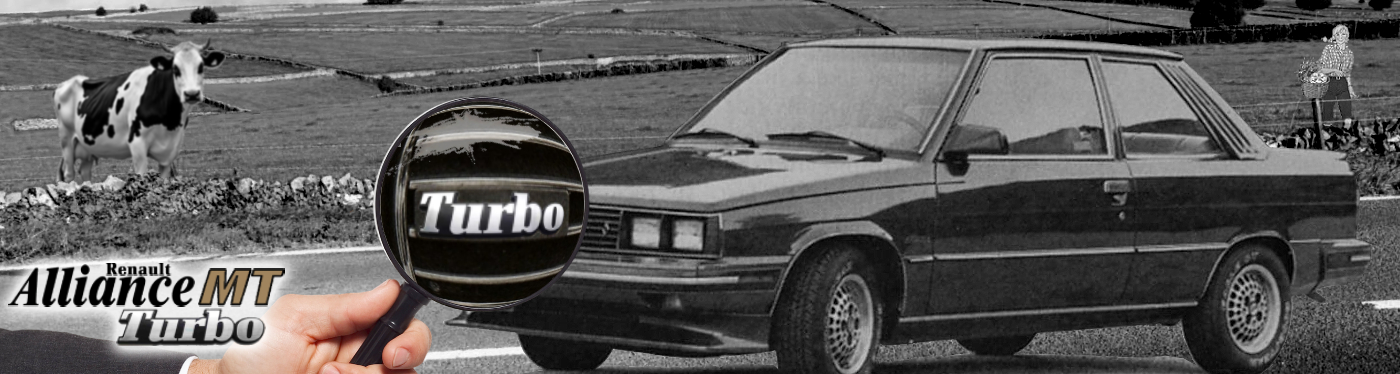
Renault Alliance MT 1.4L Turbo? What’s that?
MotorTrend – January 1984 – by Don Fuller – PHOTOGRAPHY BY RICH COX AND PAUL MARTINEZ
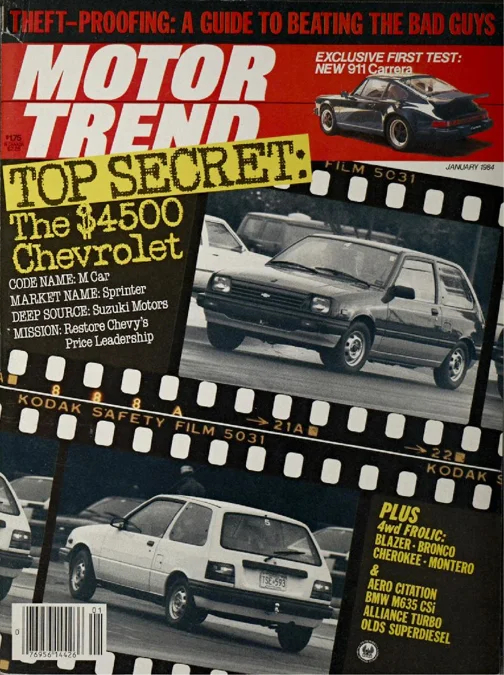
Here is a homemade translation of an article published in MotorTrend magazine in
January 1984.
We are therefore positioned between the award received by Renault “Car of the
Year” and the launch of the Renault Encore. MotorTrend journalists initiated
a Renault Alliance MT Turbo project with Renault Racing and Katech.
They followed the technical choices, the developments and were finally able
to test this Turbo version.
As you might expect, the goal is not the commercialization of this little
rocket, even if a 2 L would later appear in 1987 on the GTA, but rather to
attempt small, inexpensive modifications on a 2-door model, with a 1.4 L
engine, allowing the Alliance to get closer to the racing versions
(Renault Cup) while maintaining road comfort and driving pleasure.
Enjoy
the read, and I hope I have not strayed too far from the original article while
translating it.
*******************************************************
We certainly don’t mean to take anything away from a winner of the
“Car of the Year” title, but one of the most immediate impressions one gets of
the Renault Alliance is that the term “acceleration” is somewhat exaggerated
to describe this car’s progress from 0 to 60 mph.
During testing, the Alliance distinguished itself with exceptional handling
and very good braking. As lively as a tiger in downhill corners, BUT slow:
14.57 sec from standstill to 60 mph and 20 sec for the quarter mile.
Wouldn’t it be fun, we thought, if this thing had a little
more power?
Imagine the surprise of a powerful engine under
such a discreet appearance!
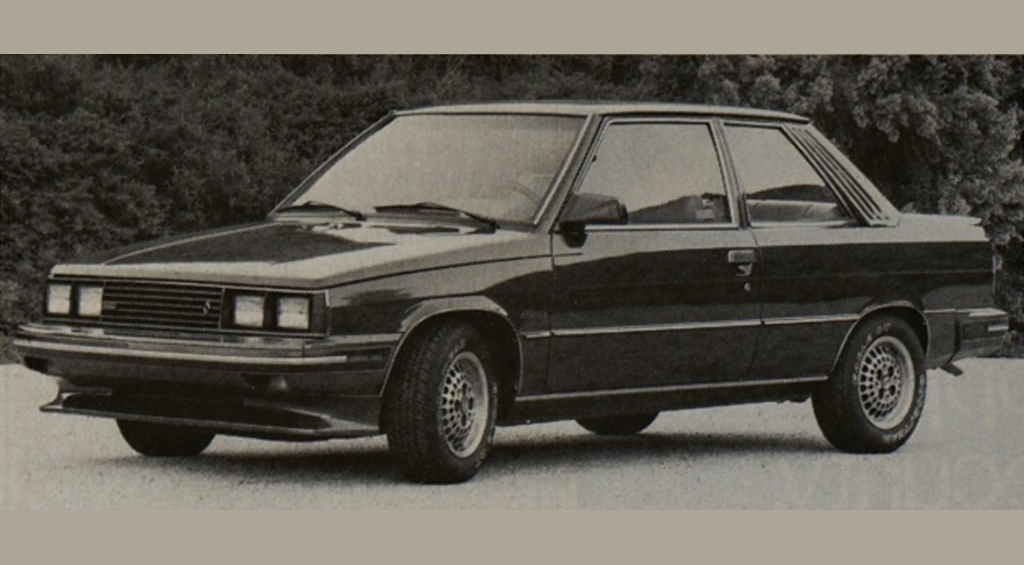
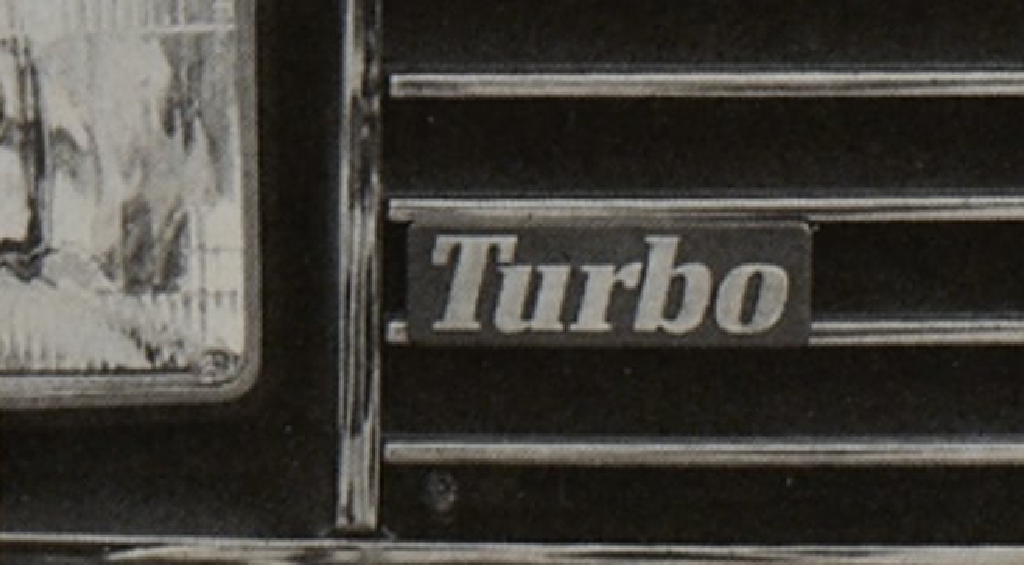
Which brings us to the car you see here, the Renault
Alliance Turbo.
This Alliance was born from that conversation about transforming the
1983 Car of the Year into something more… spicy. A new concept,
in other words, between Renault Racing and MotorTrend.
The conversation took a fairly predictable direction. A quick and easy
solution presented itself: bolt on a Gordini head, a few Webers, etc.
Basically, build a race car for the road. Turbocharging won the vote,
and the concept of this car began to take shape. It had to move quickly,
pleasantly, remain discreet enough not to disturb citizens — especially
those wearing police badges. It needed to be efficient and usable,
adding strong points without harming the qualities our little Alliance
already possessed.
An important point here: usable, for a fast car, means that
you can actually use the speed.
Example: the other day, we saw a De-Tomaso Pantera with wide fender flares
covering enormous tires on sun-polished wheels, a large front spoiler,
a huge cantilevered rear wing, painted bright red and rumbling with a
race Ford V-8. Teenagers drooled. This fantasy on wheels, this automotive
circus joke, has a usable top speed of about 54 mph before the flashing
lights of seven western counties are on and in pursuit mode.
Remember this “usable” factor, and consider our Renault
Alliance Turbo.
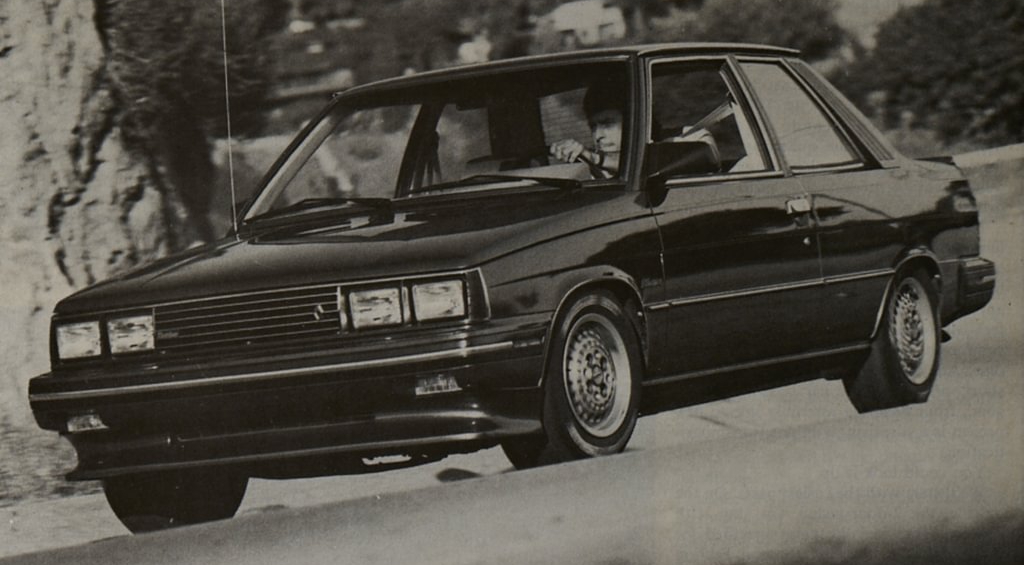
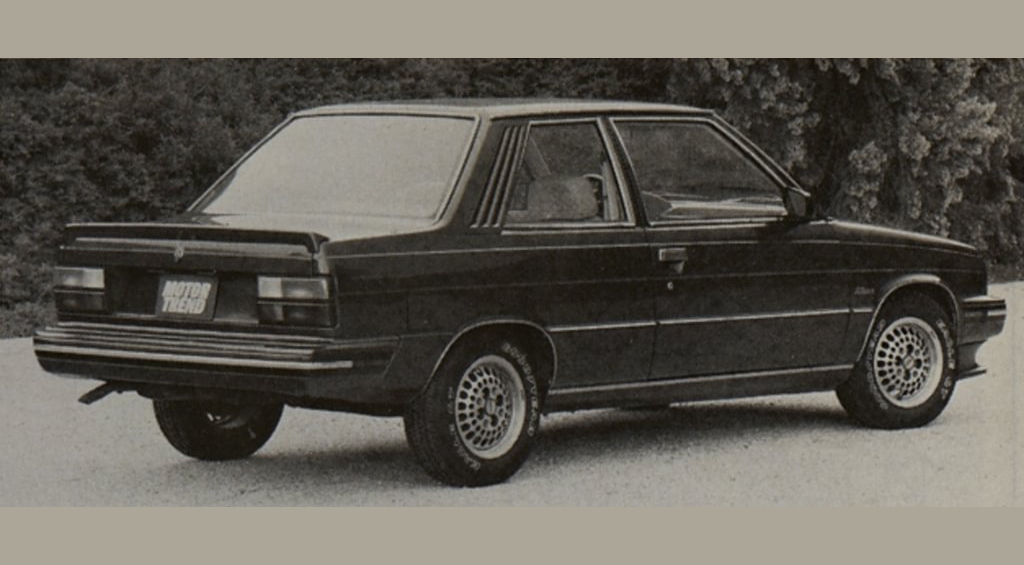
Body modifications therefore had to be minimal, limited to an anthracite
gray paint, two small spoilers and better quality tires. Enough to make it
perform better, look clean and sharp, but without excessively increasing
its “noticeability.”
On the other hand, on the engine side, modifications had to be major, the turbo
forcing cubic yards of air through the intake, enough for the development
program to wear out 3 clutches before the odometer reached 1,000 miles.
Enough to shave seconds and add mph to quarter-mile performance.
Enough to classify it in the “fast vehicles” category. Not to mention
the greatly increased driving pleasure.
Now, aside from adding a turbo, the base Alliance doesn’t really
need many modifications to reach this ambitious level. After all,
the base Alliance is a delightfully “dandy” little thing.
Pleasant to look at. Good ride and handling, though designed with
compromises favoring comfort. And a solid, functional drivetrain.
In short, since the base car is so inherently good, going from the
Kenosha assembly line to the MT Turbo project is a surprisingly minor
metamorphosis.
Judge for yourself.
We start with the easiest parts. On the outside, the 2-door sedan
was painted with a specific anthracite metallic paint for the
Renault Alliance MT models, which you
can buy from your friendly AMC/Renault dealer. Under the front bumper
is an aerodynamic spoiler, a one-off Renault Racing part. At the rear
on the trunk, another spoiler from the European version of the Alliance,
the Renault 9 (here, the GTS model). It bolts directly onto the trunk.
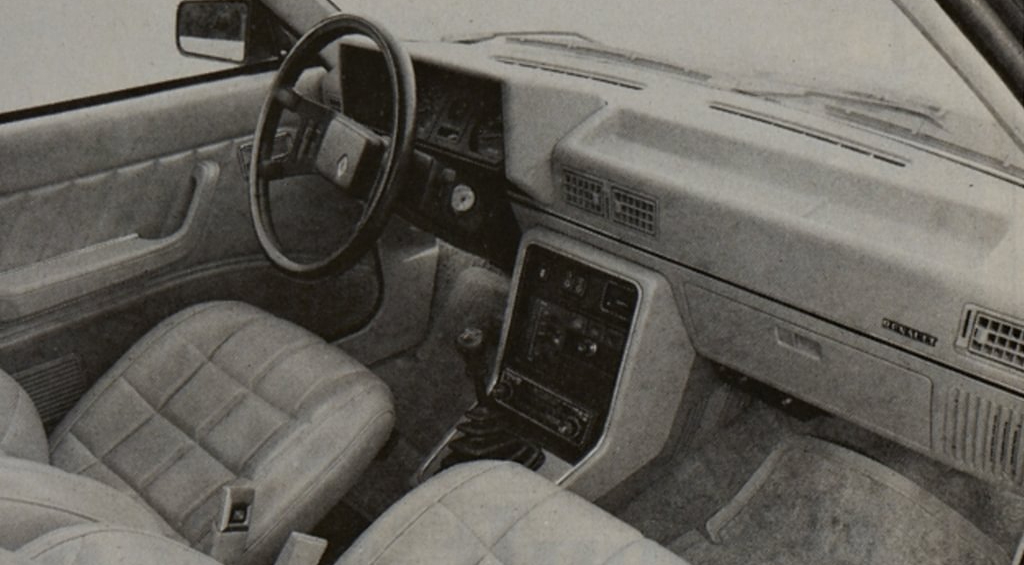
Inside, simplification continued. The seats come from the Renault 11 —
similar to those in the Alliance — except the backrests have lateral
bolstering to handle cornering G forces. The steering wheel is a
three-spoke Momo, the Pininfarina model. Comfort items such as an
AMC-supplied audio system, power windows and others complete the
interior.
With the exception of the front spoiler, all parts are available…
at least somewhere in the world. These are parts, in fact, we would
like to encourage Renault to make available in the USA.
On the other hand, chassis parts are obtainable. Renault has experience
from racing the Alliance on circuits (during the
West Coast Alliance Cup) and therefore
the suspension components are already available and proven. Adjustable
Koni shocks, stiffer front and rear anti-roll bars and harder bushings
are part of the race Alliance kit.
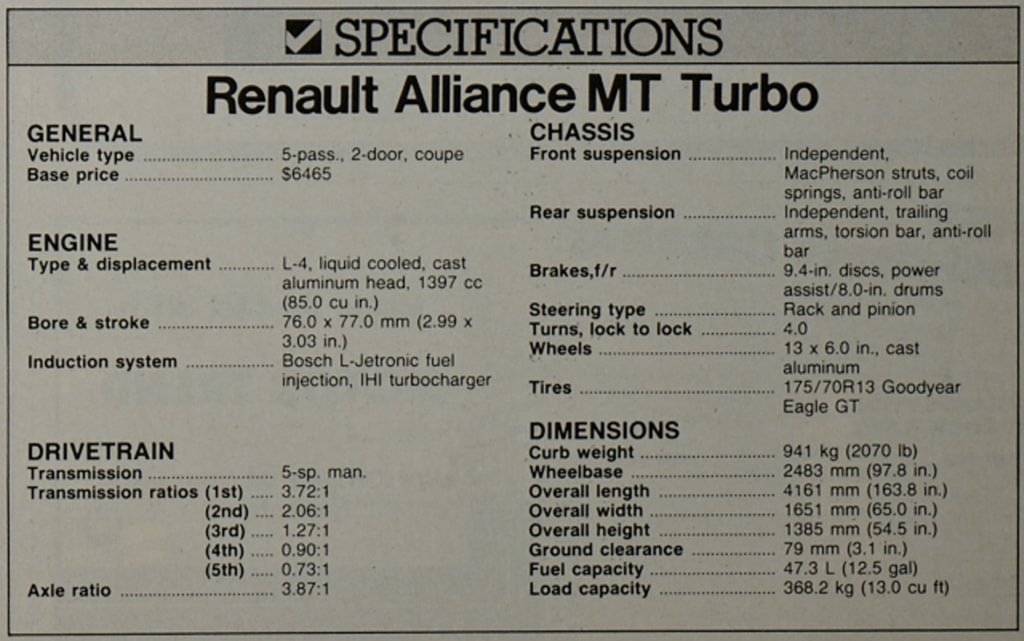
Surprisingly few other modifications were required to boost the
engine. Revised pistons and connecting rods, and that’s about it.
This particular Alliance is a California version, which means,
for the purposes of this project, that it is equipped with Bosch
L-Jetronic fuel injection with multipoint injectors instead of the
single-point Bendix injection used on cars in the other 49 states.
Since the 49-state cars breathe through a thumb-sized hole and deliver
fuel through only one nozzle, the Bosch system provides a much better
starting point for serious performance increases.
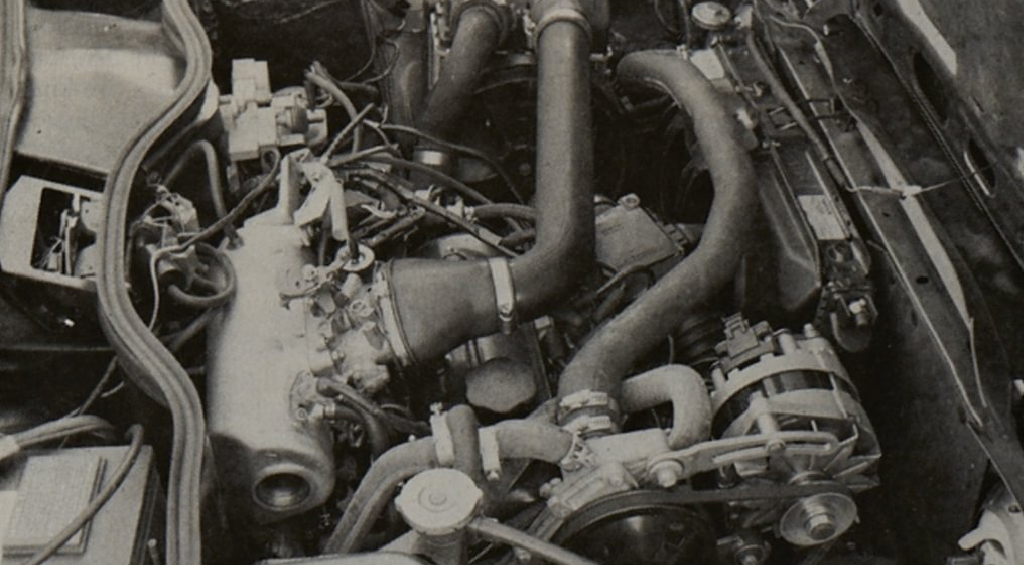
The turbo itself is a Japanese IHI. It draws air and forces it through
a huge intercooler (larger than that of the Fuego Turbo), then to the
engine. The intercooler, located above the gearbox, is fitted with its
own electrically driven fan and draws cooling air through a fiberglass
duct located behind the left spoiler.
It is difficult to evaluate performance and horsepower gains. But boost
pressure is in the range of 9.5-11.0 psi. Power is, as Rolls-Royce would
say, “sufficient” — probably between 100 and 120 hp.
Sufficient, of course. As we said, the development program wore out
three clutches just to ensure everything worked. A few axles and
universal joints also gave their lives to the increase in power.
The current clutch is stronger and competition axles are in this car’s
future. That is why good aftermarket kits are expensive, why factory
turbos are expensive, and why speed enthusiasts often take plenty
of aspirin.
What we developed here is, in every sense, well executed. Designed and
built by Katech, a shop based in Mt. Clemens, Michigan, specializing in
racing engines, this Renault Alliance turbo looks as factory as you
could hope. Everything fits properly, ducting is well done, fittings are
first quality, the layout is logical and there isn’t a piece of coat
hanger wire or duct tape in sight. You can tell it’s handmade, but it’s
quality handmade.
However, if an Alliance like this were factory built, more of you
could share our pleasure. As expected, handling is first class; it
feels exactly like the Alliance Cup cars (with just a bit more body
roll, of course), and that makes it simply wonderful. This little
French rocket will reach 60 mph in 9.16 sec and complete the quarter
mile in 16.93 sec at 80.4 mph.
Yet this is a complete package, not a hot rod. Handling is good enough
for the track and also for the street, with 0.84g of lateral acceleration
on our skidpad. That is quite comparable to the Chevrolet Camaro Z28.
It feels like a small race car, but without the harsh ride. Braking
figures are 151 feet from 60 and 37 feet from 30. It’s a complete
high-performance package. And it’s fast, very fast.
In fact, an interesting idea would be to use it as a pace car at
Alliance competitions.
Think about it: it would be the first time a road car could outrun
the official racers!
We seem to be on the right track: something in the general category
of “Gee, wouldn’t it be great if Renault built one for everyone else?”
The problem is that within Renault, the slightly heavier Encore is
considered the more “sporty” of the Alliance/Encore duo. That’s a rather
surprising idea since that large glass hatch high at the rear cannot
improve weight distribution or center of gravity. Besides, we prefer
tidy little sedans, and the Alliance has a more purposeful nature.
But if Renault ever takes interest in our model, it will likely end up
with a large glass hatchback.
Still, that’s not so bad. This Alliance is a genuinely clever car,
and if it appears as an Encore, that’s fine with us. The Encore scores
well both in quickness and invisibility, an essential and often
overlooked factor that allows you to use that quickness.
The only negative point in all this is that with the turbo equipment
installed, something underneath resonates at such a frequency that
the buzzing becomes annoying and the vibrations completely cancel
the use of the most important speed equipment on any fast car:
the rearview mirror.
But somehow we know that if the factory did something like this,
that nasty little buzz would disappear and clear rearward vision
would provide the peace of mind needed to cruise freely.
How about it, Kenosha?
contact@renaultalliance.net +33 9 72 45 10 13 (answering machine) Cookie Management Data Protection and Legal Notices