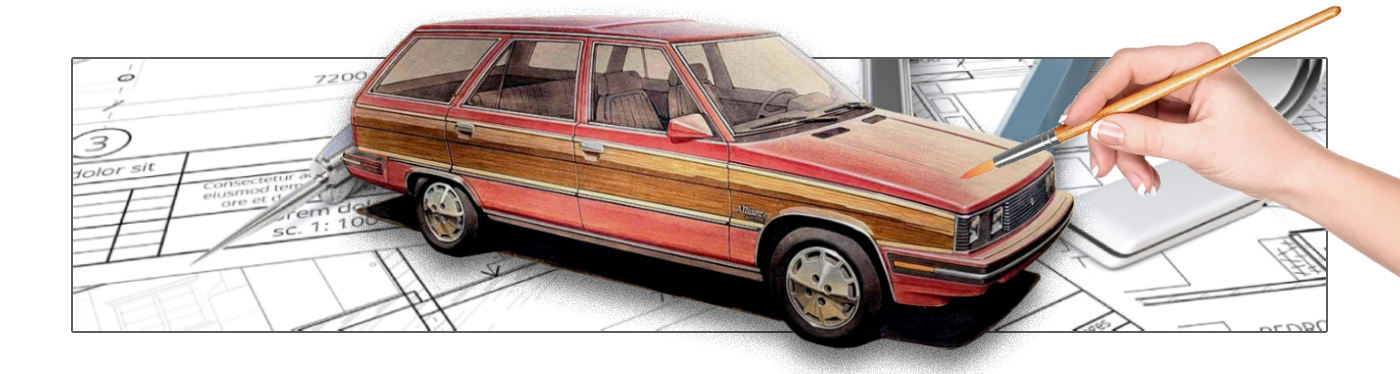
Renault Alliance & AMC/Renault Prototypes
First of all, a BIG thank you
- Car Design Archives for all the research carried out and shared on Facebook. A gold mine, even for specialists like us of the Alliance/Encore. We invite you to visit the site; it is well-documented and pleasant to read regarding many different models.
- Yann Le Lay (Les Renault 9 & 11 de mon père - ETAI), for the images of the GT and Medallion.
- Losange Magazine. A must among magazines dealing with Renault models.
- lautomobileancienne.com
- The Last Independent Automaker. They offer a 6-part documentary on the history of AMC.
At AMC/Jeep/Renault.
At American Motors, there was a vital need to keep the factories running and, above all, to complete the range with more fuel-efficient models to satisfy new federal regulations.
Renault could meet this need.
In the Amtek premises, which previously housed the Kelvinator headquarters and under the direction of Philippe Ventre, the "Renam Product Engineering" department was then in charge, from July 1981, of Americanizing the Renault 9.
Contrary to appearances, the design had to be completely overhauled. The Alliance (X42) was put into production in Kenosha in June 1982, along with its two-door derivative.
The three-door Encore (X37) followed in July 83, and finally the Convertible version (D42) in September 1984.
(source: Car Design Archives)
Renault could meet this need.
In the Amtek premises, which previously housed the Kelvinator headquarters and under the direction of Philippe Ventre, the "Renam Product Engineering" department was then in charge, from July 1981, of Americanizing the Renault 9.
Contrary to appearances, the design had to be completely overhauled. The Alliance (X42) was put into production in Kenosha in June 1982, along with its two-door derivative.
The three-door Encore (X37) followed in July 83, and finally the Convertible version (D42) in September 1984.
(source: Car Design Archives)
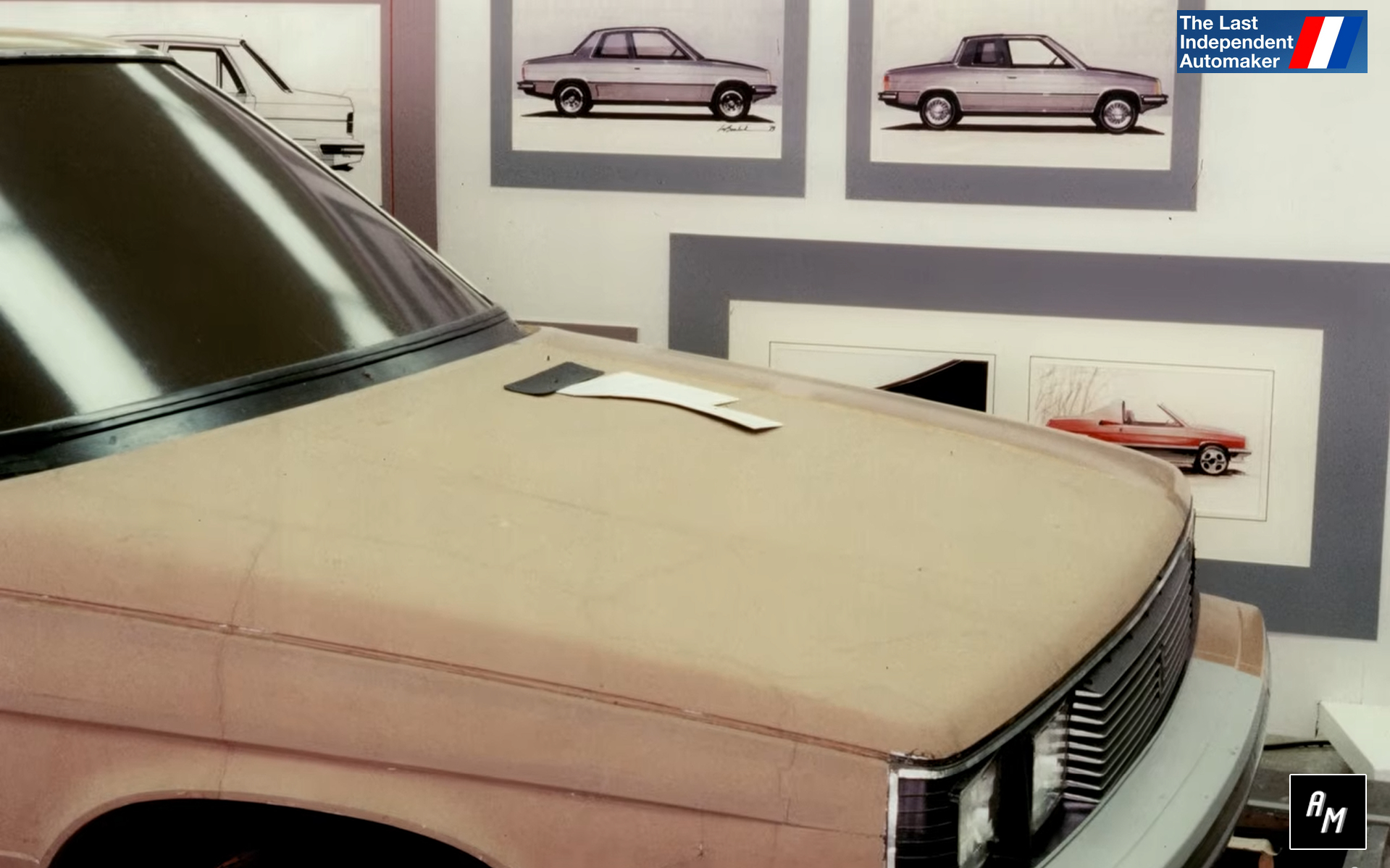
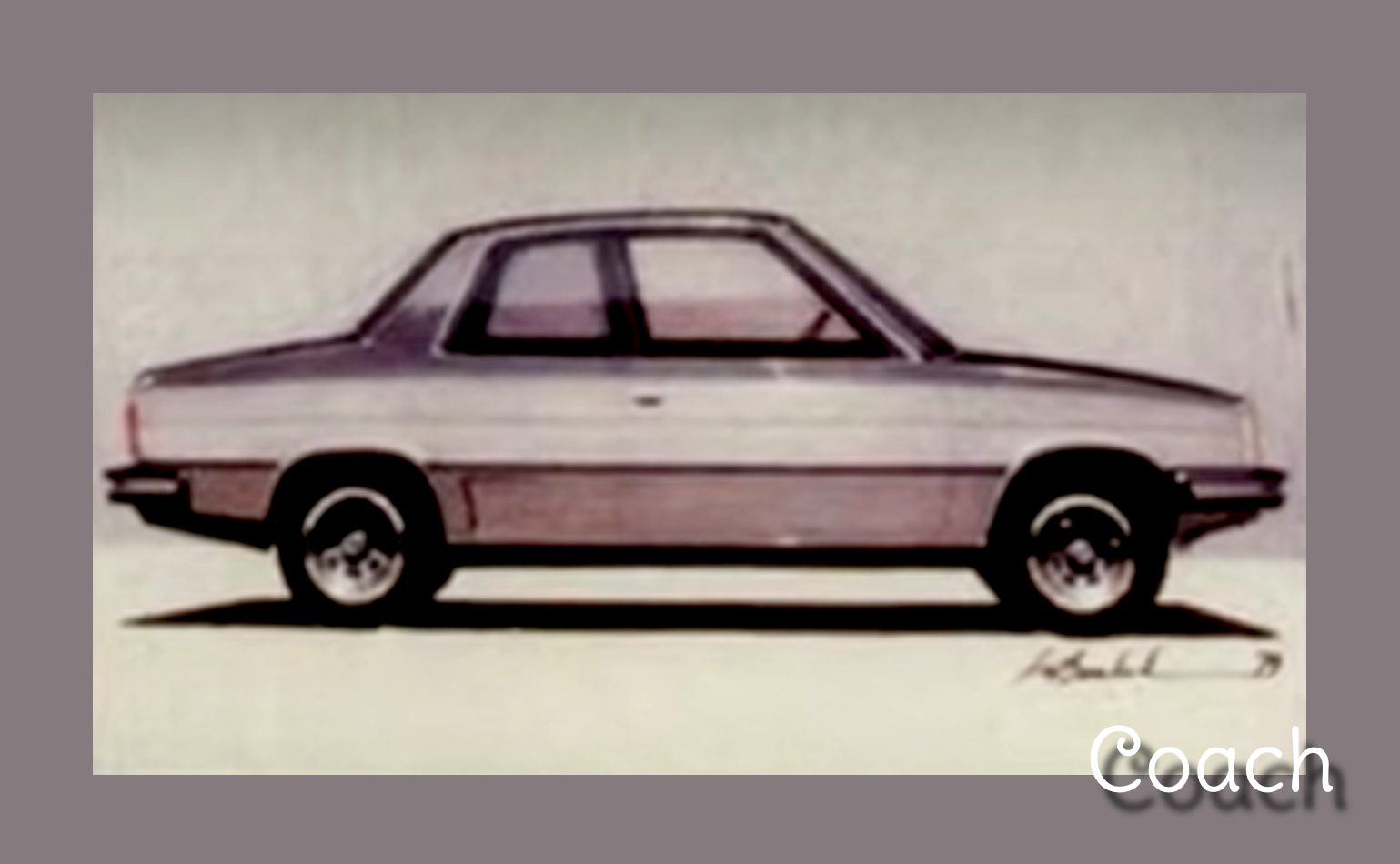
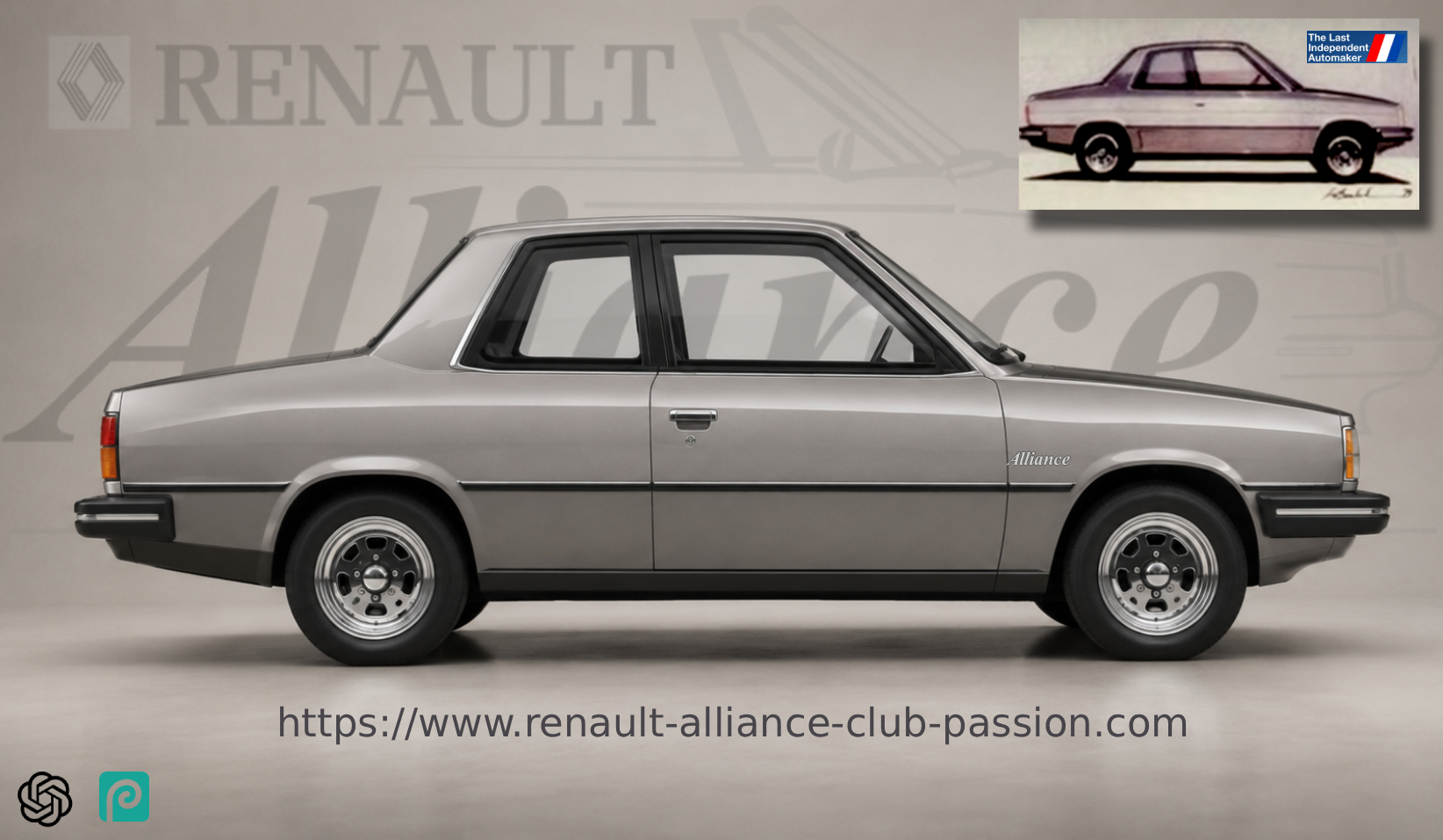
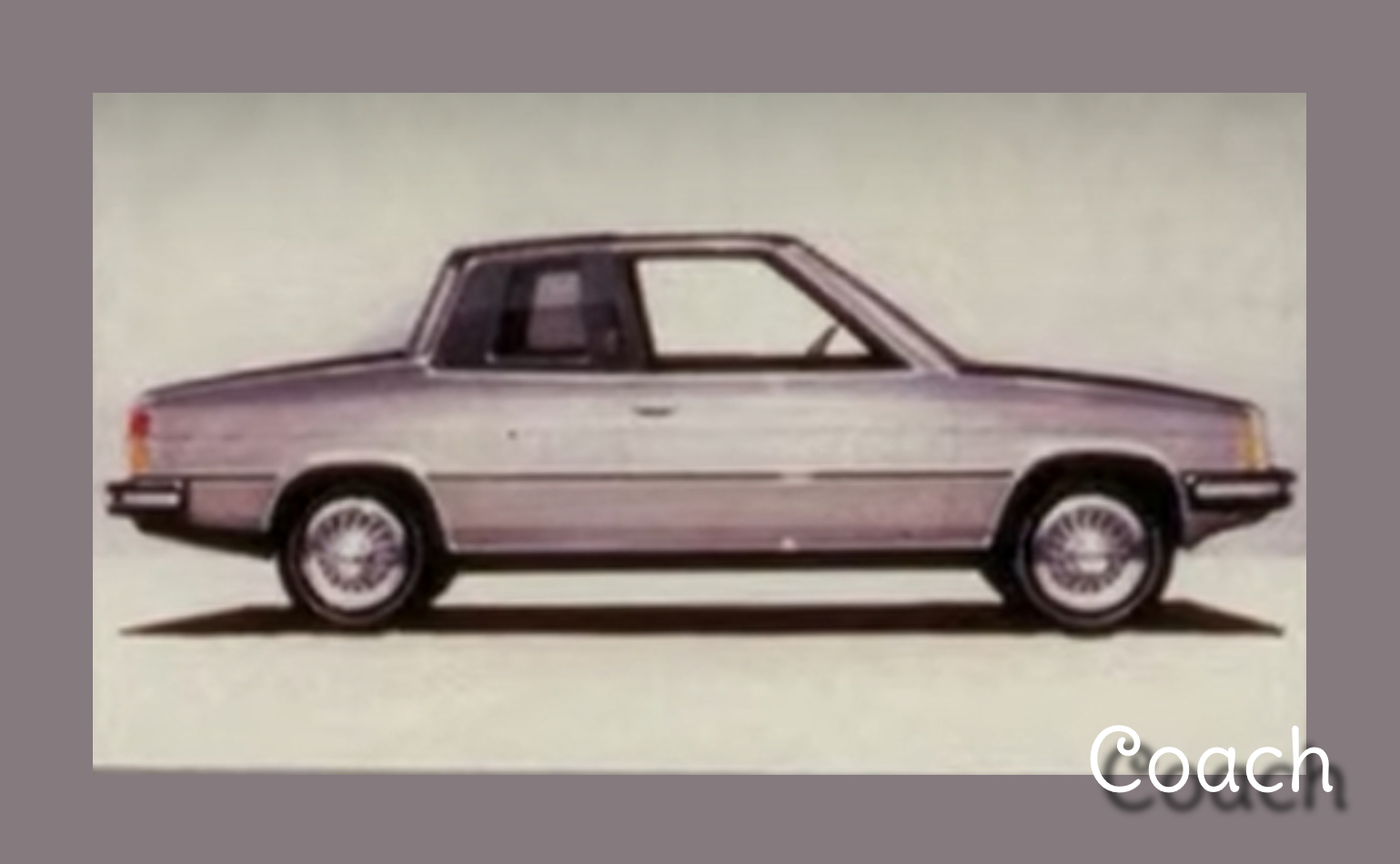
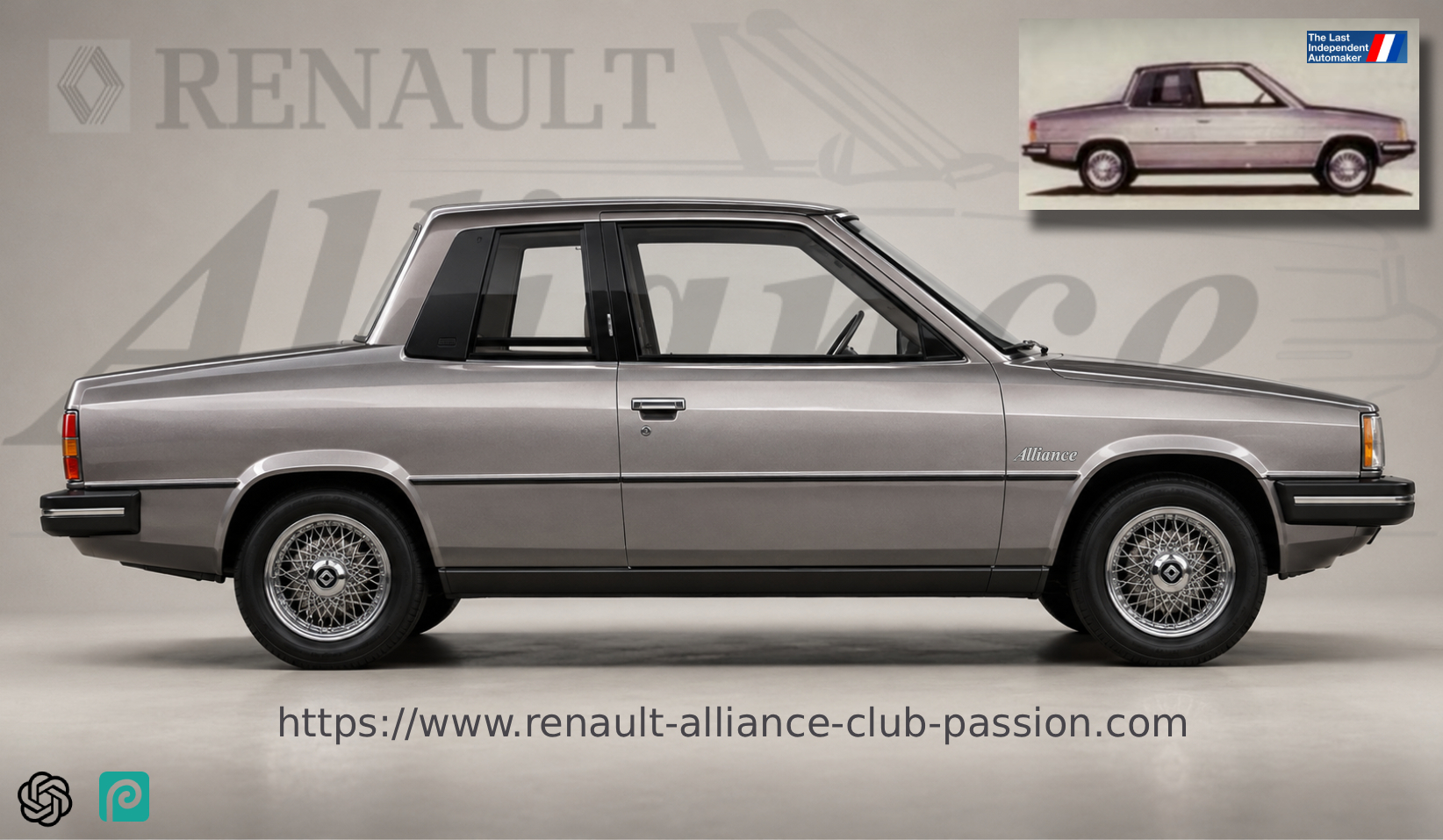
M42A - Renault Alliance 2-door coupe (coach) The exquisite sketches
While waiting for more details, here are some images.
M42A - A GT Model
At first glance, one might think it is the Coupe version of the Alliance.
Therefore, a classic two-door.
But in fact, everything happens under the hood and also on a small GT logo placed at the bottom of the body just before the rear bumper.
We have no further information to date on this variation which never saw the light of day...
Therefore, a classic two-door.
But in fact, everything happens under the hood and also on a small GT logo placed at the bottom of the body just before the rear bumper.
We have no further information to date on this variation which never saw the light of day...


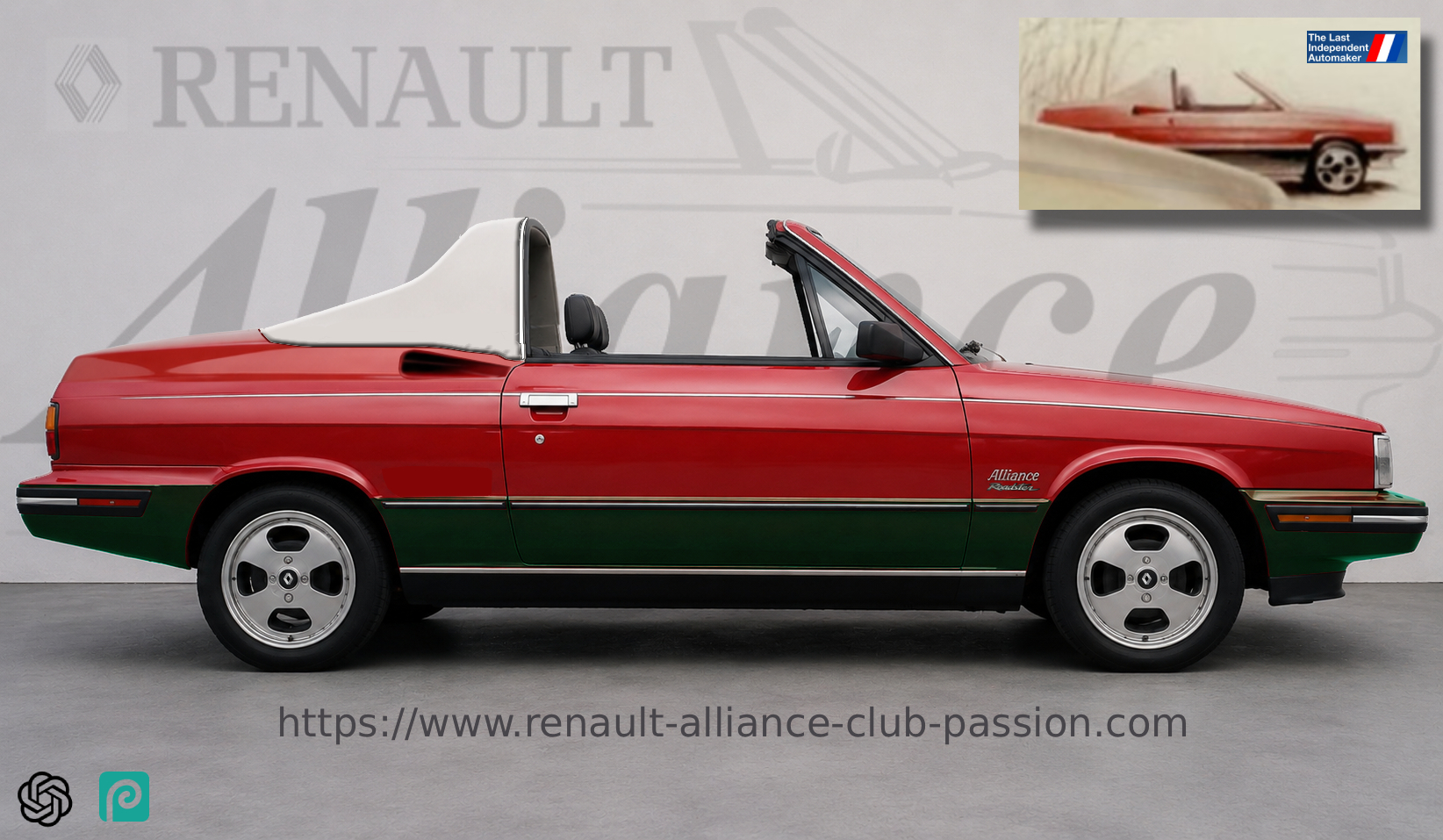
D42A - a hint of a convertible
While waiting for more details, here is a small image.

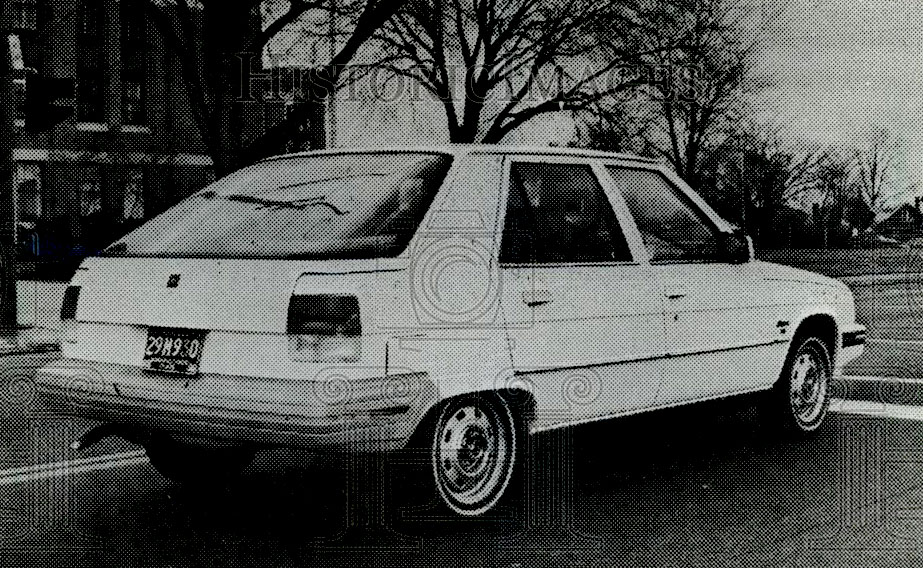
X37 - The Renault ENCORE, an Alliance with a backpack
Below, Bernard Hanon and Gaston Juchet in front of a scale model of the
Renault Encore. You will notice, 2 doors on one side, 1 door on the other.


X52 - An Alliance stretched in both width and length: the "Medallion" project
 Episode 5 "the last independant automaker"
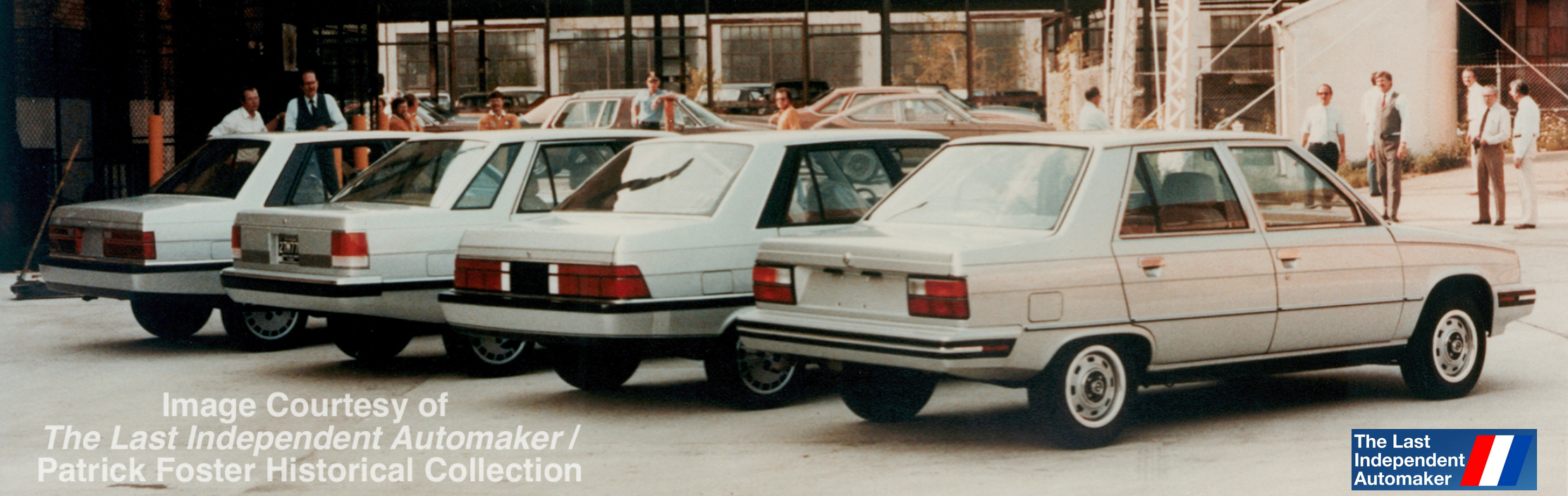
In September 1982, under the direction of Philippe Ventre at the Amtek design office, the idea was born to develop a superior compact model based on the Alliance.
A sort of Alliance XL, wider and longer. A name was even found for it: “Medallion”, which would later be recycled for the imported R21.
For this project, three styling offices were put into competition:
- Amtek under the direction of Dick Teague,
- Heuliez/France Design which, according to Seidler, “provided an excellent scale model,” and finally
- Renault's Styling Center under the leadership of Gaston Juchet and Robert Opron.
The final choice fell on the one produced at Heuliez by Yves Dubernard and Grégory Gambarara.
- Amtek under the direction of Dick Teague,
- Heuliez/France Design which, according to Seidler, “provided an excellent scale model,” and finally
- Renault's Styling Center under the leadership of Gaston Juchet and Robert Opron.
The final choice fell on the one produced at Heuliez by Yves Dubernard and Grégory Gambarara.
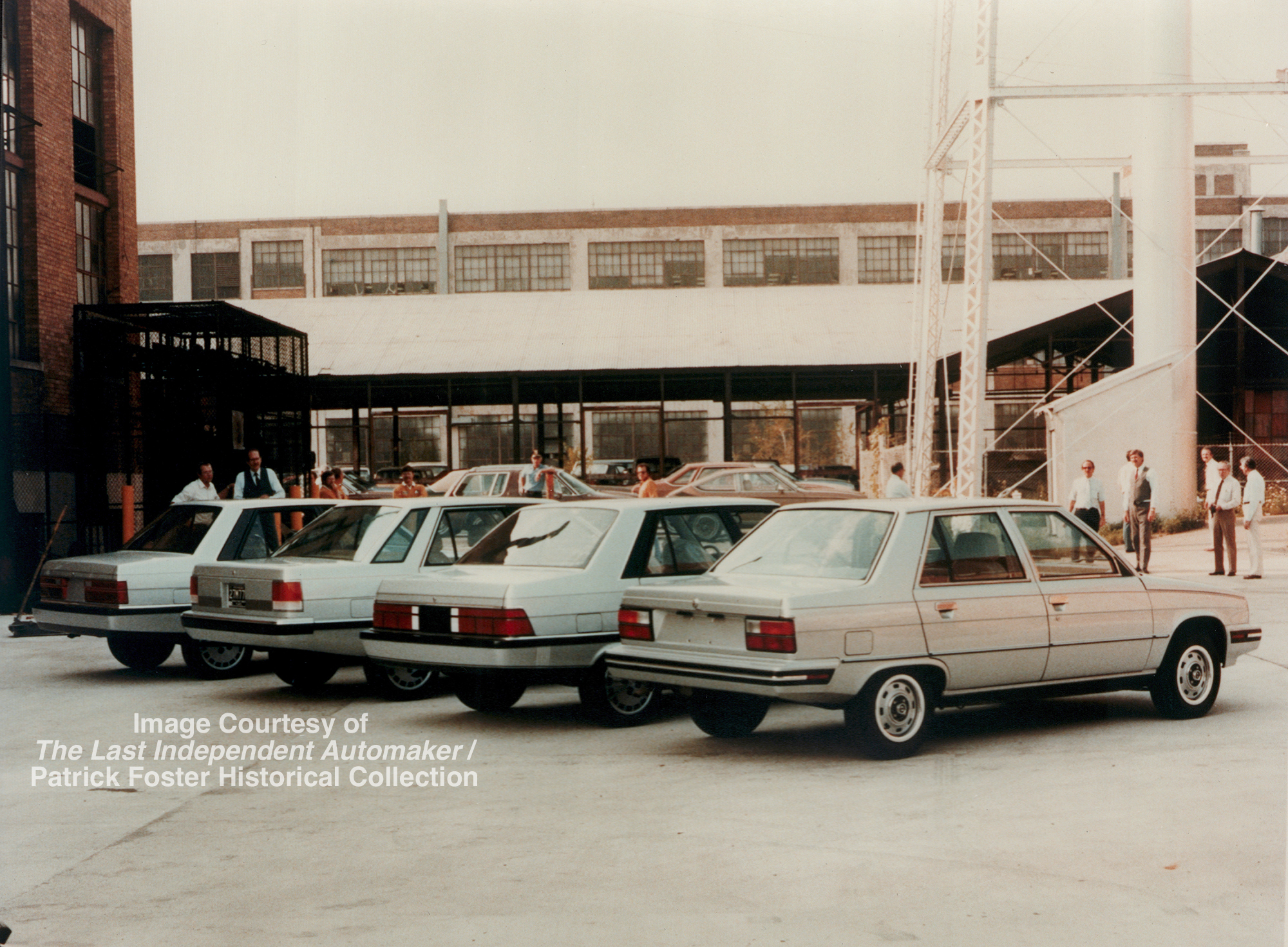
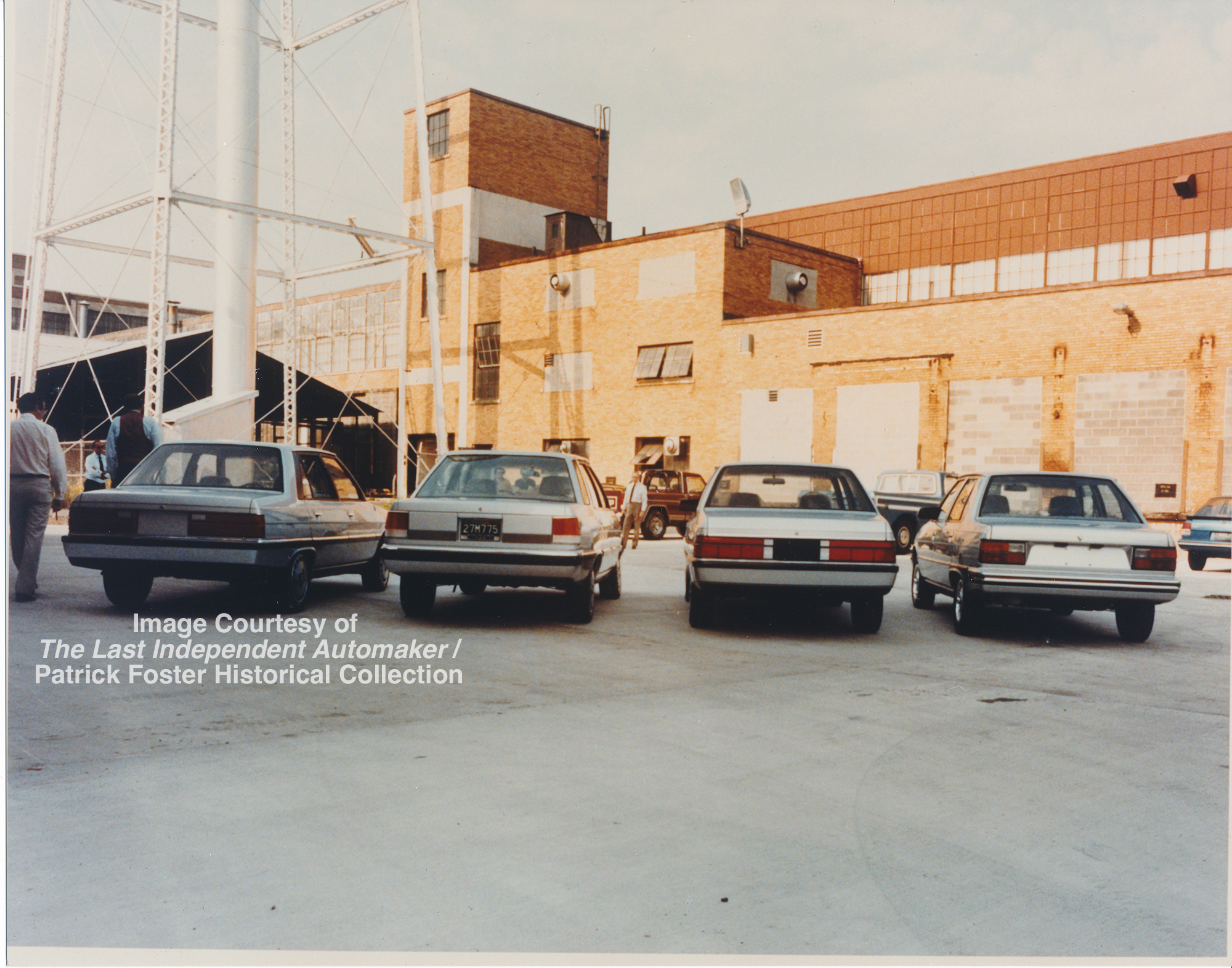
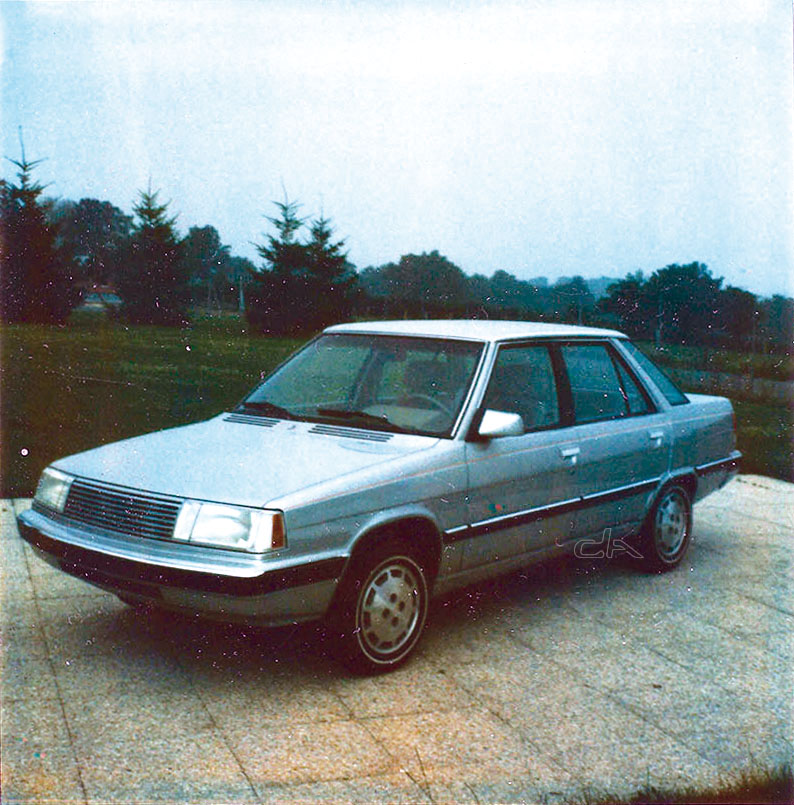
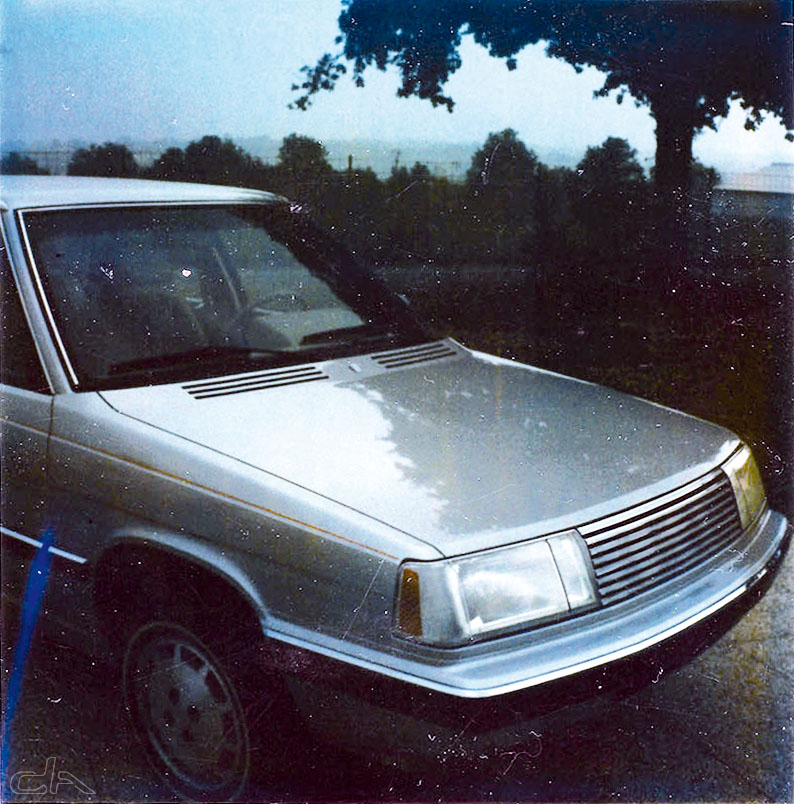
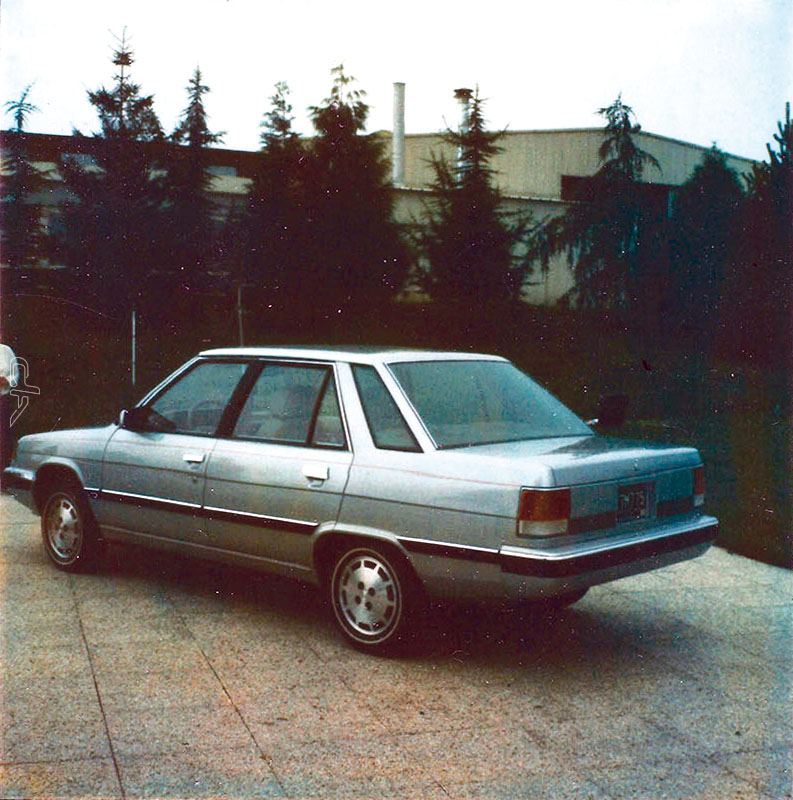
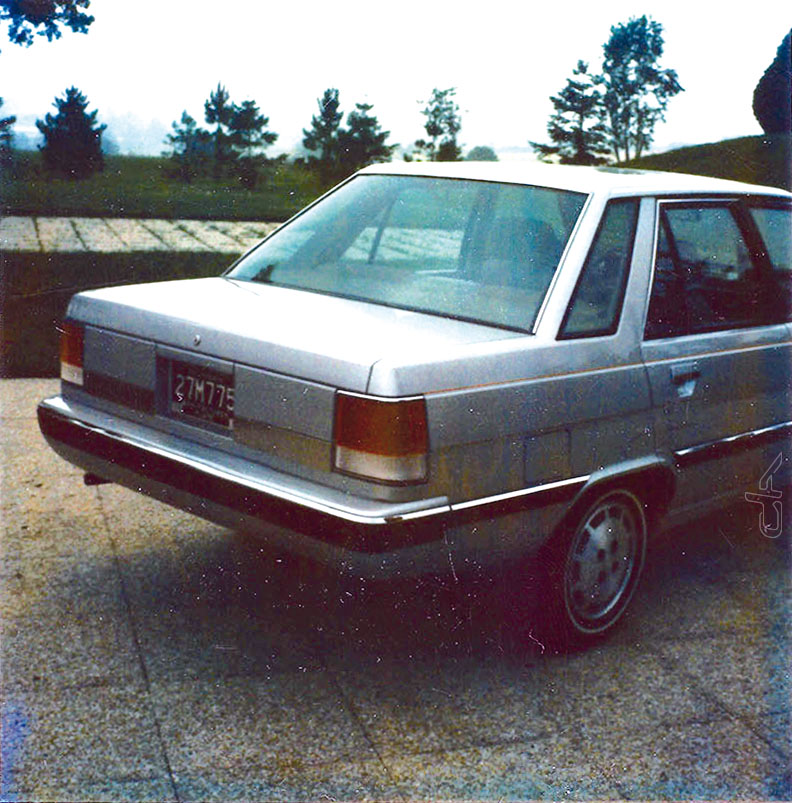
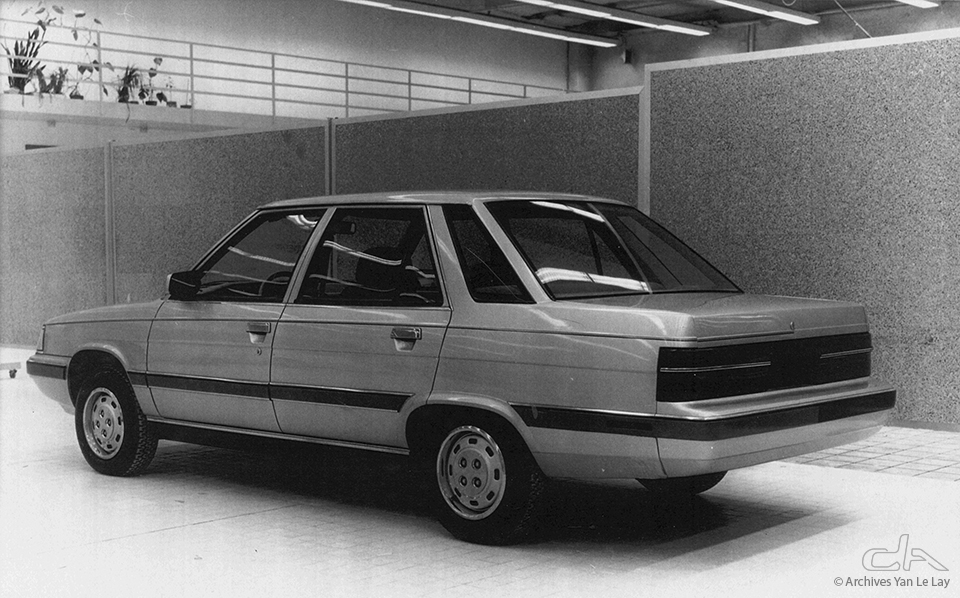
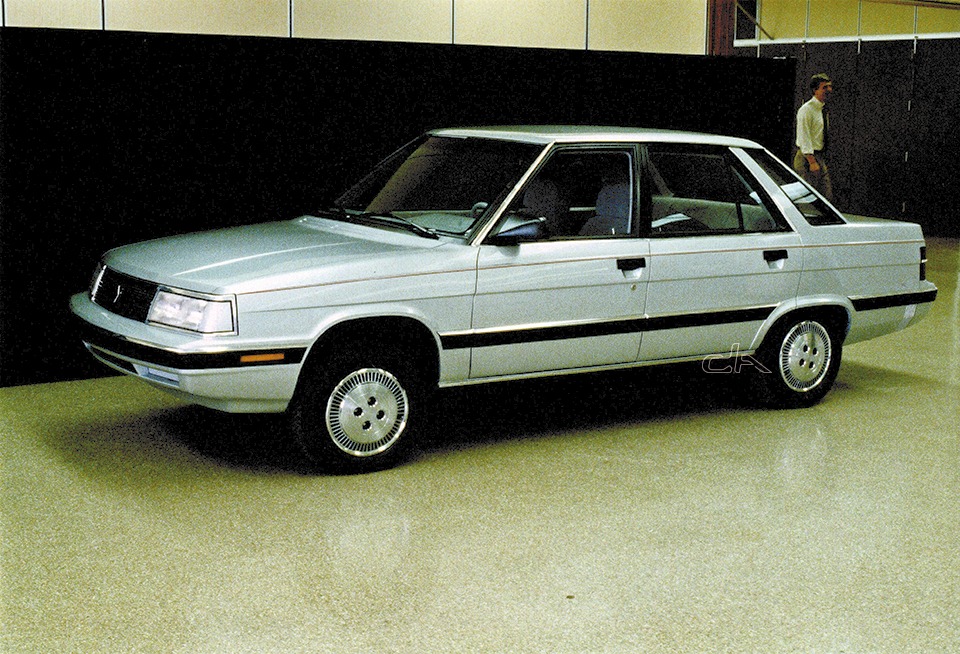
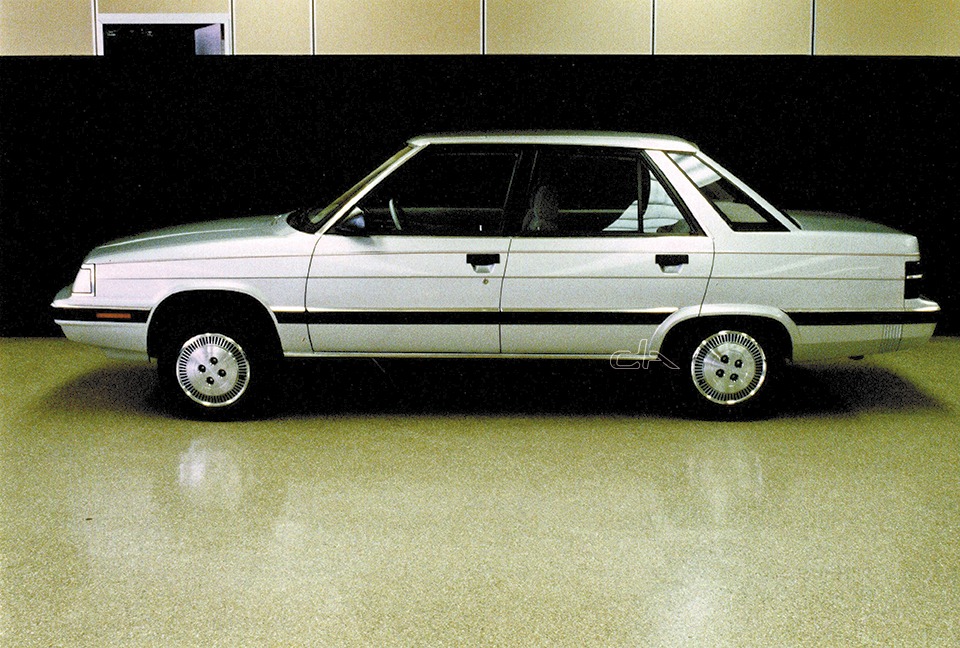
The model was well-liked, and the feedback from clinics was so positive that the staff at Billancourt considered marketing it in Europe!
Production was estimated at 100,000 units/year, and its launch was planned for 1986. The chosen site was Haren in Belgium, the same one that produced the Rambler.
A nice nod to history! This factory, which we all know as Vilvoorde since its resounding closure in February 1997, was already under threat in 1982. This Medallion would have made it possible to avoid a redundancy plan.
But the investments were heavy, especially for a manufacturer whose financial health was beginning to falter. Renault therefore requested help from the Belgian government to contribute financially. This was not surprising, as all manufacturers have recourse to public funds. Except that in Brussels, the bureaucracy procrastinated and dragged out the process. Months passed, and when the verdict was delivered, the allocated budget (15 to 18% of the investment) was insufficient. Alas, it was already too late! In the meantime, there had been a complete market reversal: on one hand, the very sharp rise in the dollar no longer worked in favor of the French. If the Medallion were manufactured in Europe, it would no longer be competitive in the United States. On the other hand, with oil prices in freefall, Americans suddenly began to shun subcompacts. Sales of the Alliance and Encore collapsed, and the X52 project, which was no longer viable, was definitively abandoned in February 1985. In the meantime, plans were made to plug the gap with the future Renault 21 (X48), which adopted the name “Medallion” for its own use.
From then on, the Régie knew that AMC had to move upmarket to rebuild its name and become profitable. Because it was in the most popular segment in terms of volume, the Premier became an absolute priority, to be supported in 1988 by its coupe derivative “Allure” and then the Alpine GTA.
You will notice in the latest photographs that there are some differences between the color models and the black and white photo:
- Wheels / hubcaps
- Addition of chrome on the window treatments
- Door handles
- Painted B-pillar
These were the final adjustments by Amtek based on the already slightly modified Heuliez proposal.
(Source: Car Design Archives)
But the investments were heavy, especially for a manufacturer whose financial health was beginning to falter. Renault therefore requested help from the Belgian government to contribute financially. This was not surprising, as all manufacturers have recourse to public funds. Except that in Brussels, the bureaucracy procrastinated and dragged out the process. Months passed, and when the verdict was delivered, the allocated budget (15 to 18% of the investment) was insufficient. Alas, it was already too late! In the meantime, there had been a complete market reversal: on one hand, the very sharp rise in the dollar no longer worked in favor of the French. If the Medallion were manufactured in Europe, it would no longer be competitive in the United States. On the other hand, with oil prices in freefall, Americans suddenly began to shun subcompacts. Sales of the Alliance and Encore collapsed, and the X52 project, which was no longer viable, was definitively abandoned in February 1985. In the meantime, plans were made to plug the gap with the future Renault 21 (X48), which adopted the name “Medallion” for its own use.
From then on, the Régie knew that AMC had to move upmarket to rebuild its name and become profitable. Because it was in the most popular segment in terms of volume, the Premier became an absolute priority, to be supported in 1988 by its coupe derivative “Allure” and then the Alpine GTA.
You will notice in the latest photographs that there are some differences between the color models and the black and white photo:
- Wheels / hubcaps
- Addition of chrome on the window treatments
- Door handles
- Painted B-pillar
These were the final adjustments by Amtek based on the already slightly modified Heuliez proposal.
(Source: Car Design Archives)
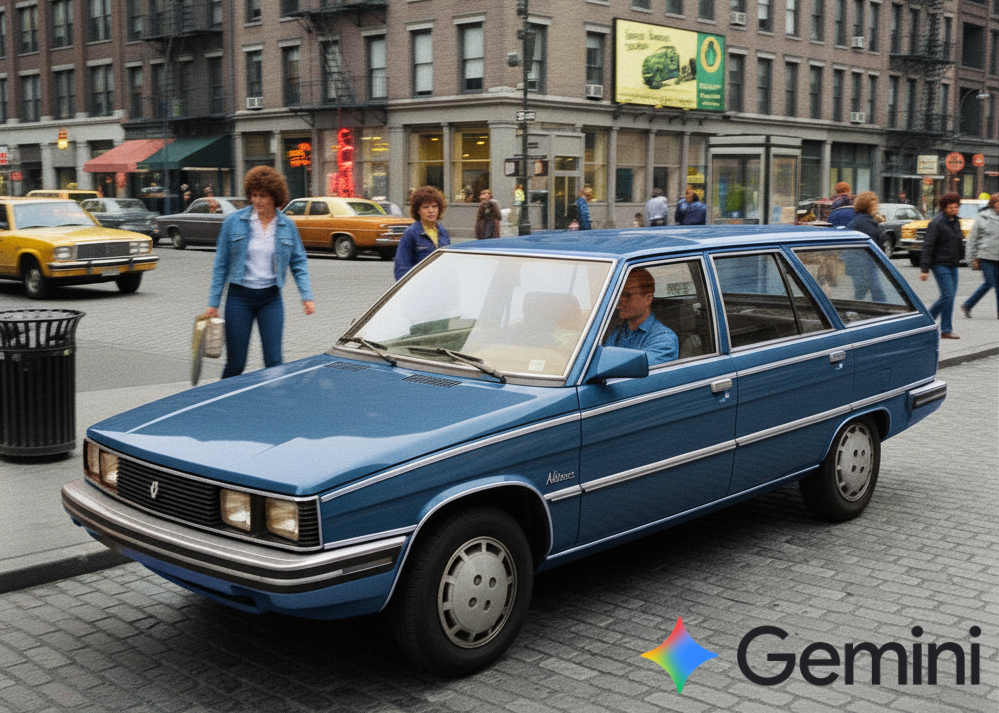
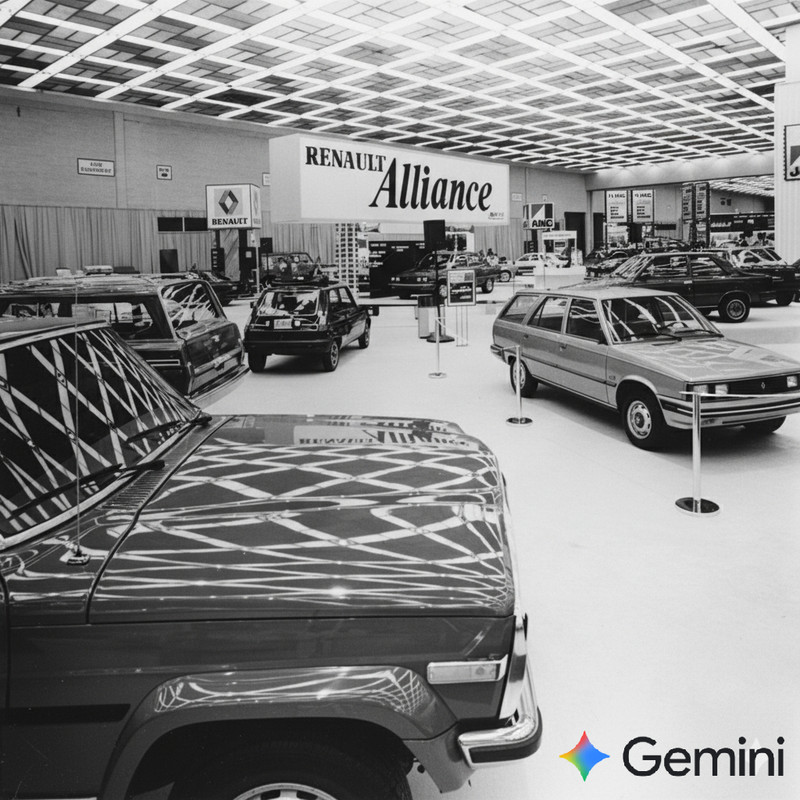
K42 - ... a break / Station Wagon
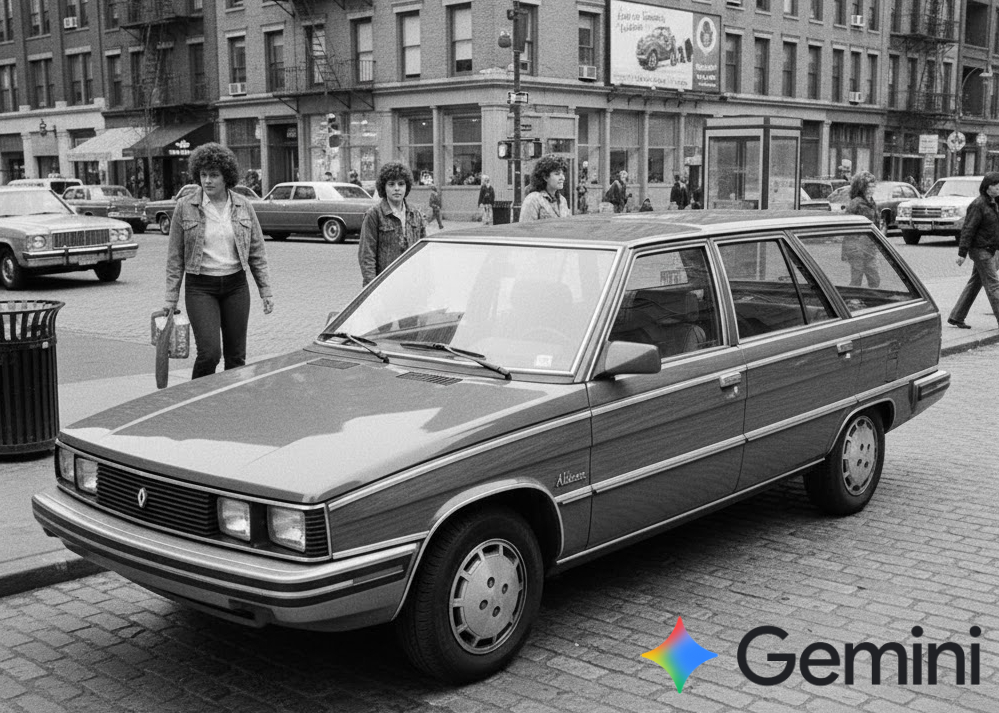
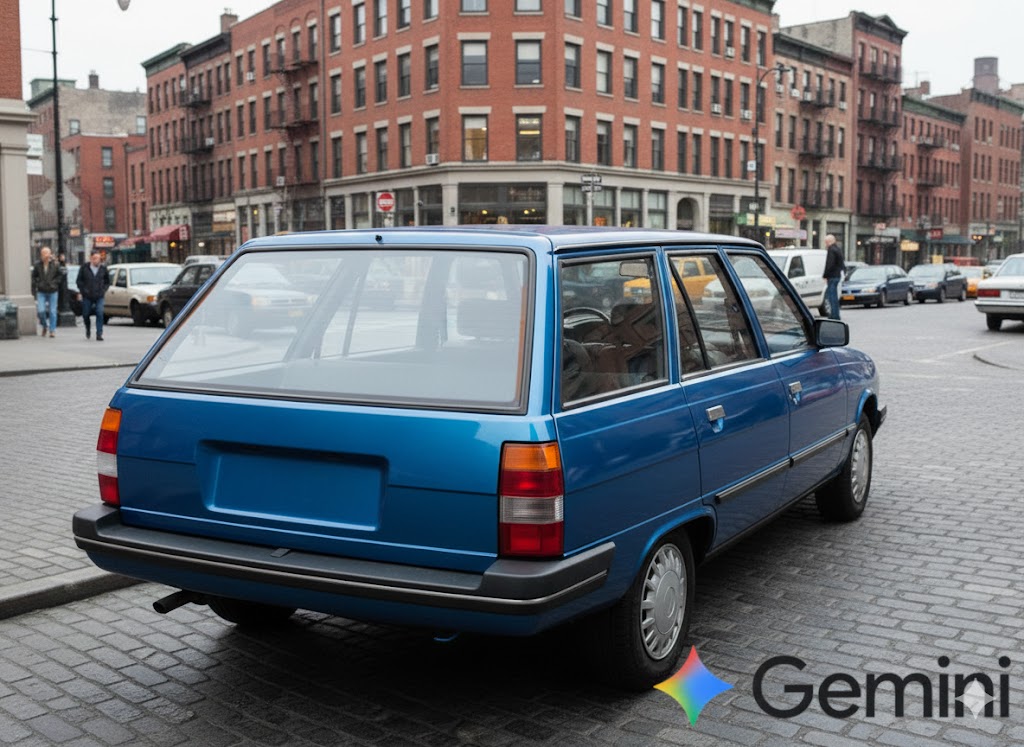
From the beginning of 1982, another body style was considered: a station wagon derivative, coded K42.
While in Rueil (France), the teams of Gaston Juchet and Robert Opron submitted several style studies, at AMC, those of Dick Teague and Bob Nixon worked on a counter-proposal that would be developed up to the body-in-white stage. The realization of this was led by Claude Sutren, then head of the Body Engineering Department.
Alas, due to insufficient resources (priority was given to the future Cherokee XJ) and with sales volumes judged too low, the station wagon was finally abandoned in February 1983.
(source: Car Design Archives)
Based on the few archive images available and a bit of Photoshop, we asked an AI to generate what the final model of this Alliance Station Wagon could have looked like. It is quite impressive.
While in Rueil (France), the teams of Gaston Juchet and Robert Opron submitted several style studies, at AMC, those of Dick Teague and Bob Nixon worked on a counter-proposal that would be developed up to the body-in-white stage. The realization of this was led by Claude Sutren, then head of the Body Engineering Department.
Alas, due to insufficient resources (priority was given to the future Cherokee XJ) and with sales volumes judged too low, the station wagon was finally abandoned in February 1983.
(source: Car Design Archives)
Based on the few archive images available and a bit of Photoshop, we asked an AI to generate what the final model of this Alliance Station Wagon could have looked like. It is quite impressive.




J48 & J63 - ... Espace 1 & 2
In Europe, the year 1984 saw the appearance of the Espace, an innovative concept developed by Matra and marketed by Renault: the minivan.
This type of vehicle, totally unknown in Europe, made Renault fear a commercial failure of the product and a potential conversion into a commercial vehicle.
Fortunately, despite the first few unsuccessful weeks of sales, the minivan quickly found its customers and, without real competition, ensured good sales volumes.
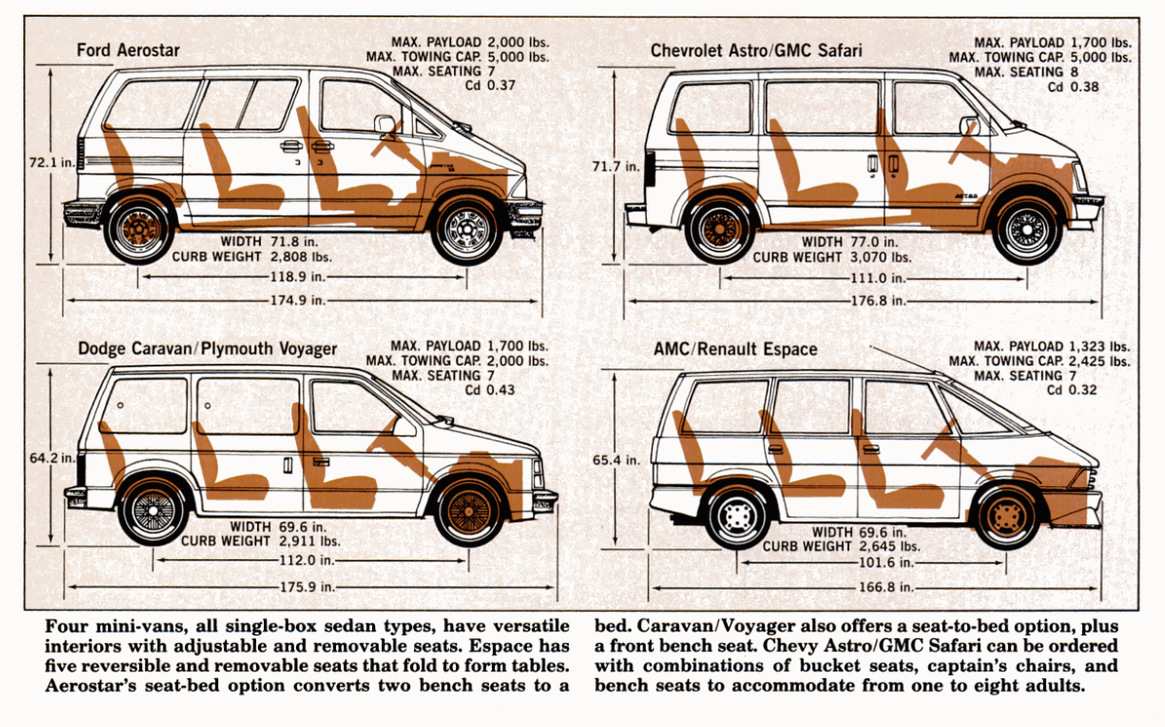
On the other side of the Atlantic, minivans arrived almost at the same time, with Chrysler and its Voyager leading in 1984, followed by Chevrolet with the Astro and Ford and its Aerostar, all in 1985. Later (but only in 1989), Pontiac followed with its Trans Sport. In North America, where vans were legion, the concept of the minivan seemed more in phase with the customer base. In the United States, Renault was present in the 1980s with its ally AMC; consequently, the Espace could have had a role to play on Uncle Sam's soil.
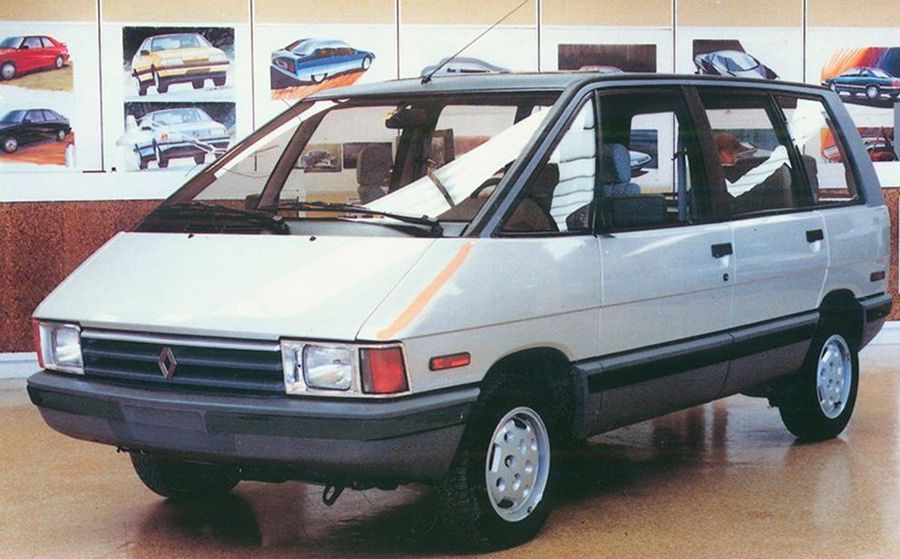
This was indeed the thought of AMC, Renault's American branch, which asked the French manufacturer to provide it with a copy of the Espace as soon as it was presented, to Americanize it and produce, as early as June 1984 (one month before the launch of its commercialization in France), a US version under the direction of Tom Scott. To meet local standards, the front headlights were replaced, reflectors were installed on the wings, and the front bumper was discreetly revised. Nevertheless, the size of the Espace was smaller than its rivals, and the absence of a sliding rear door could be a hindrance on the American market.
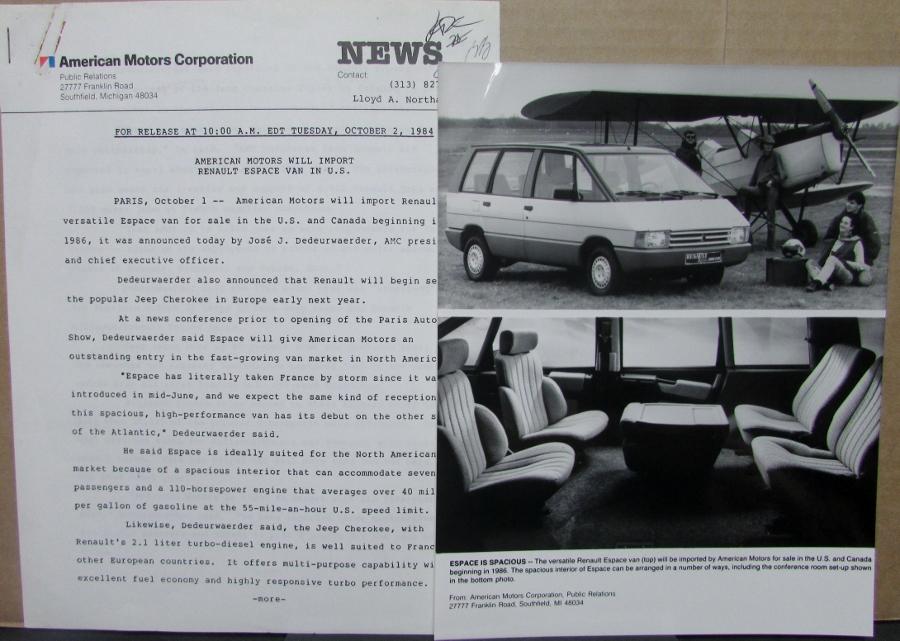
Wishing for the Espace to join the range alongside the Alliance, Encore, and Fuego, AMC tried to convince the Régie Renault that the minivan had its place in the United States. Faced with a lack of response from Boulogne Billancourt, AMC communicated discreetly around the Espace in early October 1984, with a press release dated the 2nd, using photos of the European version, announcing the future importation of the Espace to the United States and Canada starting with the 1986 model year. Had AMC obtained an agreement from the Régie Renault? Or was it a nudge to be heard, or even to test the reaction of North American customers.
Despite AMC's determination, Renault halted the project to import the Espace to North America in March 1985; at the very least, it was officially postponed to 1986-1987 with the arrival of the facelifted Espace. Several justifications can be advanced: the fact that Renault was in a delicate financial position, with several product plans undermining margins (the launches of the Supercinq, R25, and Alpine GTA during 1984-1985 which now had to be amortized, and the necessary projects for the future R19 and R21...), an abyssal debt that had to be repaid, a new factory in Canada, and the Premier project which also limited AMC's possibilities, not to mention a market reversal in the United States which turned customers away from compacts, led by the Alliance and Encore, which were the spearheads of the American range.
Also, the US Espace presented a puzzle for Renault: in the United States, the Chrysler Voyager was offered at an aggressive price that Renault could not compete with by producing the US Espace in France as initially planned: unfavorable exchange rate, high customs duties, and did Matra have the capacity to produce 15,000 Espaces per year dedicated solely to the North American market, while the Espace was gaining momentum in Europe (moreover, the Renault factory in Dieppe came to the rescue of the Matra factory in Romorantin for European Espace deliveries starting in 1988...). And producing the Espace entirely on American soil could only be done, on one hand, with Matra's agreement, and on the other, at the cost of an investment that neither Renault nor AMC could assume at the time.
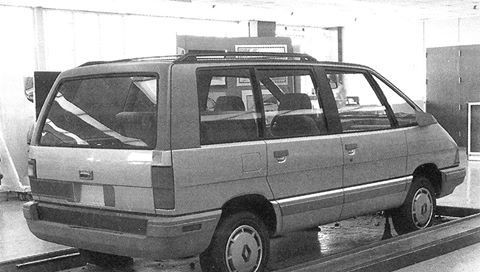
In 1986, the American Espace project returned to the table when Renault asked the AMC-Renault styling office to propose its version of the facelifted Espace, to which AMC responded with a full-scale model. Unfortunately, Renault management preferred to bet its funds on the project to Americanize the Alpine GTA, doubtless to mimic Japanese manufacturers who all offered a sports coupe in their range, but also a decision to avoid facing American minivans and their competitive prices. We know the rest: in early 1987, Renault sold AMC-Renault to Chrysler, sounding the death knell for the diamond manufacturer's American adventure... and with it, the Espace's adventure across the Atlantic.
(source: lautomobileancienne.com)
On the other side of the Atlantic, minivans arrived almost at the same time, with Chrysler and its Voyager leading in 1984, followed by Chevrolet with the Astro and Ford and its Aerostar, all in 1985. Later (but only in 1989), Pontiac followed with its Trans Sport. In North America, where vans were legion, the concept of the minivan seemed more in phase with the customer base. In the United States, Renault was present in the 1980s with its ally AMC; consequently, the Espace could have had a role to play on Uncle Sam's soil.
This was indeed the thought of AMC, Renault's American branch, which asked the French manufacturer to provide it with a copy of the Espace as soon as it was presented, to Americanize it and produce, as early as June 1984 (one month before the launch of its commercialization in France), a US version under the direction of Tom Scott. To meet local standards, the front headlights were replaced, reflectors were installed on the wings, and the front bumper was discreetly revised. Nevertheless, the size of the Espace was smaller than its rivals, and the absence of a sliding rear door could be a hindrance on the American market.
Wishing for the Espace to join the range alongside the Alliance, Encore, and Fuego, AMC tried to convince the Régie Renault that the minivan had its place in the United States. Faced with a lack of response from Boulogne Billancourt, AMC communicated discreetly around the Espace in early October 1984, with a press release dated the 2nd, using photos of the European version, announcing the future importation of the Espace to the United States and Canada starting with the 1986 model year. Had AMC obtained an agreement from the Régie Renault? Or was it a nudge to be heard, or even to test the reaction of North American customers.
Despite AMC's determination, Renault halted the project to import the Espace to North America in March 1985; at the very least, it was officially postponed to 1986-1987 with the arrival of the facelifted Espace. Several justifications can be advanced: the fact that Renault was in a delicate financial position, with several product plans undermining margins (the launches of the Supercinq, R25, and Alpine GTA during 1984-1985 which now had to be amortized, and the necessary projects for the future R19 and R21...), an abyssal debt that had to be repaid, a new factory in Canada, and the Premier project which also limited AMC's possibilities, not to mention a market reversal in the United States which turned customers away from compacts, led by the Alliance and Encore, which were the spearheads of the American range.
Also, the US Espace presented a puzzle for Renault: in the United States, the Chrysler Voyager was offered at an aggressive price that Renault could not compete with by producing the US Espace in France as initially planned: unfavorable exchange rate, high customs duties, and did Matra have the capacity to produce 15,000 Espaces per year dedicated solely to the North American market, while the Espace was gaining momentum in Europe (moreover, the Renault factory in Dieppe came to the rescue of the Matra factory in Romorantin for European Espace deliveries starting in 1988...). And producing the Espace entirely on American soil could only be done, on one hand, with Matra's agreement, and on the other, at the cost of an investment that neither Renault nor AMC could assume at the time.
In 1986, the American Espace project returned to the table when Renault asked the AMC-Renault styling office to propose its version of the facelifted Espace, to which AMC responded with a full-scale model. Unfortunately, Renault management preferred to bet its funds on the project to Americanize the Alpine GTA, doubtless to mimic Japanese manufacturers who all offered a sports coupe in their range, but also a decision to avoid facing American minivans and their competitive prices. We know the rest: in early 1987, Renault sold AMC-Renault to Chrysler, sounding the death knell for the diamond manufacturer's American adventure... and with it, the Espace's adventure across the Atlantic.
(source: lautomobileancienne.com)

X58 - The Renault Premier
At Renault, the highly mediatized Opron was not unanimously liked.
He had a tendency to claim authorship of certain projects to the press, and internally, his maneuvering did not make him very popular.
That is why he preferred to move away and coordinate design internationally, mainly with American Motors but also with subcontractors, such as Ital Design.
With Dick Teague at AMC, they would together develop the idea of an advanced design studio in the United States. Teague even convinced him to open it in New York rather than in California.
The development program for the X58 – the Premier – and its coupe derivative X59 (Allure) – was launched in the early 1980s. Renault / AMC needed to sell a car larger than the Renault Alliance, allowing them to compete in the “mid-size” category, a key category in the USA. The future car would be studied jointly by the AMC and Renault teams.
The Premier was developed on a widened and lengthened Renault 21 base with a longitudinal engine. The first test mules used a modified Renault 25 body (see photo).
Mules are part of the first running prototypes. These are followed by “form” prototypes using the bodywork of the future vehicle.
Jean-Marie Réveillé specifies in his article that “the car will be front-wheel drive.
But which base to choose? Redo everything? Start from the Renault 25 released in 1984? Start from the Renault 21, which was smaller, and its future American version, the Medallion? Redoing everything from a blank sheet was out of the question; finances were at an all-time low with the record deficit of 1983. So starting from the Renault 21 remained the only solution. For the Renault 25, the question was quickly settled. “Clinic” tests had taken place in the USA with catastrophic results. Redoing the entire design and structure from the Renault 25 was also too expensive. […] So how do you make a Premier from a Renault 21? […] the Renault 21 is cut twice. Once across to lengthen it and reach a length of 4.89m by increasing the wheelbase from 2600mm to 2692mm. Interior space, particularly in the rear, will be top-notch and the trunk immense (460dm3). Another time lengthwise, to widen it and bring it up to the standard of its competitors. The rear axle, a copy of the Renault 21’s, is however not interchangeable, its transverse profile being longer to increase the rear track. ”
Two engines were selected for this new high-end model. A 111 hp 2.5L 4-cylinder of AMC origin and the 150 hp 3.0L PRV (Peugeot Renault Volvo) V6. These two engines were paired with an automatic gearbox. The Premier measured 4.89m long and 1.77m wide. At its launch, it was available in 3 trim levels: DL, LX, and the top-of-the-range ES. Its competitors at the time were the Audi 5000, Saab 9000, Oldsmobile Cutlass Ciera, Ford Taurus, Toyota Camry, and Honda Accord.
Unfortunately, on March 9, 1987, Chrysler signed a letter of intent in which the manufacturer announced the acquisition of AMC. Renault accepted this proposal and abandoned the American market.
The Renault Medallion (US version of the Renault 21) and Premier were then integrated into the new Eagle brand and became the Eagle Medallion and Eagle Premier. The Allure coupe project was halted, as were the US programs for the Renault Espace and the Alpine GTA.
In June 1987, it was done: the large American Renault sedan, 4.90 meters long, was ready and named “Premier”. Renault built a brand new factory with AMC in Bramalea, Canada, where a pre-series of about 200 copies was produced so that the North American press could get to know the model. The media were satisfied but did not find the car exceptional. What was most shocking was that the car would not be sold under the Renault name.
Indeed, things were going badly for the French manufacturer and the CEO, Raymond Levy, put an end to the American adventure. AMC/Jeep, as well as the new Premier and the brand-new factory, would be sold to Chrysler.
The Premier appeared in showrooms in 1987, but under the badge of the new Eagle brand.
Sources:
With Dick Teague at AMC, they would together develop the idea of an advanced design studio in the United States. Teague even convinced him to open it in New York rather than in California.
The development program for the X58 – the Premier – and its coupe derivative X59 (Allure) – was launched in the early 1980s. Renault / AMC needed to sell a car larger than the Renault Alliance, allowing them to compete in the “mid-size” category, a key category in the USA. The future car would be studied jointly by the AMC and Renault teams.
The Premier was developed on a widened and lengthened Renault 21 base with a longitudinal engine. The first test mules used a modified Renault 25 body (see photo).
Mules are part of the first running prototypes. These are followed by “form” prototypes using the bodywork of the future vehicle.
Jean-Marie Réveillé specifies in his article that “the car will be front-wheel drive.
But which base to choose? Redo everything? Start from the Renault 25 released in 1984? Start from the Renault 21, which was smaller, and its future American version, the Medallion? Redoing everything from a blank sheet was out of the question; finances were at an all-time low with the record deficit of 1983. So starting from the Renault 21 remained the only solution. For the Renault 25, the question was quickly settled. “Clinic” tests had taken place in the USA with catastrophic results. Redoing the entire design and structure from the Renault 25 was also too expensive. […] So how do you make a Premier from a Renault 21? […] the Renault 21 is cut twice. Once across to lengthen it and reach a length of 4.89m by increasing the wheelbase from 2600mm to 2692mm. Interior space, particularly in the rear, will be top-notch and the trunk immense (460dm3). Another time lengthwise, to widen it and bring it up to the standard of its competitors. The rear axle, a copy of the Renault 21’s, is however not interchangeable, its transverse profile being longer to increase the rear track. ”
Two engines were selected for this new high-end model. A 111 hp 2.5L 4-cylinder of AMC origin and the 150 hp 3.0L PRV (Peugeot Renault Volvo) V6. These two engines were paired with an automatic gearbox. The Premier measured 4.89m long and 1.77m wide. At its launch, it was available in 3 trim levels: DL, LX, and the top-of-the-range ES. Its competitors at the time were the Audi 5000, Saab 9000, Oldsmobile Cutlass Ciera, Ford Taurus, Toyota Camry, and Honda Accord.
Unfortunately, on March 9, 1987, Chrysler signed a letter of intent in which the manufacturer announced the acquisition of AMC. Renault accepted this proposal and abandoned the American market.
The Renault Medallion (US version of the Renault 21) and Premier were then integrated into the new Eagle brand and became the Eagle Medallion and Eagle Premier. The Allure coupe project was halted, as were the US programs for the Renault Espace and the Alpine GTA.
In June 1987, it was done: the large American Renault sedan, 4.90 meters long, was ready and named “Premier”. Renault built a brand new factory with AMC in Bramalea, Canada, where a pre-series of about 200 copies was produced so that the North American press could get to know the model. The media were satisfied but did not find the car exceptional. What was most shocking was that the car would not be sold under the Renault name.
Indeed, things were going badly for the French manufacturer and the CEO, Raymond Levy, put an end to the American adventure. AMC/Jeep, as well as the new Premier and the brand-new factory, would be sold to Chrysler.
The Premier appeared in showrooms in 1987, but under the badge of the new Eagle brand.
Sources:


X59 - Une Renault qui a de l'... Allure
In the basket sold to Chrysler, Renault included the Premier sedan, a Canadian factory, the Jeep brand which served as a dowry, but also a strange prototype of a coupe derived from the Premier.
The machine even had a name: Allure.
Large coupes have always been popular in the USA, and the Allure therefore represented an interesting solution for Renault (and later for Eagle…) to broaden the local product range. The car was normally supposed to arrive on the market in late 1988 or early 1989. But the “marketers” at Chrysler decided otherwise...
A copy of this particular car has been kept in the FCA Heritage collection in Detroit. A white model, from which the Renault logos have been erased. No “diamond” on the grille or the steering wheel, then. But clues to the model's origin are visible, such as the ignition keys, which come from Renault. Under the bodywork, this coupe also hides several parts common with the Premier. The dashboard is also taken from the Premier, although it has a specific center console and a red-digit display. The model preserved at FCA Heritage features the well-known 3.0 V6 engine, paired with a 5-speed manual gearbox. At the time, designers had certainly also considered adding the 2.5 V6 turbo block to the range.
As for the seats, they are specific here, with nice integrated headrests. Just like the Premier, this Allure also featured a large trunk. And this unique surviving copy wears elegant light-alloy wheels, which were later also fitted to the Premier. Aerodynamically shaped mirrors and the fixed front part of the door windows are also noted.
The rear windows wrap around the tailgate, giving the effect of a floating roof when seen from the rear. The decision not to integrate this model into the Eagle range seems somewhat illogical. Perhaps the American manufacturer feared internal competition within its group?
On the other side of the Atlantic, when production ceased at the Île Seguin in Billancourt at the end of 1992, the factory's collection was limited. But, surprise, it included an Allure prototype. The model was painted dark grey but lacked headlights and indicators. And while the Chrysler version sports black bumpers and shiny sides, those of the Renault proto were simply painted in the body color, as with the Premier's LX finish. And here too, the logos were missing. This grey car has since disappeared and is therefore not part of the current Renault Classic collection. It can be concluded that it must have been destroyed, thus throwing into oblivion the last trace of Renault's history in the United States…
(source : Losange Magazine)
Large coupes have always been popular in the USA, and the Allure therefore represented an interesting solution for Renault (and later for Eagle…) to broaden the local product range. The car was normally supposed to arrive on the market in late 1988 or early 1989. But the “marketers” at Chrysler decided otherwise...
A copy of this particular car has been kept in the FCA Heritage collection in Detroit. A white model, from which the Renault logos have been erased. No “diamond” on the grille or the steering wheel, then. But clues to the model's origin are visible, such as the ignition keys, which come from Renault. Under the bodywork, this coupe also hides several parts common with the Premier. The dashboard is also taken from the Premier, although it has a specific center console and a red-digit display. The model preserved at FCA Heritage features the well-known 3.0 V6 engine, paired with a 5-speed manual gearbox. At the time, designers had certainly also considered adding the 2.5 V6 turbo block to the range.
As for the seats, they are specific here, with nice integrated headrests. Just like the Premier, this Allure also featured a large trunk. And this unique surviving copy wears elegant light-alloy wheels, which were later also fitted to the Premier. Aerodynamically shaped mirrors and the fixed front part of the door windows are also noted.
The rear windows wrap around the tailgate, giving the effect of a floating roof when seen from the rear. The decision not to integrate this model into the Eagle range seems somewhat illogical. Perhaps the American manufacturer feared internal competition within its group?
On the other side of the Atlantic, when production ceased at the Île Seguin in Billancourt at the end of 1992, the factory's collection was limited. But, surprise, it included an Allure prototype. The model was painted dark grey but lacked headlights and indicators. And while the Chrysler version sports black bumpers and shiny sides, those of the Renault proto were simply painted in the body color, as with the Premier's LX finish. And here too, the logos were missing. This grey car has since disappeared and is therefore not part of the current Renault Classic collection. It can be concluded that it must have been destroyed, thus throwing into oblivion the last trace of Renault's history in the United States…
(source : Losange Magazine)



contact@renaultalliance.net +33 9 72 45 10 13 (answering machine) Cookie Management Data Protection and Legal Notices
Renault Alliance Club Passion 2002 - 2026