
1983 :the Renault Alliance is elected "Car of the Year".
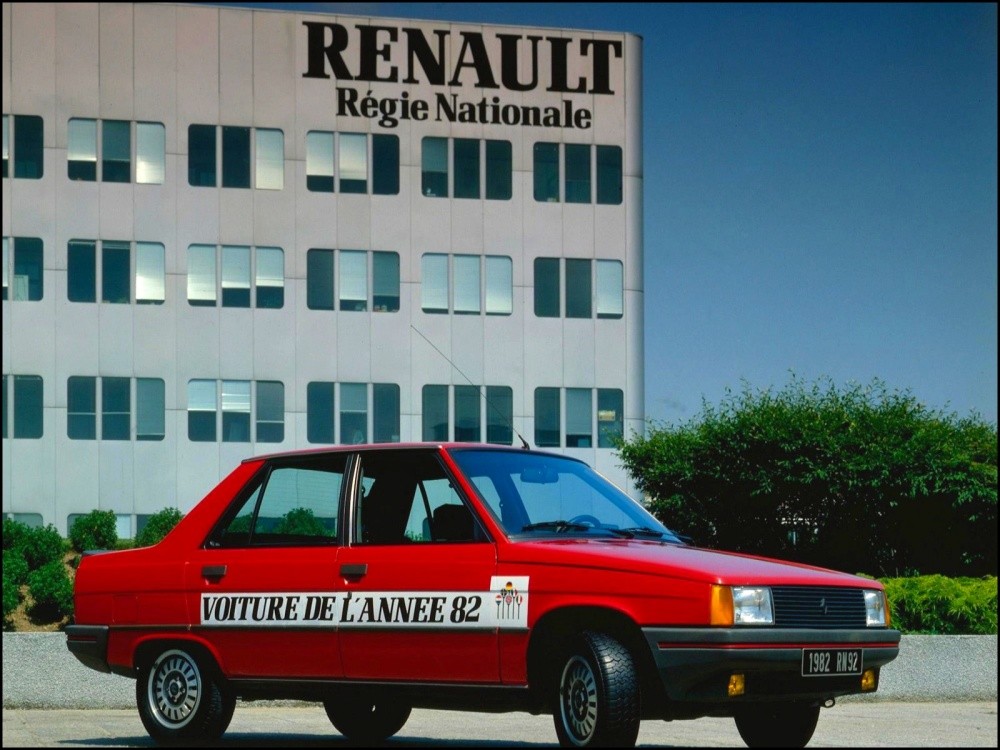
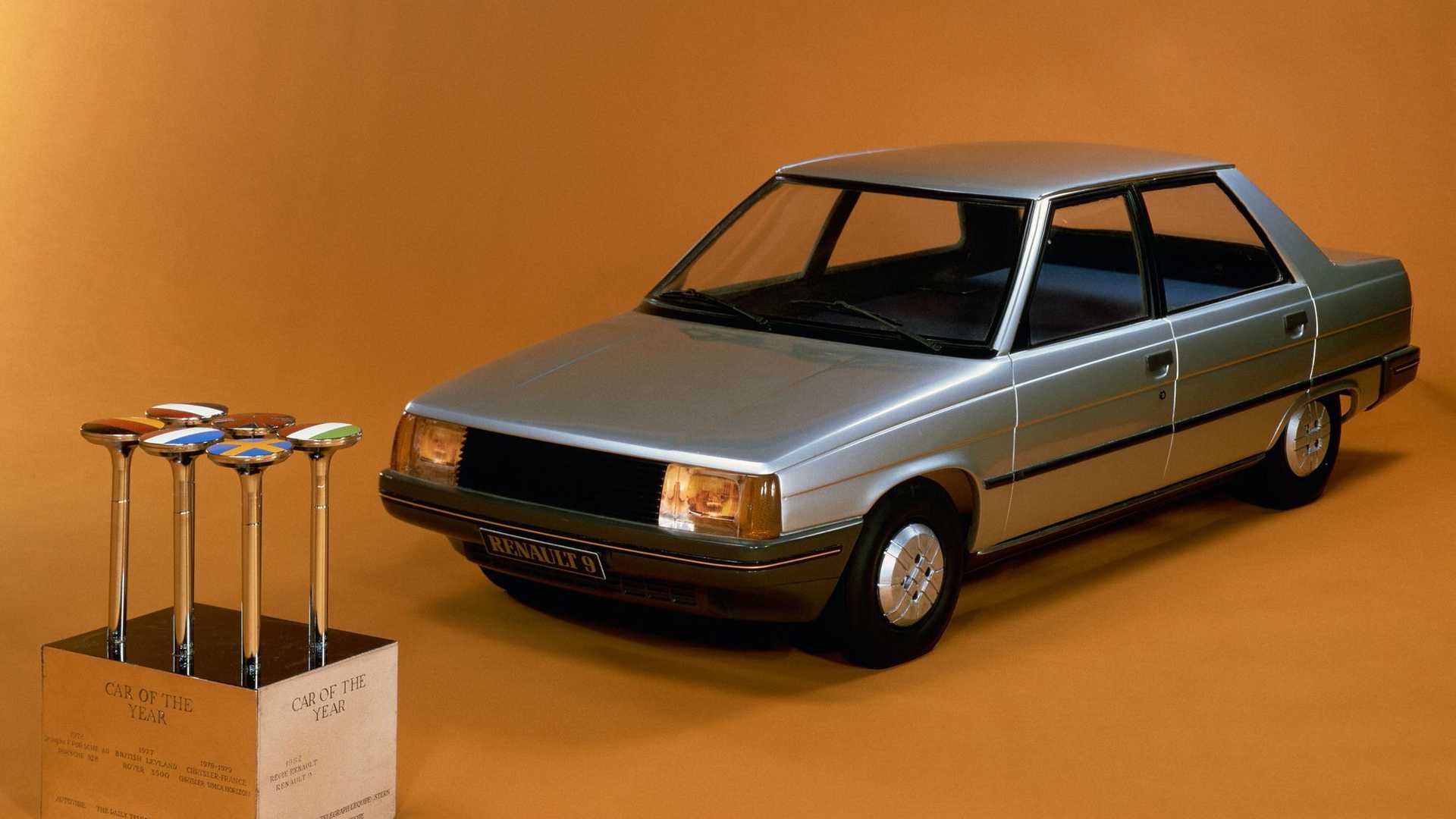
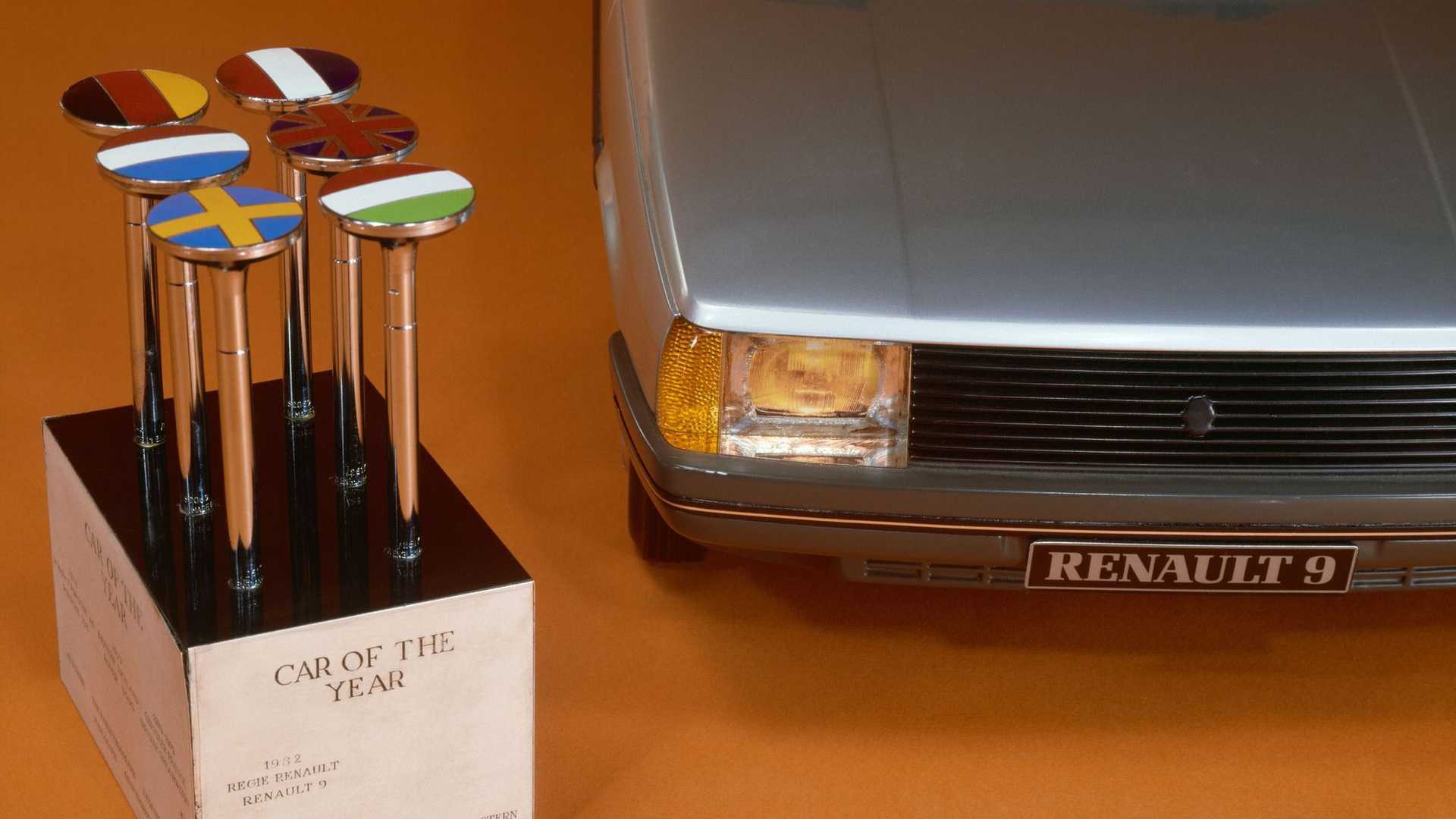
In Europe, the Renault R9 is awarded

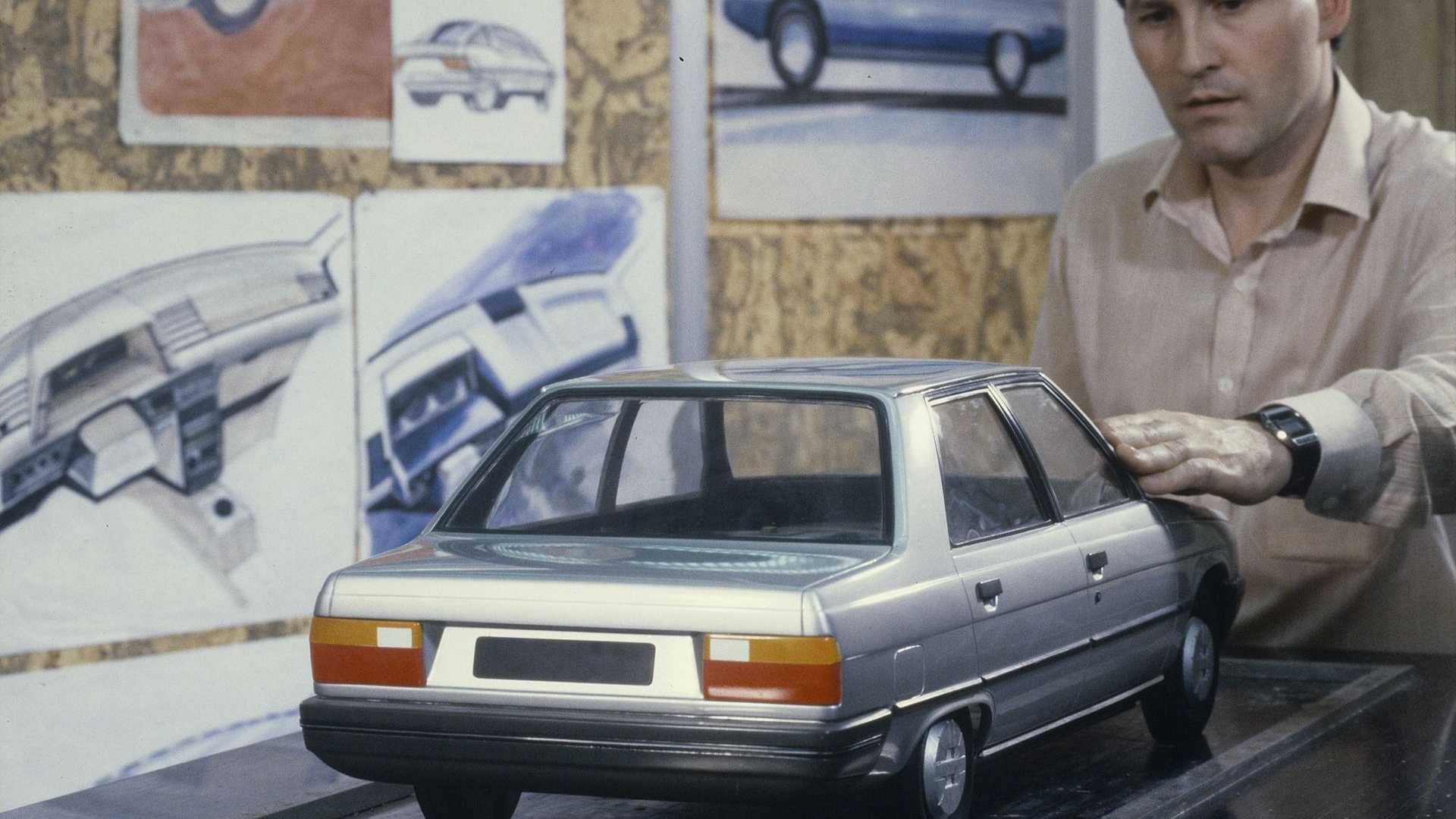
Presented at the Frankfurt Motor Show in 1981, the Renault 9 completed Renault's offering in a key segment of the European market: the lower part of the mid-range (which represented around 30% of the market). It targeted customers looking for a versatile family car with moderate running costs.
The Renault 9 inaugurated a truly global product policy. Designed for the European market, its economical qualities gave it an even more international career following the second oil shock. The Renault 9 would be built in all regions of the world.
The Renault 9 was voted "Car of the Year 1982" by a jury of 52 European journalists.
52 professional automotive journalists, eminent and undisputed, representing 17 countries. There were 10 candidates.
All were new production cars, representing the elite of global automotive manufacturing. Each journalist tried, tested, and compared the 10 candidates for the title. Each journalist rated general design, comfort, safety, economy in use, road qualities, performance, functionality, driving pleasure, and price. - In good conscience - they voted and signed.
With 64.5% of the votes, the Renault 9 was elected "Car of the Year 1982". Learn more
The Renault 9 inaugurated a truly global product policy. Designed for the European market, its economical qualities gave it an even more international career following the second oil shock. The Renault 9 would be built in all regions of the world.
The Renault 9 was voted "Car of the Year 1982" by a jury of 52 European journalists.
52 professional automotive journalists, eminent and undisputed, representing 17 countries. There were 10 candidates.
All were new production cars, representing the elite of global automotive manufacturing. Each journalist tried, tested, and compared the 10 candidates for the title. Each journalist rated general design, comfort, safety, economy in use, road qualities, performance, functionality, driving pleasure, and price. - In good conscience - they voted and signed.
With 64.5% of the votes, the Renault 9 was elected "Car of the Year 1982". Learn more

Consecration in the United States: Motor Trend "Car of the Year"!
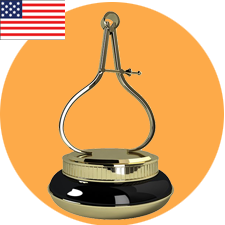
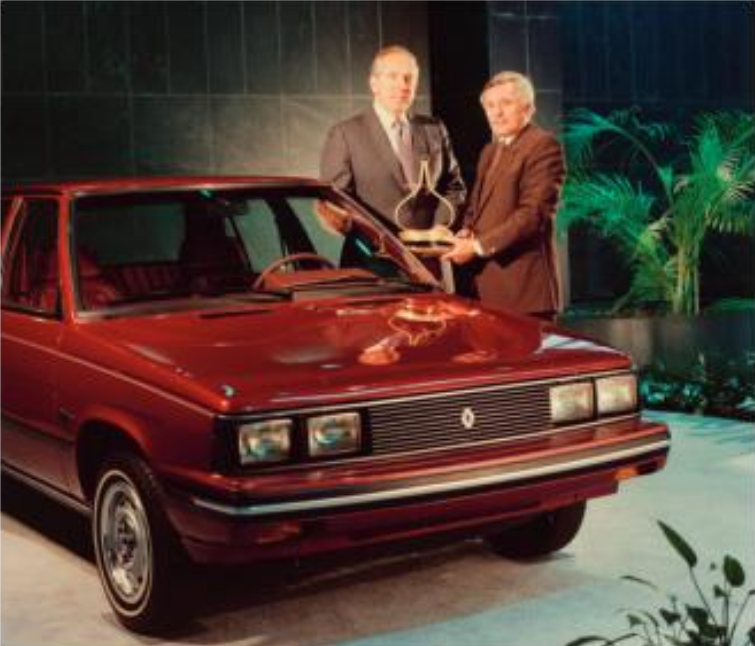
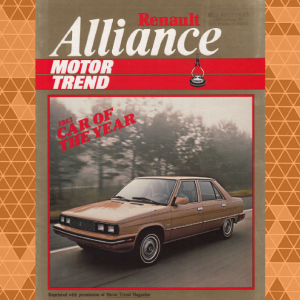
Although this award normally goes each year to exclusively American production, in 1983 the Renault Alliance won the prestigious "Car of the Year" award, granted by the magazine "Motor Trend". Motor Trend even declared: "The Alliance may well be the best-assembled first-year car we've ever seen. Way to go Renault!"
For the record, out of the 8 categories tested for the Motor Trend "Car of the Year" ranking, the Alliance finished first 6 times and second 2 times.
It should be noted that this result, quite unexpected in the land of the automobile, was criticized for years.
In the following article, titled "Why the Awful, No Good Renault Alliance Was Our 1983 Car of the Year. Allow us to defend the indefensible.", Motor Trend explains again why this award was justified at the time, in the context of that era and the candidates involved. Positive to some extent, but not entirely...
For the record, out of the 8 categories tested for the Motor Trend "Car of the Year" ranking, the Alliance finished first 6 times and second 2 times.
It should be noted that this result, quite unexpected in the land of the automobile, was criticized for years.
In the following article, titled "Why the Awful, No Good Renault Alliance Was Our 1983 Car of the Year. Allow us to defend the indefensible.", Motor Trend explains again why this award was justified at the time, in the context of that era and the candidates involved. Positive to some extent, but not entirely...


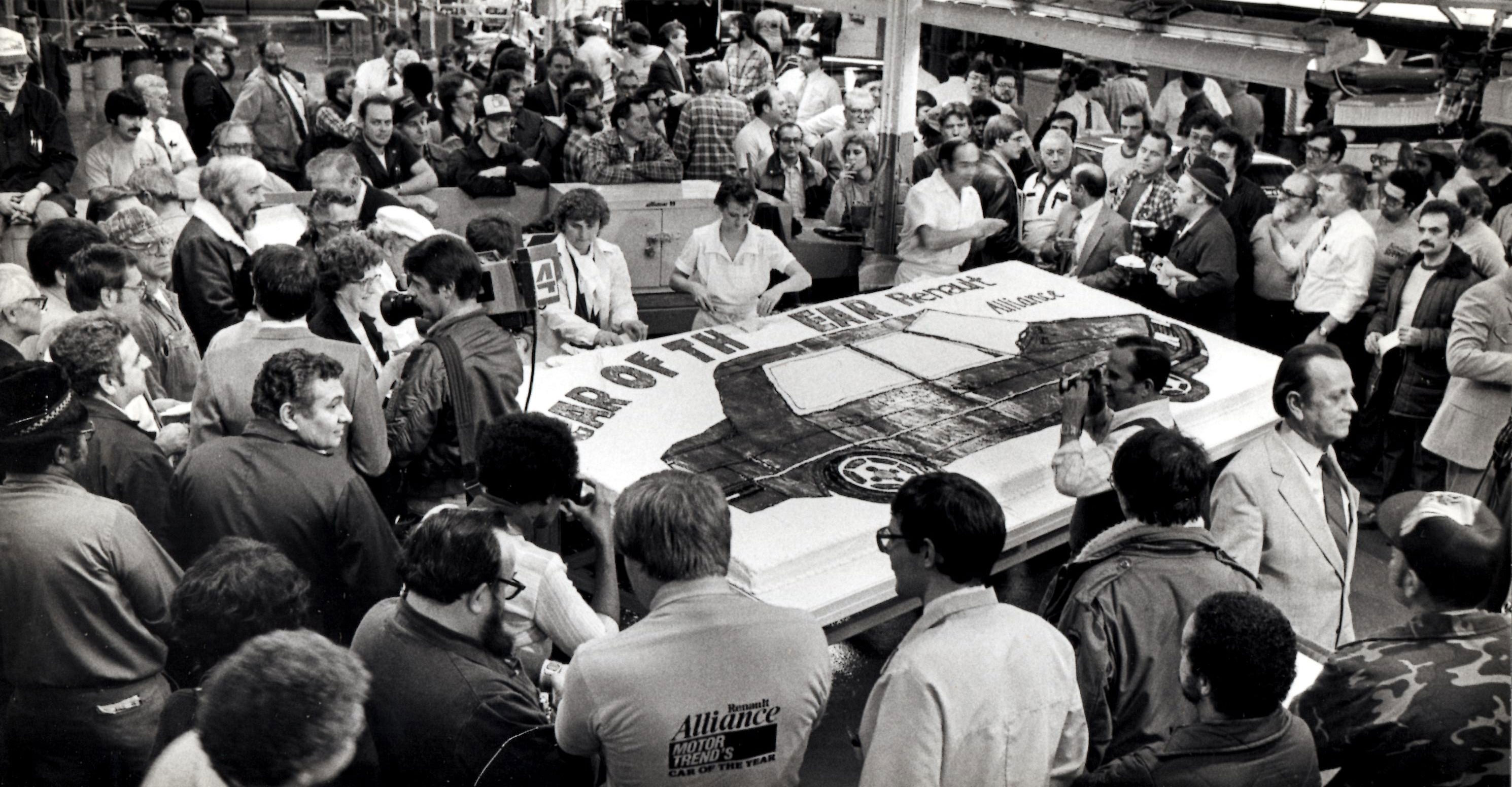
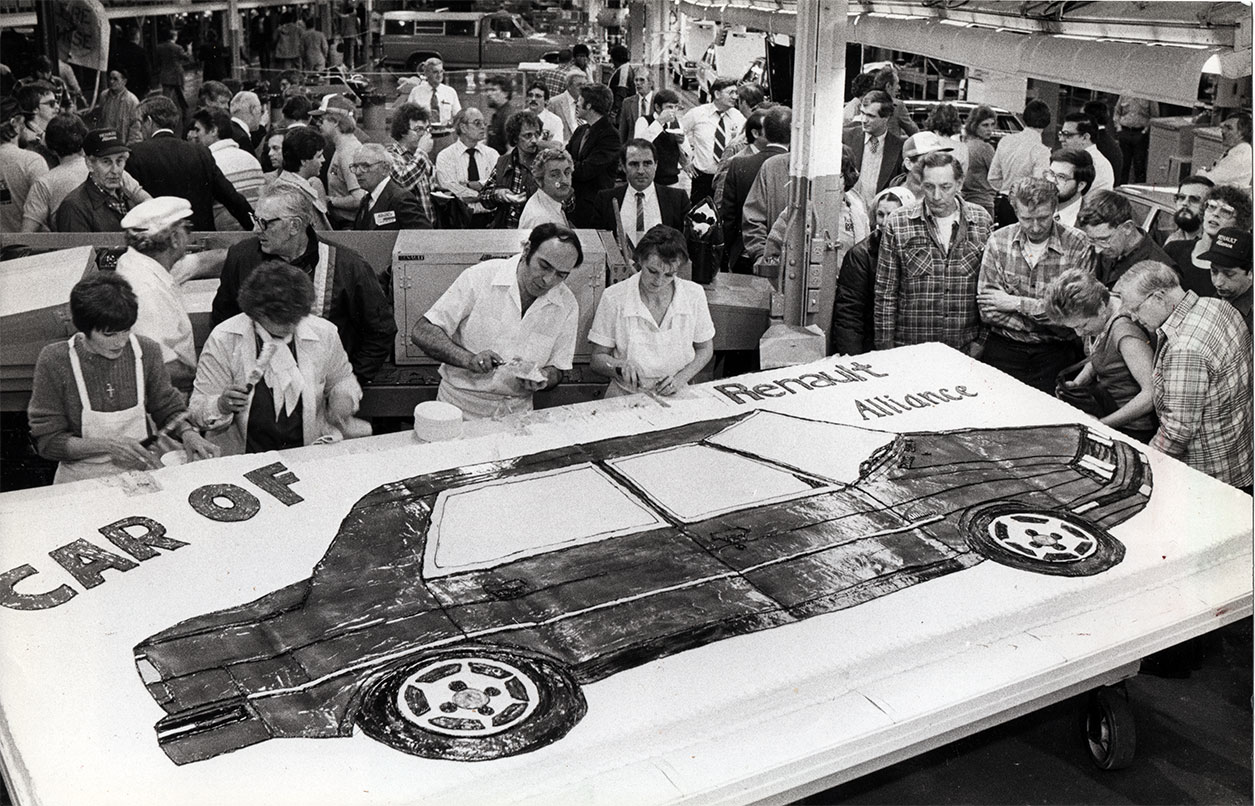
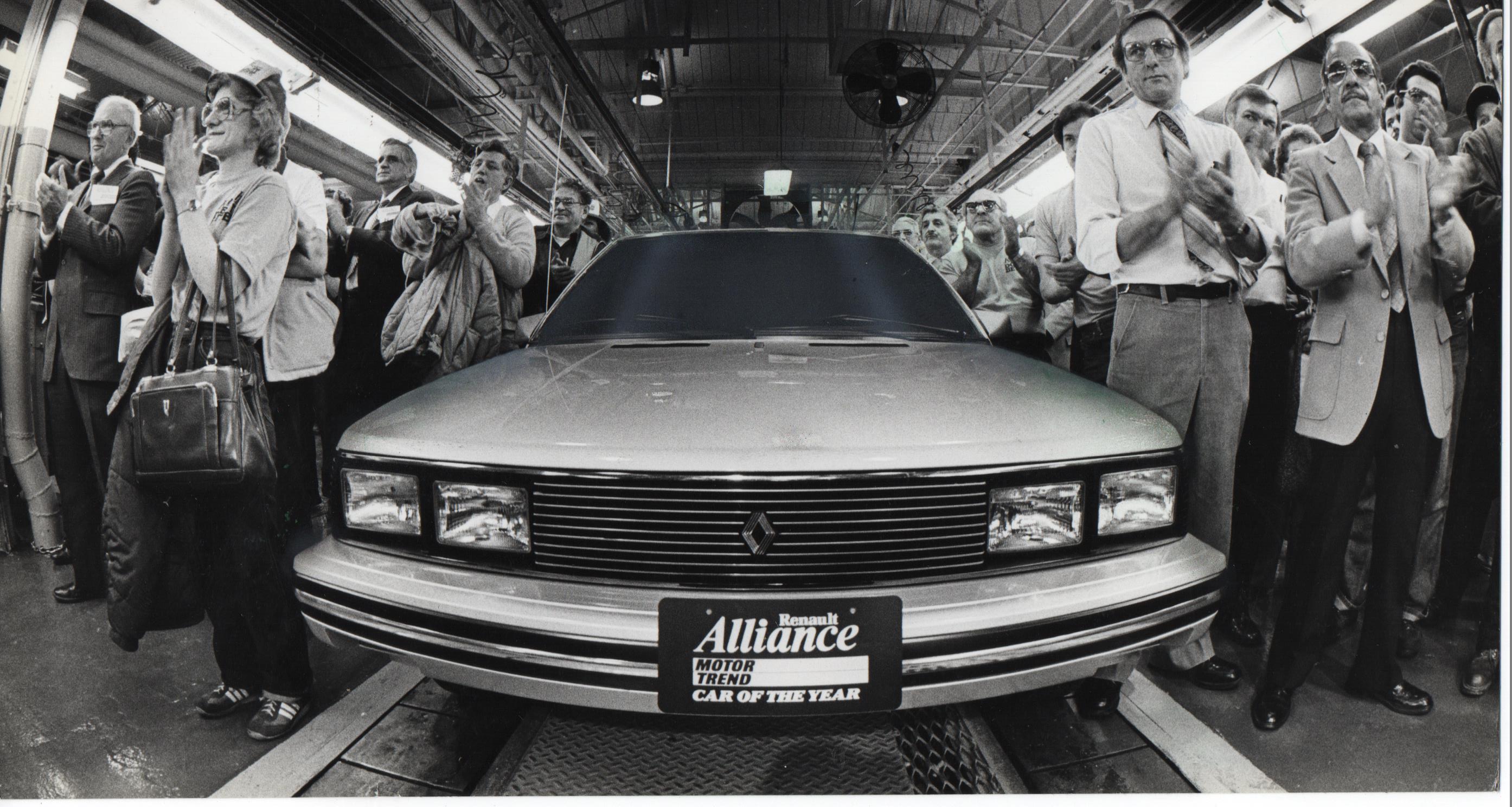
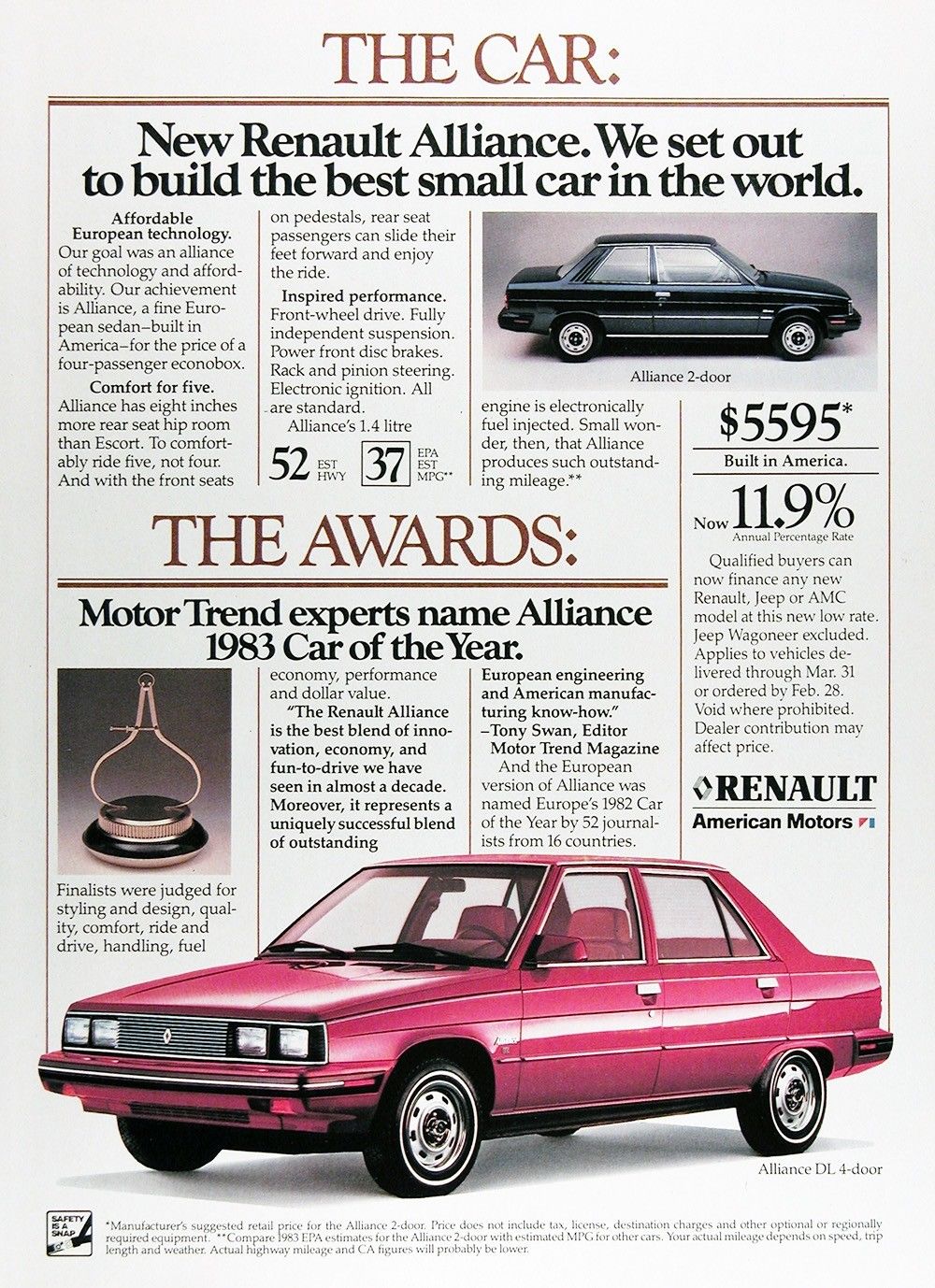
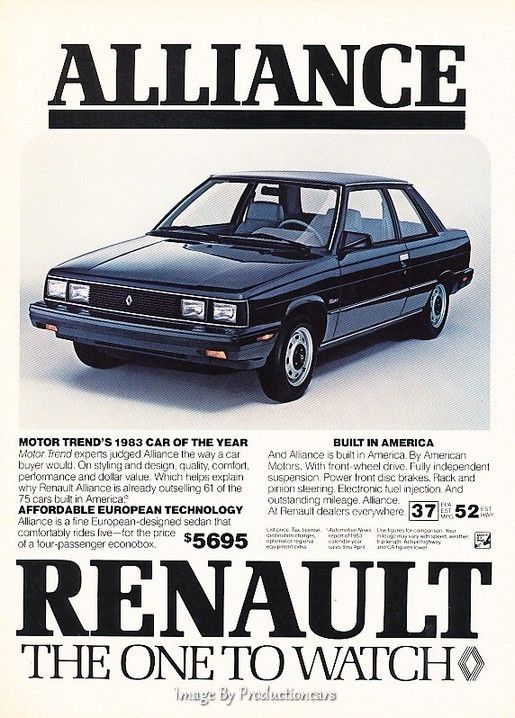
Why the awful and poor Renault Alliance was elected "Car of the Year" 1983. Allow us to defend the indefensible.
Source : MotorTrend écrit par Aaron Gold
The MotorTrend "Car of the Year" award was created about 70 years ago. We have been criticized for a few winners, such as the 1974 Ford Mustang II (which was the right car for its time) and the 1991 Chevrolet Caprice. However, few of our winners have sparked as much contempt as our 1983 Car of the Year, the AMC Renault Alliance.
Honestly, we cannot help but cringe when people bring up the Alliance, as an automotive executive recently did. Yet, looking back and reviewing history, we believe our early-1980s predecessors made the right choice. Step into the Motor Trend time machine and let us revisit the circumstances surrounding the Alliance's 1983 "Car of the Year" victory.
Times change...
Let us begin with a brief overview of what was happening at the end of 1982 when we conducted our tests to select the 1983 Car of the Year.
- First, fuel economy was of enormous importance. Gasoline prices had doubled since the 1979 fuel crisis. It had caused rationing and endless lines at service stations.
- Second, pop culture loved everything European, and especially anything French.
- And third, and most importantly, the competition against the Alliance was fairly weak.
In 1983, MotorTrend still had separate Car of the Year awards for domestic and imported vehicles. The Alliance, built at the American Motors Corporation plant in Kenosha (Wisconsin), with 72% American parts, was considered local production, therefore domestic. The industry had not yet emerged from the "malaise era" and the Alliance faced some of the weakest contenders in the history of the "Car Of The Year" award.
It competed against only six other cars, and with one exception, none were particularly outstanding.
The MotorTrend "Car of the Year" award was created about 70 years ago. We have been criticized for a few winners, such as the 1974 Ford Mustang II (which was the right car for its time) and the 1991 Chevrolet Caprice. However, few of our winners have sparked as much contempt as our 1983 Car of the Year, the AMC Renault Alliance.
Honestly, we cannot help but cringe when people bring up the Alliance, as an automotive executive recently did. Yet, looking back and reviewing history, we believe our early-1980s predecessors made the right choice. Step into the Motor Trend time machine and let us revisit the circumstances surrounding the Alliance's 1983 "Car of the Year" victory.
Times change...
Let us begin with a brief overview of what was happening at the end of 1982 when we conducted our tests to select the 1983 Car of the Year.
- First, fuel economy was of enormous importance. Gasoline prices had doubled since the 1979 fuel crisis. It had caused rationing and endless lines at service stations.
- Second, pop culture loved everything European, and especially anything French.
- And third, and most importantly, the competition against the Alliance was fairly weak.
In 1983, MotorTrend still had separate Car of the Year awards for domestic and imported vehicles. The Alliance, built at the American Motors Corporation plant in Kenosha (Wisconsin), with 72% American parts, was considered local production, therefore domestic. The industry had not yet emerged from the "malaise era" and the Alliance faced some of the weakest contenders in the history of the "Car Of The Year" award.
It competed against only six other cars, and with one exception, none were particularly outstanding.

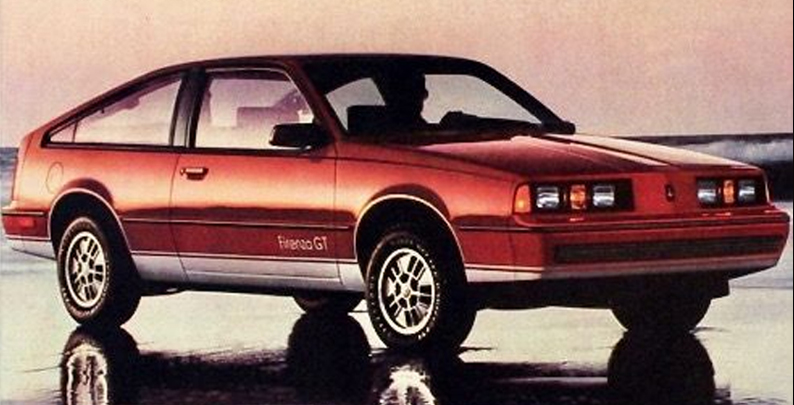
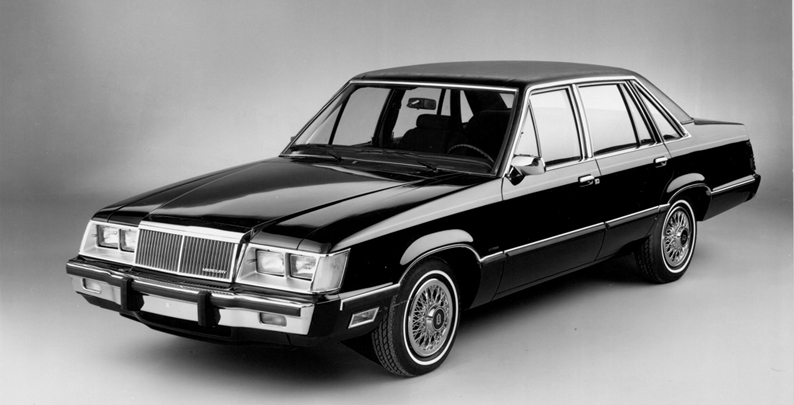
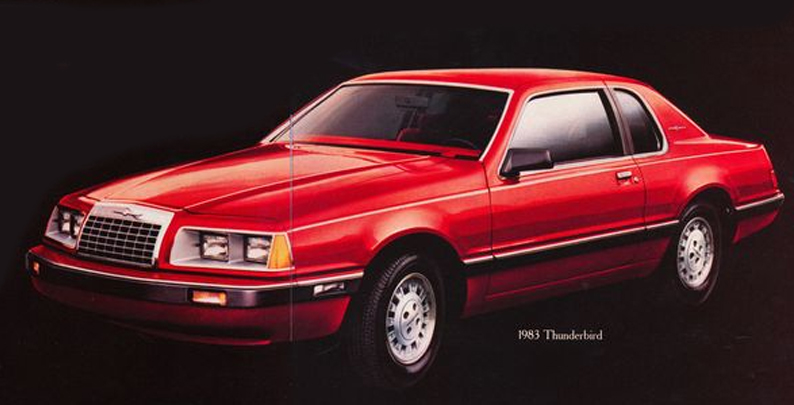
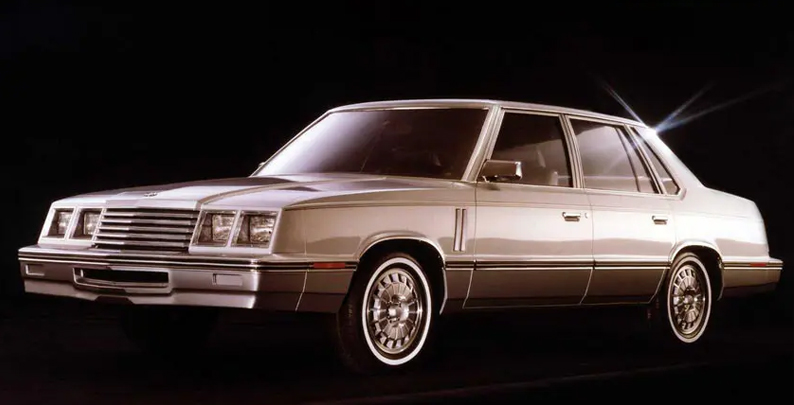
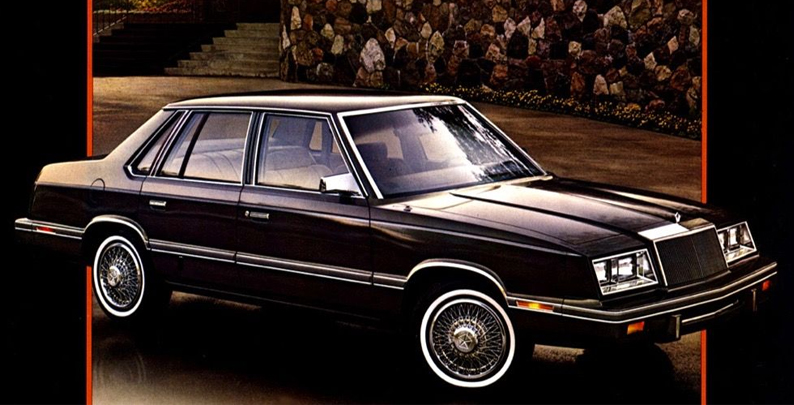
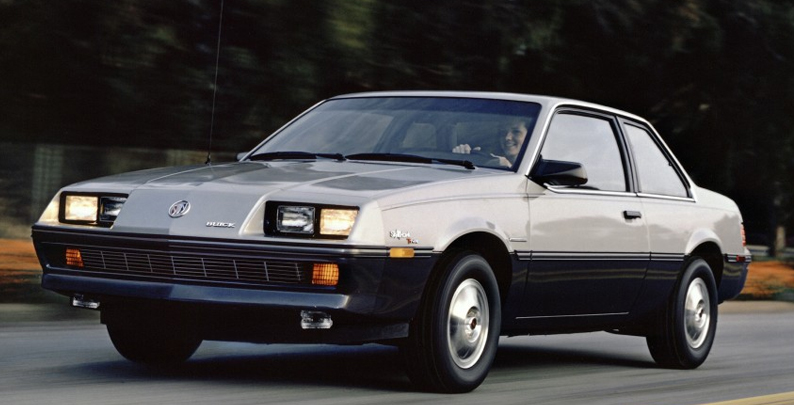
The contenders for the 1983 Car of the Year
- General Motors entered two cars, the Buick Skyhawk in T-Type "European-style" form and the Oldsmobile Firenza GT. (These were rebadged versions of the Chevrolet Cavalier, which competed for the "Car of the Year" in 1982 and finished 7th out of 11 in a surprisingly strong field.)
- Chrysler submitted its new E-Class and the Dodge 600 ES, stretched versions of the "K-car" that won the 1981 "Car of the Year". They marked the beginning of the proliferation of "K-car" platforms, which we quickly grew tired of.
Ford, for its part, entered a rather interesting contender: the 1983 Thunderbird, with a rounded aerodynamic style that we described as "one of the most radical 'restylings' to come out of Detroit factories in the past 25 years."
Unfortunately for Ford (and perhaps fortunately for AMC/Renault), at the time we conducted our Car of the Year tests, the T-Bird was only available with a 3.8-liter V6 producing 114 horsepower and an automatic transmission. The 4.9 L V8 (also called 5.0 L by Ford) with a five-speed manual transmission that would exploit the Thunderbird's full potential was scheduled several months later.
Ford Motor Corporation also submitted the Mercury Marquis Brougham, recently underpowered on the Fox platform... truly soporific.
AMC-Renault becomes Americanized!
Against these competitors, the AMC/Renault Alliance was an intriguing proposition.
AMC partnered with Renault in the late 1970s; Renault wanted access to a dealer network in the United States and AMC needed money. Their first joint product was the Alliance, a version of the European-market "Renault 9", reworked and restyled to meet American safety standards. Riding the early-1980s wave of enthusiasm for everything French, the car was badged Renault, relegating the AMC logo to a small sticker placed on the rear window.
Although it was considered a "local American" car, the Alliance was very European: its 1.4-liter engine produced only 55 horsepower, but it featured fuel injection (Chrysler and Ford competitors were carbureted) and promised remarkable fuel economy. The Alliance was also inexpensive, with a base price of $6,020 (about $17,000 in 2022 dollars), placing it between subcompacts like the Chevrolet Chevette and Ford Escort and compacts like the Cavalier and Tempo. Instead of sending a top-of-the-range model for Car of the Year, AMC submitted a mid-range Alliance DL with a five-speed manual transmission. Priced at $6,905 (about $20,000 in 2022), it was the bargain of the "Car Of The Year" contenders.

The Renault Alliance performs during testing
During our tests, the Alliance rose to the top, which is not surprising given that it was the lightest vehicle in the group (the only car under one ton...) and the only one with fully independent suspension. It had the best grip (0.75 g), the shortest stopping distance from 60 mph (about 100 km/h), and the best time in our 600-foot (about 180 meters) slalom at 6.73 seconds. In our fuel-economy loop, the Alliance achieved 37.09 mpg (6.34 L/100 km), just behind the Skyhawk’s 38.56 mpg (6.09 L/100 km).
The only test where the Renault was clearly outclassed was acceleration, where it struggled to reach 60 mph (about 100 km/h) in an agonizing 14.6 seconds and completed the quarter mile (400 meters) in 19.58 seconds at 68.4 mph (110 km/h).
Keep in mind that the fastest car in the contender group was the Dodge 600 ES — 94 hp 2.2-liter four-cylinder, five-speed manual — which recorded a 12.1-second 0–60 mph (0–100 km/h) time and an 18-second quarter mile.
French Roll
The Alliance performed (relatively) well in our subjective tests. Visually, we liked the way AMC styling chief "Dick Teague" and his team integrated 5 mph bumpers (mandated by the federal government) without ruining the appearance of the Renault 9. Unlike its overly chromed competitors, the Alliance was authentically euro-chic.
We judged the handling to be very French. Body roll was so extreme that we thought the door handles might scrape the curb, but the Alliance had adequate grip and balance, and its steering was precise, although the power assistance (unnecessary, in our opinion) dulled feedback. The ride was surprisingly comfortable, and in a pre-Car Of The Year review we wrote: "The Alliance delivers sensations similar to those of an early Peugeot 504 or — dare we say it? — a Citroën SM. Without the porpoising (seasickness)."
The Alliance quickly takes the lead
When we totaled the scores — we used a convoluted points system at the time — the Renault came out on top.
It ranked first in the subjective categories of style and design, comfort and convenience, ride and driving, price, and, believe it or not, quality control. It placed second in the handling and fuel economy categories, behind the Thunderbird and the Skyhawk, respectively.
- General Motors entered two cars, the Buick Skyhawk in T-Type "European-style" form and the Oldsmobile Firenza GT. (These were rebadged versions of the Chevrolet Cavalier, which competed for the "Car of the Year" in 1982 and finished 7th out of 11 in a surprisingly strong field.)
- Chrysler submitted its new E-Class and the Dodge 600 ES, stretched versions of the "K-car" that won the 1981 "Car of the Year". They marked the beginning of the proliferation of "K-car" platforms, which we quickly grew tired of.
Ford, for its part, entered a rather interesting contender: the 1983 Thunderbird, with a rounded aerodynamic style that we described as "one of the most radical 'restylings' to come out of Detroit factories in the past 25 years."
Unfortunately for Ford (and perhaps fortunately for AMC/Renault), at the time we conducted our Car of the Year tests, the T-Bird was only available with a 3.8-liter V6 producing 114 horsepower and an automatic transmission. The 4.9 L V8 (also called 5.0 L by Ford) with a five-speed manual transmission that would exploit the Thunderbird's full potential was scheduled several months later.
Ford Motor Corporation also submitted the Mercury Marquis Brougham, recently underpowered on the Fox platform... truly soporific.
AMC-Renault becomes Americanized!
Against these competitors, the AMC/Renault Alliance was an intriguing proposition.
AMC partnered with Renault in the late 1970s; Renault wanted access to a dealer network in the United States and AMC needed money. Their first joint product was the Alliance, a version of the European-market "Renault 9", reworked and restyled to meet American safety standards. Riding the early-1980s wave of enthusiasm for everything French, the car was badged Renault, relegating the AMC logo to a small sticker placed on the rear window.
Although it was considered a "local American" car, the Alliance was very European: its 1.4-liter engine produced only 55 horsepower, but it featured fuel injection (Chrysler and Ford competitors were carbureted) and promised remarkable fuel economy. The Alliance was also inexpensive, with a base price of $6,020 (about $17,000 in 2022 dollars), placing it between subcompacts like the Chevrolet Chevette and Ford Escort and compacts like the Cavalier and Tempo. Instead of sending a top-of-the-range model for Car of the Year, AMC submitted a mid-range Alliance DL with a five-speed manual transmission. Priced at $6,905 (about $20,000 in 2022), it was the bargain of the "Car Of The Year" contenders.
The Renault Alliance performs during testing
During our tests, the Alliance rose to the top, which is not surprising given that it was the lightest vehicle in the group (the only car under one ton...) and the only one with fully independent suspension. It had the best grip (0.75 g), the shortest stopping distance from 60 mph (about 100 km/h), and the best time in our 600-foot (about 180 meters) slalom at 6.73 seconds. In our fuel-economy loop, the Alliance achieved 37.09 mpg (6.34 L/100 km), just behind the Skyhawk’s 38.56 mpg (6.09 L/100 km).
The only test where the Renault was clearly outclassed was acceleration, where it struggled to reach 60 mph (about 100 km/h) in an agonizing 14.6 seconds and completed the quarter mile (400 meters) in 19.58 seconds at 68.4 mph (110 km/h).
Keep in mind that the fastest car in the contender group was the Dodge 600 ES — 94 hp 2.2-liter four-cylinder, five-speed manual — which recorded a 12.1-second 0–60 mph (0–100 km/h) time and an 18-second quarter mile.
French Roll
The Alliance performed (relatively) well in our subjective tests. Visually, we liked the way AMC styling chief "Dick Teague" and his team integrated 5 mph bumpers (mandated by the federal government) without ruining the appearance of the Renault 9. Unlike its overly chromed competitors, the Alliance was authentically euro-chic.
We judged the handling to be very French. Body roll was so extreme that we thought the door handles might scrape the curb, but the Alliance had adequate grip and balance, and its steering was precise, although the power assistance (unnecessary, in our opinion) dulled feedback. The ride was surprisingly comfortable, and in a pre-Car Of The Year review we wrote: "The Alliance delivers sensations similar to those of an early Peugeot 504 or — dare we say it? — a Citroën SM. Without the porpoising (seasickness)."
The Alliance quickly takes the lead
When we totaled the scores — we used a convoluted points system at the time — the Renault came out on top.
It ranked first in the subjective categories of style and design, comfort and convenience, ride and driving, price, and, believe it or not, quality control. It placed second in the handling and fuel economy categories, behind the Thunderbird and the Skyhawk, respectively.
"Motor Trend" Car of the year (source : Motor Trend)
Style |
Comfort |
Driving |
Quality control |
Performance |
Fuel economy |
Handling |
Price | |
| Renault Alliance DL |
 |
|
|
|
|
2 | 2 | |
|---|---|---|---|---|---|---|---|---|
| Chrysler E-Class |
7 | 4 | 5 | 6 | 4 | 5 | 6 | 7 |
| Dodge 600 ES |
6 | 5 | 4 | 3 | 2 | 3 | 3 | 5 |
| Ford Thunderbird 83 |
2 | 3 | 3 | 2 | 6 | 6 | |
2 |
| Mercury Marquis Brougham |
5 | 2 | 7 | 4 | 7 | 7 | 7 | 3 |
| Oldsmobile Firenza GT |
4 | 6 | 6 | 7 | 3 | 4 | 5 | 6 |
| Buick SkyHawk T-Type |
3 | 7 | 2 | 5 | 5 | |
4 | 4 |
The six judges ranked the Alliance at the top of this modest group, and editor-in-chief "Jim McCraw" summarized what set the car apart from its budget rivals:
"It took Chevrolet nearly 8 years to bring the Chevette to something reasonably acceptable, and 3 years for Ford to fix the Escort. But the Alliance is the closest thing to perfection I've encountered for a first-year design car.
Editor "Kevin Smith" stated: "Everyone in Detroit talks about 'European style' when it comes to looks, finish, and feel. AMC and Renault showed the right way to achieve it."
Editor "Bob Nagy" noted that while the Thunderbird was the true leader, "When it came to evaluating overall value, I found the Alliance's combination of style, comfort, and performance simply unbeatable."
"It took Chevrolet nearly 8 years to bring the Chevette to something reasonably acceptable, and 3 years for Ford to fix the Escort. But the Alliance is the closest thing to perfection I've encountered for a first-year design car.
Editor "Kevin Smith" stated: "Everyone in Detroit talks about 'European style' when it comes to looks, finish, and feel. AMC and Renault showed the right way to achieve it."
Editor "Bob Nagy" noted that while the Thunderbird was the true leader, "When it came to evaluating overall value, I found the Alliance's combination of style, comfort, and performance simply unbeatable."
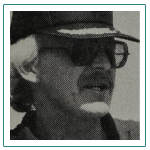
Tony Swan
“It looks to me like our version of the Renault 9 is even better than the one they sell in France. Vive la difference!”
“It looks to me like our version of the Renault 9 is even better than the one they sell in France. Vive la difference!”

Jim McCraw (Executive editor)
“It took Chevy almost eight years to get the Chevette somewhere close to right, and Ford three years to straighten the Escort out. But the Alliance is as close to perfect as any first-year car I have ever encountered”
“It took Chevy almost eight years to get the Chevette somewhere close to right, and Ford three years to straighten the Escort out. But the Alliance is as close to perfect as any first-year car I have ever encountered”

Bob Nagy (Senior editor A)
“Ford’s new Thunderbird certainly won the head-turning contest. But when it came down to rating this field from the standpoint of overall value, I found the Alliance’s combination of style, comfort, and performance simply unbeatable.”
“Ford’s new Thunderbird certainly won the head-turning contest. But when it came down to rating this field from the standpoint of overall value, I found the Alliance’s combination of style, comfort, and performance simply unbeatable.”
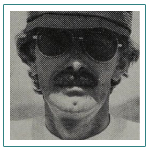
Ron Grable (Engineering editor)
“In spite of being the lowest priced car of the field, with the least power, the Alliance took a back seat to none of the other contestants.”
“In spite of being the lowest priced car of the field, with the least power, the Alliance took a back seat to none of the other contestants.”
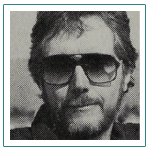
Kevin Smith (Senior editor B)
“Everyone in Detroit is talking ‘European-style’ in form, finish, and feel. AMC and Renault have shown the right way to get it.”
“Everyone in Detroit is talking ‘European-style’ in form, finish, and feel. AMC and Renault have shown the right way to get it.”

Jim Hall (Feature editor)
“The Thunderbird’s styling is right on the money, the ride and handling are the company’s best. Unfortunately the performance of the V-6 engine isn’t up to the rest of the package. The better-late-than-never turbomotor and 5-speed should fix that.”
“The Thunderbird’s styling is right on the money, the ride and handling are the company’s best. Unfortunately the performance of the V-6 engine isn’t up to the rest of the package. The better-late-than-never turbomotor and 5-speed should fix that.”
How did the other cars rank?
The Buick Skyhawk T-Type took second place. Its fuel economy, the best in the group, gave it a slight edge over the futuristic Ford Thunderbird, a very manageable car powered by an unimpressive engine. Next on the list was the Dodge 600 ES, which performed well in performance and build-quality tests, but fell short in comfort, convenience, and style.
The Dodge narrowly beat the Oldsmobile Firenza GT, which suffered from a strange interior and the worst build quality of the contender group. The Mercury Marquis Brougham took sixth place, hampered by poor fuel economy and cumbersome handling. "Understeer aficionados will find pleasure in this one," we wrote. The Marquis struggled to beat the last-place finisher, the Chrysler E-Class, which was judged "worst car" for value and had a voice-warning system that annoyed all the judges.
The Buick Skyhawk T-Type took second place. Its fuel economy, the best in the group, gave it a slight edge over the futuristic Ford Thunderbird, a very manageable car powered by an unimpressive engine. Next on the list was the Dodge 600 ES, which performed well in performance and build-quality tests, but fell short in comfort, convenience, and style.
The Dodge narrowly beat the Oldsmobile Firenza GT, which suffered from a strange interior and the worst build quality of the contender group. The Mercury Marquis Brougham took sixth place, hampered by poor fuel economy and cumbersome handling. "Understeer aficionados will find pleasure in this one," we wrote. The Marquis struggled to beat the last-place finisher, the Chrysler E-Class, which was judged "worst car" for value and had a voice-warning system that annoyed all the judges.
And we weren't the only ones...
Of course, you could argue that the AMC/Renault Alliance won our 1983 "Car of the Year" award because it was the best of a bad bunch.
It is worth noting, however, that we were not the only publication to praise the Alliance
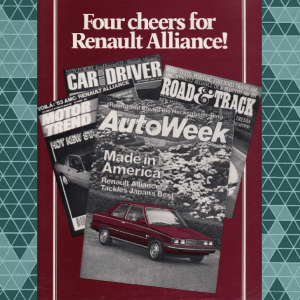
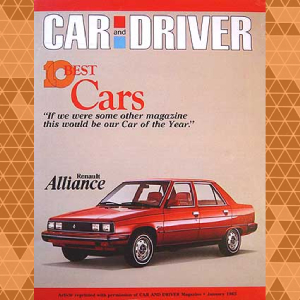
Our colleagues from other magazines such as "Car and Driver" placed it on their 1983 Ten Best list, citing its "blend of compact dimensions, surprising comfort, excellent fuel economy, attractive appearance, and very pleasant road manners that should give Japanese importers pause. If we were another magazine, this would be our car of the year."
Of course, you could argue that the AMC/Renault Alliance won our 1983 "Car of the Year" award because it was the best of a bad bunch.
It is worth noting, however, that we were not the only publication to praise the Alliance
Our colleagues from other magazines such as "Car and Driver" placed it on their 1983 Ten Best list, citing its "blend of compact dimensions, surprising comfort, excellent fuel economy, attractive appearance, and very pleasant road manners that should give Japanese importers pause. If we were another magazine, this would be our car of the year."

So how did the Alliance end up among the worst cars in history?
Part of the problem was timing: we cited the Alliance's slow acceleration as one of its biggest flaws, and that was with the five-speed manual transmission. Automatic Alliances had only three gears and were even slower: we timed 0–60 mph (0–100 km/h) in 17.3 seconds, with a 40–60 mph (50–100 km/h) passing time of 9.1 seconds. We could accept slow acceleration when fuel economy was paramount.
But gasoline prices steadily dropped in the early 1980s, and by 1986 — the final year before Chrysler bought AMC/Renault and killed the Alliance — they had, when adjusted for inflation, returned to 1973 levels before the OPEC embargo.
It is therefore not surprising that after a strong start in 1983 and 1984 (the year the "Renault Encore" hatchback version arrived), AMC/Renault sales began to decline steadily.
A more powerful 1.7-liter engine arrived for 1985, but by then bigger flaws had emerged: quality and durability were far from as good as we had thought. In fact, they were dreadful.
For what it's worth, we placed our "Car Of The Year" test car in our long-term fleet, adding 11,000 miles without significant problems, but we know automakers do not randomly choose which car to present for the "Motor Trend Car of The Year" — we are sure our Alliance, like its competitors, was carefully prepared and checked.
In late 1982, however, we could only judge what was in front of us. AMC's domestic cars were fairly durable, and we could not know how poor the AMC/Renault models would become.
History could have ended differently
What if the AMC/Renault Alliance had competed not as a domestic car but as an import?
Our 1983 Import Car of the Year title went to the Mazda 626, which one judge called "the best Japanese car I have ever driven."
The Mazda 626 was a well-designed vehicle with exceptional ergonomics, solid fuel economy, and excellent driving characteristics — and build quality an order of magnitude better than all our 1983 domestic competitors. Other top contenders included the Porsche 944, the Volvo 760, the Mitsubishi Starion, and the Toyota Tercel.
That would have been a much tougher group to beat than the lackluster domestic cars against which the Alliance competed. In fact, there was even a Renault in the import competition: the Fuego, a sporty coupe based on the older Renault 18 platform. The Fuego finished 8th in a field of 11 cars...
If the Alliance had competed as an import, it probably would not have been the best, and that means the Buick Skyhawk T-Type would have been our 1983 Car of the Year...
We are fairly certain we would not have been able to live with that either.
Part of the problem was timing: we cited the Alliance's slow acceleration as one of its biggest flaws, and that was with the five-speed manual transmission. Automatic Alliances had only three gears and were even slower: we timed 0–60 mph (0–100 km/h) in 17.3 seconds, with a 40–60 mph (50–100 km/h) passing time of 9.1 seconds. We could accept slow acceleration when fuel economy was paramount.
But gasoline prices steadily dropped in the early 1980s, and by 1986 — the final year before Chrysler bought AMC/Renault and killed the Alliance — they had, when adjusted for inflation, returned to 1973 levels before the OPEC embargo.
It is therefore not surprising that after a strong start in 1983 and 1984 (the year the "Renault Encore" hatchback version arrived), AMC/Renault sales began to decline steadily.
A more powerful 1.7-liter engine arrived for 1985, but by then bigger flaws had emerged: quality and durability were far from as good as we had thought. In fact, they were dreadful.
For what it's worth, we placed our "Car Of The Year" test car in our long-term fleet, adding 11,000 miles without significant problems, but we know automakers do not randomly choose which car to present for the "Motor Trend Car of The Year" — we are sure our Alliance, like its competitors, was carefully prepared and checked.
In late 1982, however, we could only judge what was in front of us. AMC's domestic cars were fairly durable, and we could not know how poor the AMC/Renault models would become.
History could have ended differently
What if the AMC/Renault Alliance had competed not as a domestic car but as an import?
Our 1983 Import Car of the Year title went to the Mazda 626, which one judge called "the best Japanese car I have ever driven."
The Mazda 626 was a well-designed vehicle with exceptional ergonomics, solid fuel economy, and excellent driving characteristics — and build quality an order of magnitude better than all our 1983 domestic competitors. Other top contenders included the Porsche 944, the Volvo 760, the Mitsubishi Starion, and the Toyota Tercel.
That would have been a much tougher group to beat than the lackluster domestic cars against which the Alliance competed. In fact, there was even a Renault in the import competition: the Fuego, a sporty coupe based on the older Renault 18 platform. The Fuego finished 8th in a field of 11 cars...
If the Alliance had competed as an import, it probably would not have been the best, and that means the Buick Skyhawk T-Type would have been our 1983 Car of the Year...
We are fairly certain we would not have been able to live with that either.
 Back to the 1983 Model page
contact@renaultalliance.net +33 9 72 45 10 13 (answering machine) Cookie Management Data Protection and Legal Notices
Renault Alliance Club Passion 2002 - 2026