
Electric Renault Alliance convertible - Elon Musk with his Tesla is a copycat! :)
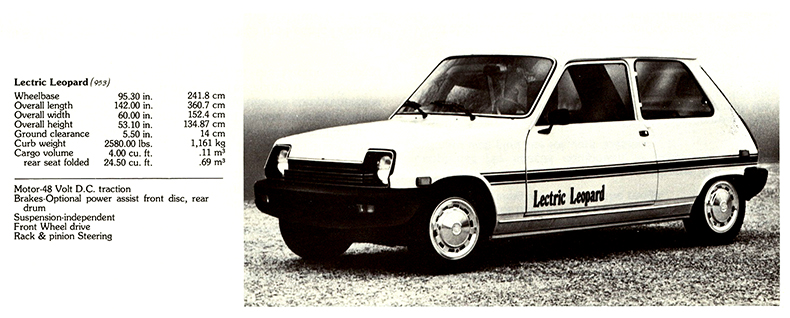
Renault Lectric Leopard
Everyone has already heard of the electric Renault 5!
No?
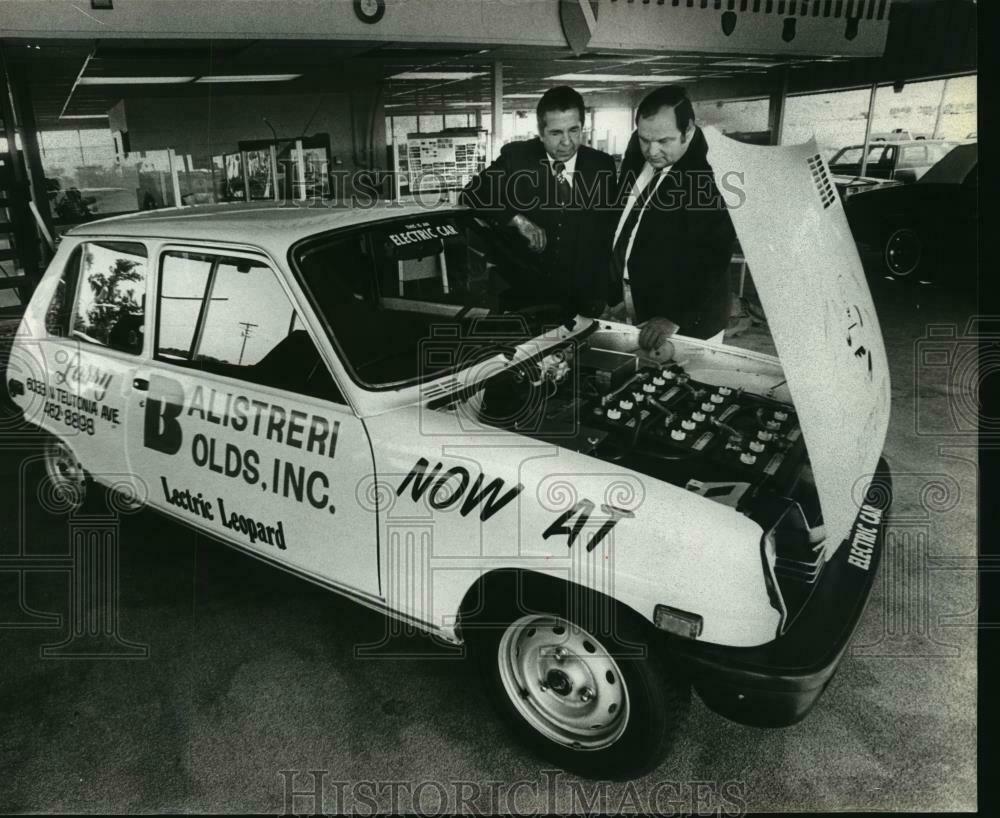
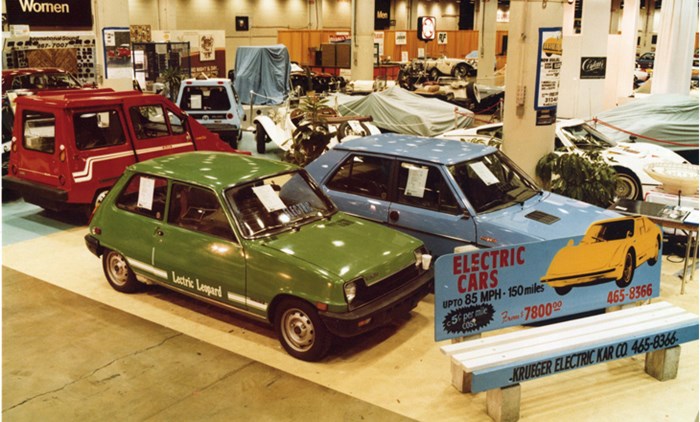
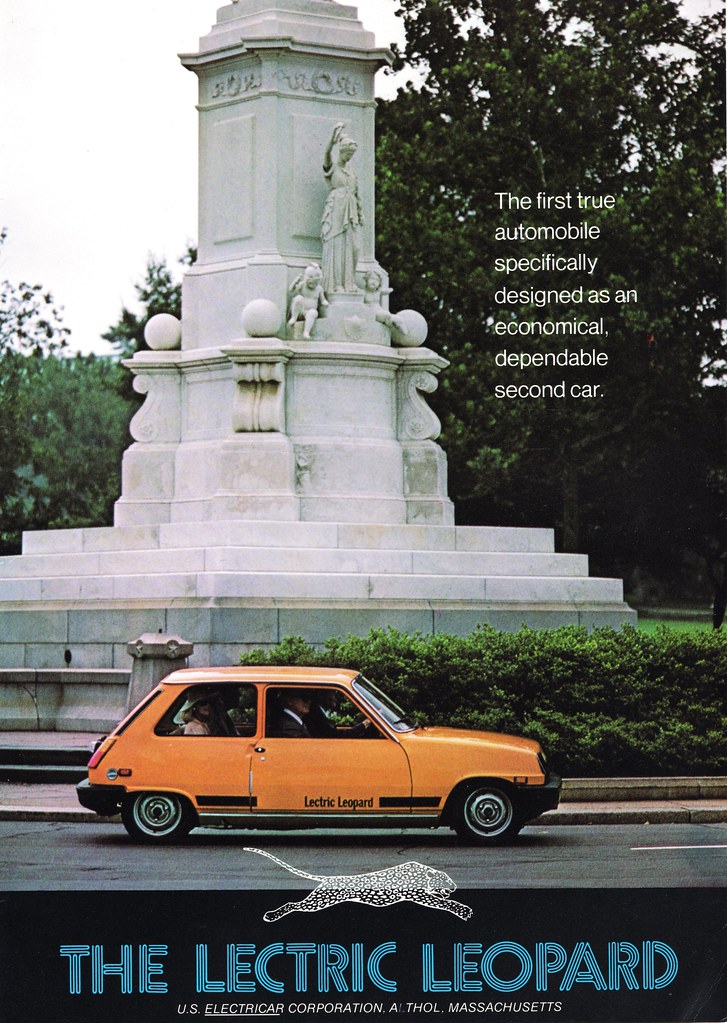
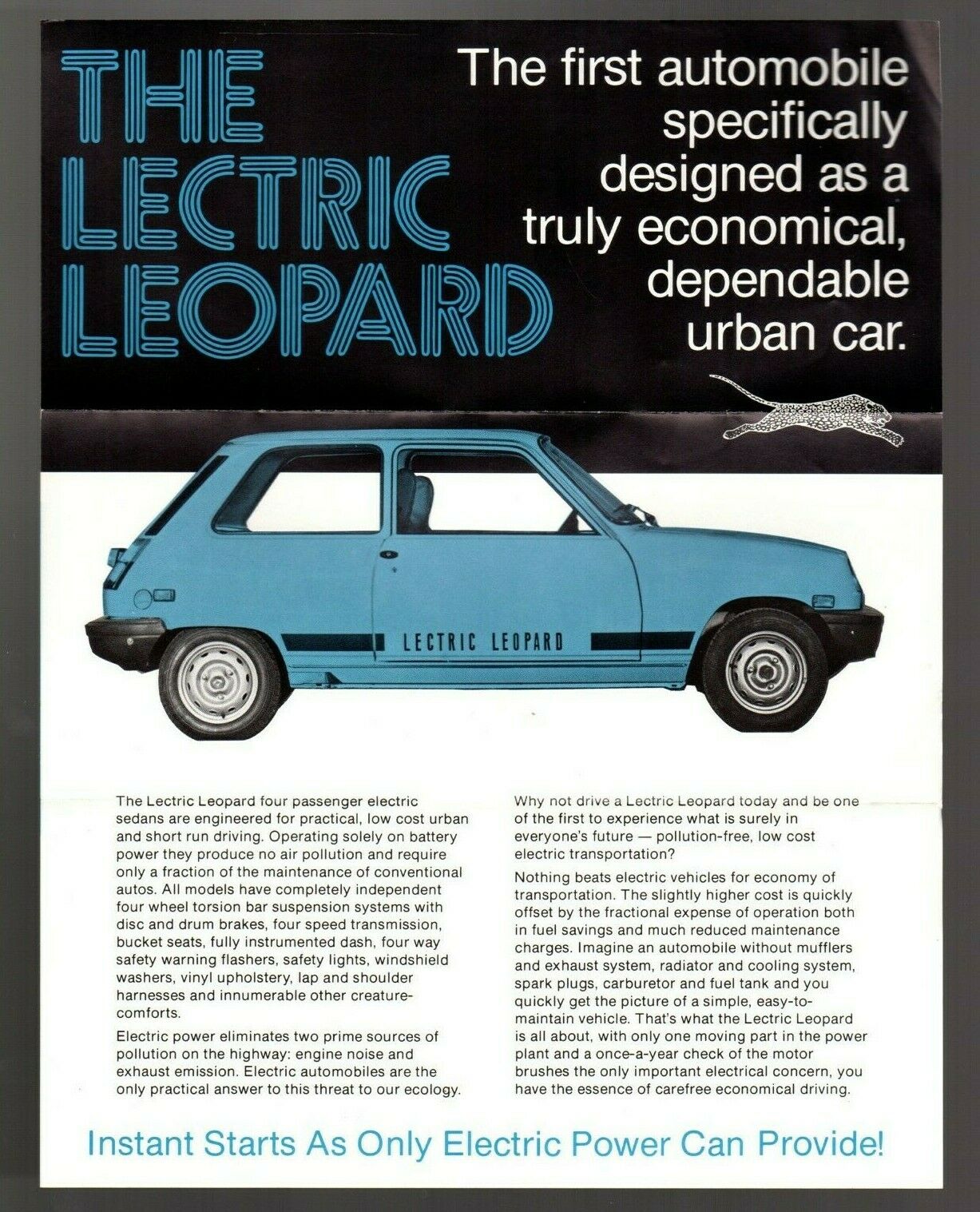
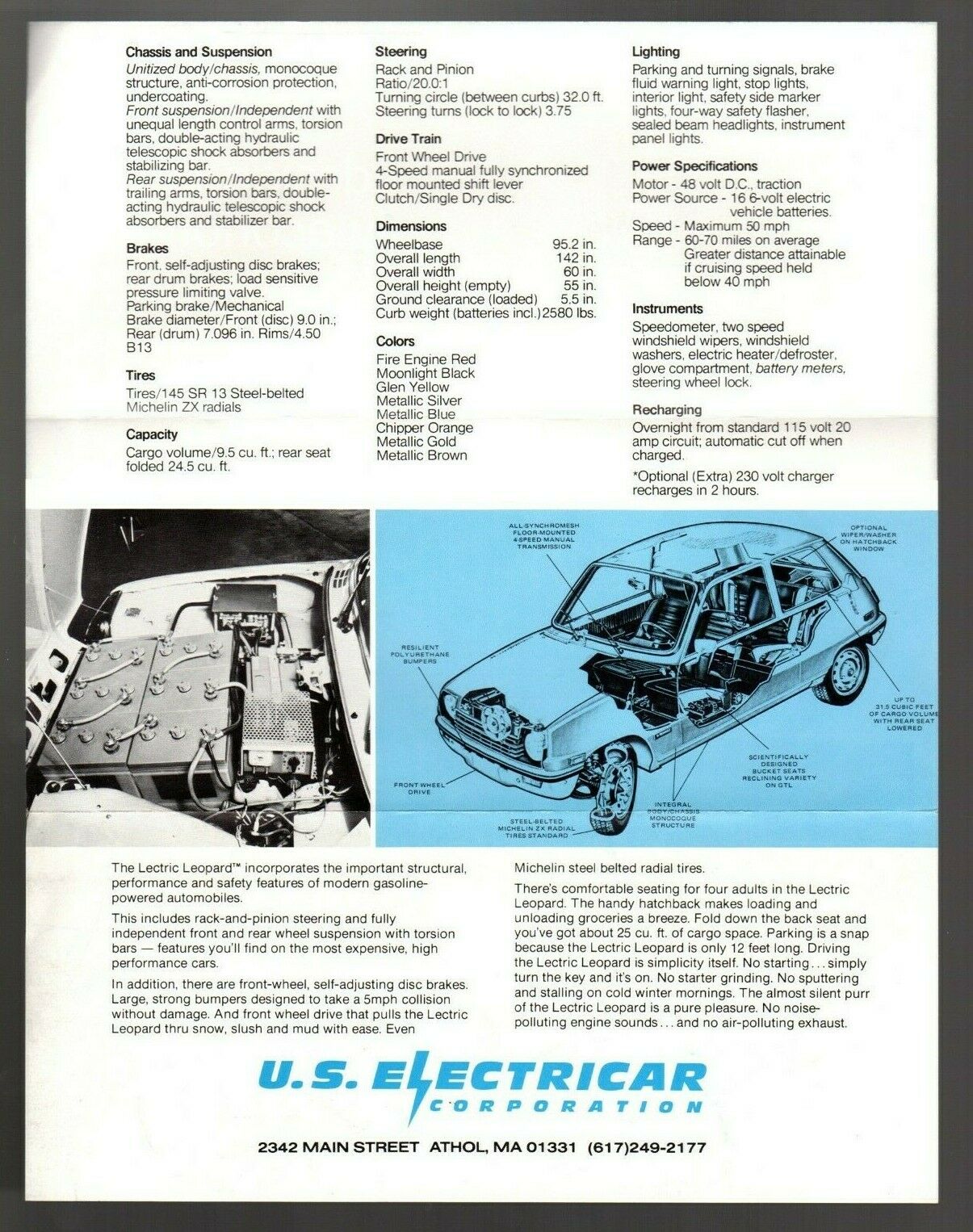
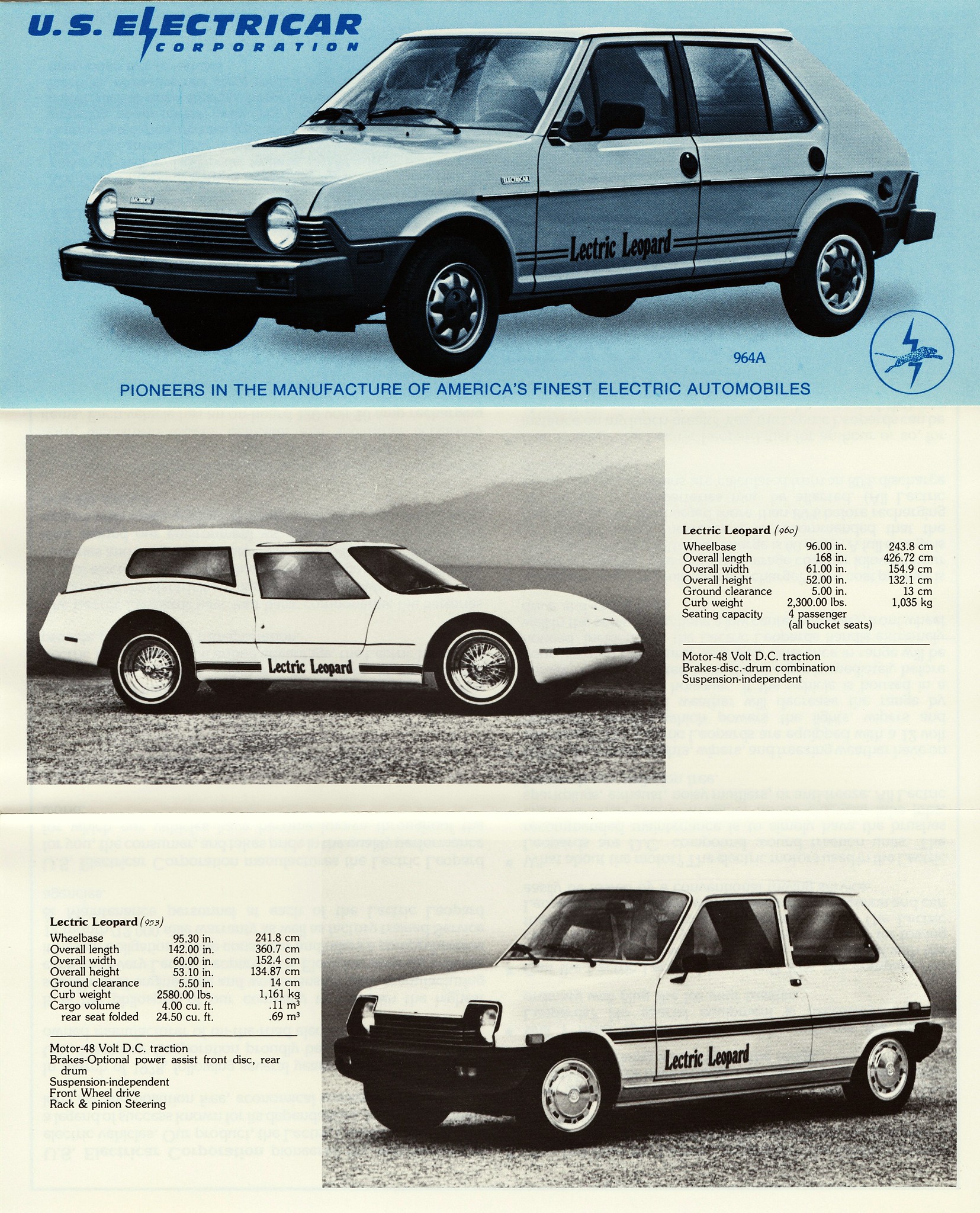
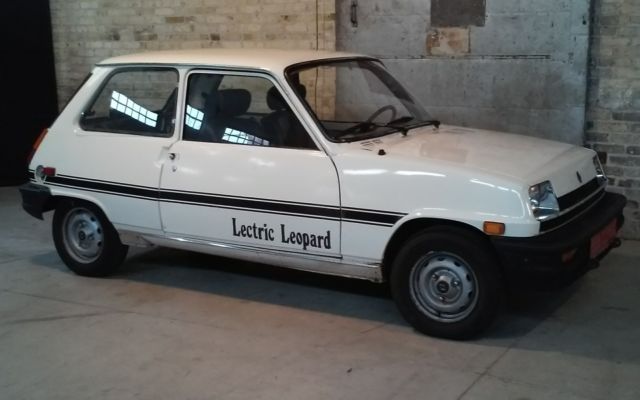
As early as 1979, the Renault 5 Lectric Leopard appeared in the United States. The most famous of the electric Renaults of that era, long before the Zoé, Tesla, and the latest electric revamps: r5, r4, twingo.
This rarity was produced by "U.S Electricar Corporation"
An ecological car before its time, it was designed for short urban trips, much like many small electric cars today. Zero polluting emissions, zero noise.
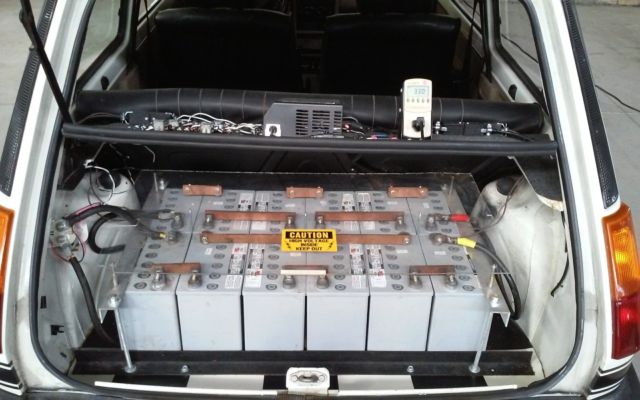
The car was powered by a 48-volt electric motor with energy sourced from 16.6-volt batteries installed under the hood and in the trunk.
It already reached the staggering speed of 50MPH or 80KMH!
Battery charging was completed overnight (115 Volt / 20 Amps) - it was possible to get a charge in 2 hours with the 230-volt option. Not bad for the time, right?
As early as 1979, the Renault 5 Lectric Leopard appeared in the United States. The most famous of the electric Renaults of that era, long before the Zoé, Tesla, and the latest electric revamps: r5, r4, twingo.
This rarity was produced by "U.S Electricar Corporation"
An ecological car before its time, it was designed for short urban trips, much like many small electric cars today. Zero polluting emissions, zero noise.
The car was powered by a 48-volt electric motor with energy sourced from 16.6-volt batteries installed under the hood and in the trunk.
It already reached the staggering speed of 50MPH or 80KMH!
Battery charging was completed overnight (115 Volt / 20 Amps) - it was possible to get a charge in 2 hours with the 230-volt option. Not bad for the time, right?
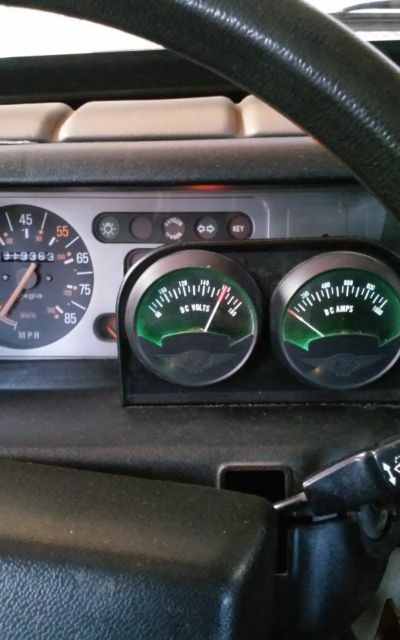
And then there is Chris Roberts, a passionate engineer who built a unique model!
Source: Chris Roberts HIMSELF! (RACP happy!)
Chris Roberts, 38, from Belleville, is an infrastructure specialist for Ameren Illinois. He works at the Collinsville office and still commutes today (early 2020) in his newly converted electric car.
Chris knows our little "RACP" site well and that makes us extremely happy :)
"It is still my daily commuter car for work and in August 2020, it will have been on the road for 7 years.
Since I've had it, it has covered 101,000 miles (162,543 km) including more than 23,000 miles (37,014 km) since its conversion."
Why a 1985 Renault Alliance convertible?
"For convenience," he answers. "I had the car. I drove it to work (in St. Louis) until 2006, when the timing belt broke. I was just able to coast into the parking lot."
It must be said that Renault Alliances have been part of the family for many years. photo 1. First, a 1983 Renault Alliance Sedan: bought new by his father (Earl). In the photo, which dates from 1986 (Chris was 11 years old), they are at a campground in the western United States (Colorado or New Mexico). A family of 4 and a lot - a lot of camping gear for a trip of over 4,000 miles, round trip, in two weeks across the United States. A grueling road trip in a very small car compared to the rest of the American auto market.
photo 2 & 3. Next, a 1986 coupe - His father was in charge of vehicle purchasing for the newspaper where he worked. He loved their Alliance sedan so much that he arranged for the company to buy some for business purposes in 1985 and 1986. When they were sold at auction in 1990, Chris bought the one that belonged to the publisher. In the photo, taken in 1993, Chris (aged 18) is repairing/replacing the idle control part with his father. It's very hot... 100 degrees Fahrenheit (37 degrees Celsius) and they had parked the car in the shade of a tree in the backyard.
He drove this car until 1998. It's his favorite car... his first.
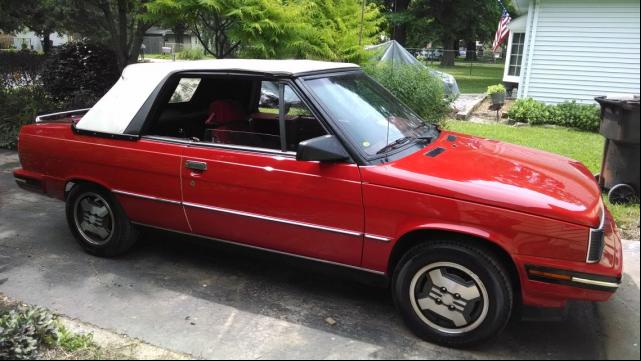
photo 4. Finally, the 1985 Alliance Convertible. Purchased in 2001 from a "little old lady." Her husband had bought it for her but she never liked it (the car, not the husband). In 2007, following the timing belt failure, the engine suffered damage that Chris was not ready to repair. On the 1.4L, it was a chain, but on the 1.7L, a belt that could potentially break again. Chris couldn't part with the car and the idea grew to try an electric conversion. It sat in the driveway and then in the garage until 2011, when Chris finally had the time, inspiration, and money to actually start the project.
A coupe, a sedan, and a convertible. All that's missing is an Encore. "I spent two and a half years working on the electric conversion, working on it in the garage."
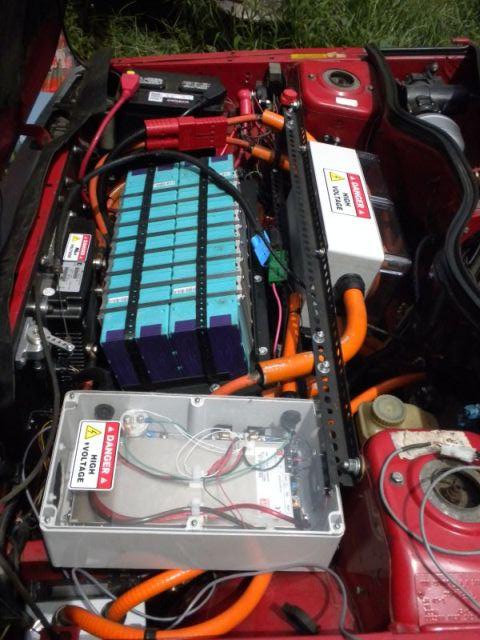
He bought all the components, batteries and everything, and assembled them all. You can see some of the technical details further down the page.
He had a lot of problems with this car. After replacing the timing belt that broke in St. Louis, he only had enough time to get back to Belleville before the new belt snapped. And this time, the engine was truly damaged.
"I learned that it was a known problem among mechanics," Chris said.
So he scrapped the old engine and turned to electric.
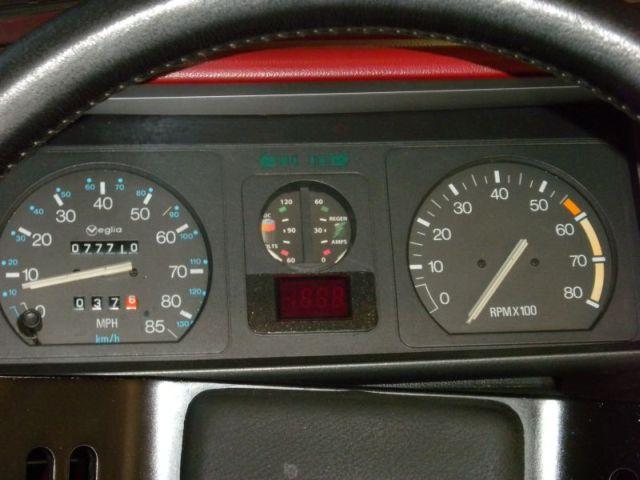
"My father, a qualified electrician, had helped me work on cars when we were both younger, and that naturally continued with the Alliance convertible. He built the circuit that supports all the original dashboard gauges."
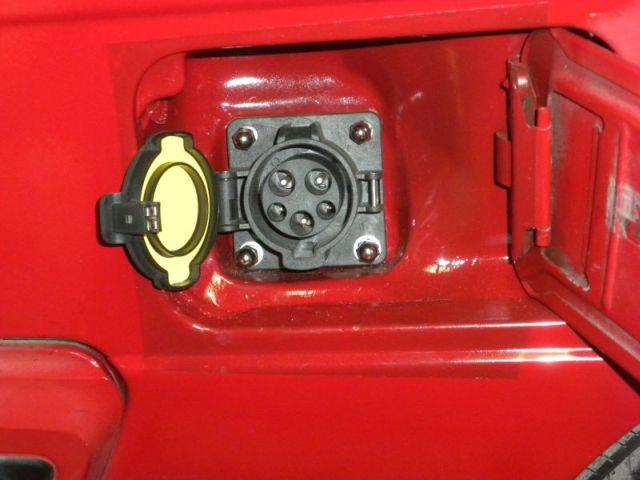
Under the gas flap is an electrical plug, which would fit a standard 220-volt clothes dryer outlet in case of emergency.
"You only need a 100-foot extension cord," Chris jokes.
The Alliance handles the regular 24-mile (40 km) round trips to his work without issues.
He is still trying to determine the maximum mileage the car can travel on a single electric charge.
"I haven't traveled more than 25 miles (40 km) with two people so far," he said.
"I guess the maximum distance would be somewhere between 40 to 50 miles (65-80 km)."
A recharge takes about three to four hours, he said.
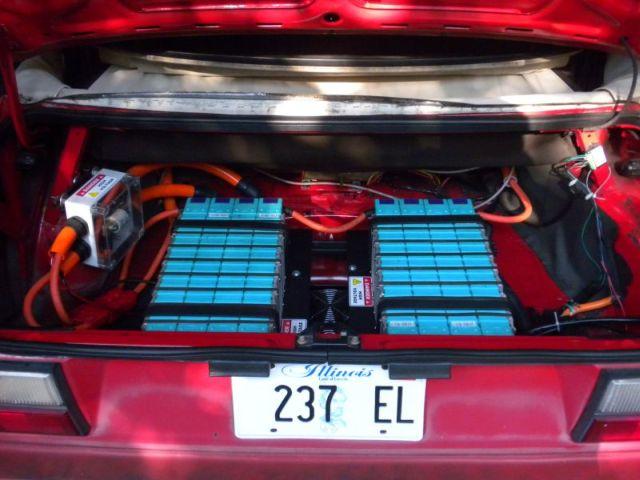
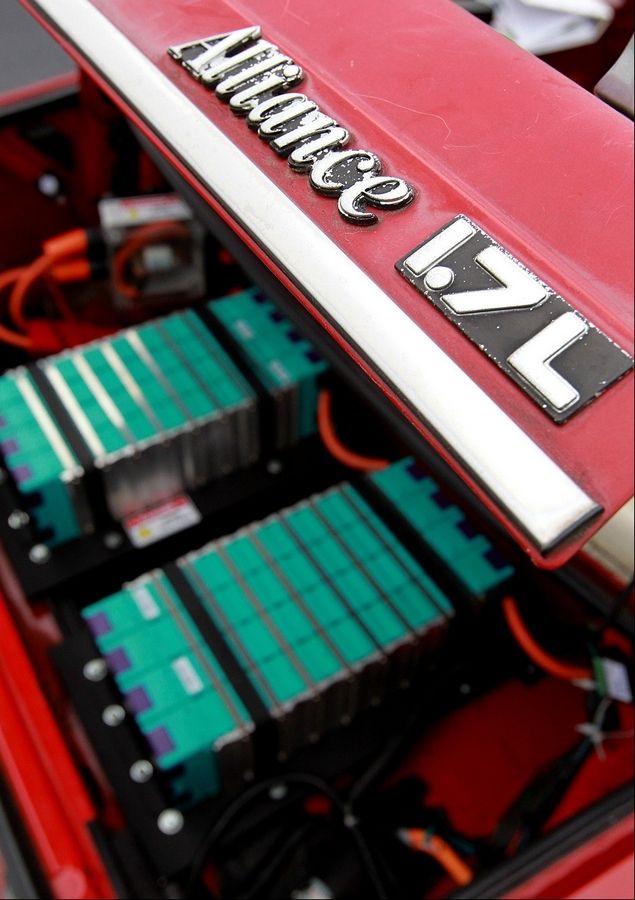
The car can only accommodate two passengers because some of the batteries fill the space where the back seat was. There are also batteries under the hood and in the trunk.
Chris says he spent just under $25,000 on this renovation, half of which was for the purchase of the batteries.
To find all the parts he needed, he made many trips to junkyards throughout the region.
But there were other complications: He shipped the original transmission to Arizona where a shop fabricated an adapter to work with electric power. When it came back, some of the connection bolts were too short and the only match he could find came from a DeLorean.
The gears go from one to five, but he never really could shift into fifth...
"I only went up to 65 mph (100+ km/h) once during testing," he said.
The interior of the car was also reworked. There is a new stereo and heating system. But no air conditioning.
His best estimate of the battery weight is about 360 kg (800 lbs), which makes the car a bit heavier than its original weight. He has special shocks to handle this weight, which tends to be concentrated in the rear.
"I hope that when the batteries need replacing the cost will be lower, as technology improves over time," he said. "The documentation indicates that the batteries should handle about 1,000 charges. That's about three years, but I'm hoping for four to five years."
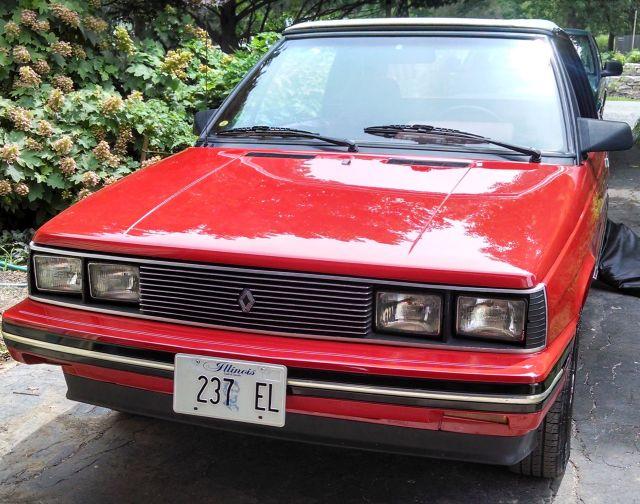
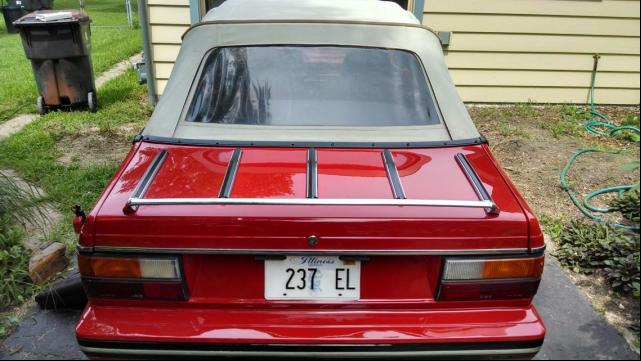
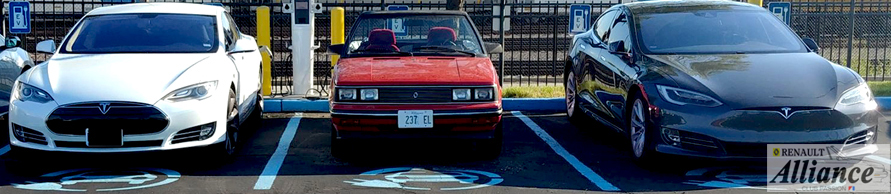
Obtaining his license plate, specific to electric cars, "237-EL" came with a discount. But it was a real uphill battle with the administration.
"The state's incentive program for electric cars was so complicated that I opened the application, looked at it, and closed it immediately," he said.
Aside from obviously being a vintage car, the slightly faded red Renault doesn't attract much attention, Chris said.
"Most people don't notice it except in parking lots," he said.
"Once, I was at Belleville Crossing and a guy was looking at it because it's old. But he did a double-take when he noticed it made no noise."
Building a fully electric car is not for the faint of heart, he said. There are many advantages, but there are also disadvantages.
Now, Chris is subject to a new syndrome that often applies to electric car drivers.
"I feel range anxiety," he said.
A big thank you to Chris for all this information, the photos, and the time he dedicated to us. It was a true pleasure!
Thanks to you Chris, the very first article of the RACP club is a real treasure.
Special thanks to Chris for the stories, time and photographs he shared with us. That was a pleasure for us. Our first RACP's article is a hit!
Chris Roberts
Belleville, IL (USA)
email on request.
Chris Roberts, 38, from Belleville, is an infrastructure specialist for Ameren Illinois. He works at the Collinsville office and still commutes today (early 2020) in his newly converted electric car.
Chris knows our little "RACP" site well and that makes us extremely happy :)
"It is still my daily commuter car for work and in August 2020, it will have been on the road for 7 years.
Since I've had it, it has covered 101,000 miles (162,543 km) including more than 23,000 miles (37,014 km) since its conversion."
Why a 1985 Renault Alliance convertible?
"For convenience," he answers. "I had the car. I drove it to work (in St. Louis) until 2006, when the timing belt broke. I was just able to coast into the parking lot."
It must be said that Renault Alliances have been part of the family for many years. photo 1. First, a 1983 Renault Alliance Sedan: bought new by his father (Earl). In the photo, which dates from 1986 (Chris was 11 years old), they are at a campground in the western United States (Colorado or New Mexico). A family of 4 and a lot - a lot of camping gear for a trip of over 4,000 miles, round trip, in two weeks across the United States. A grueling road trip in a very small car compared to the rest of the American auto market.
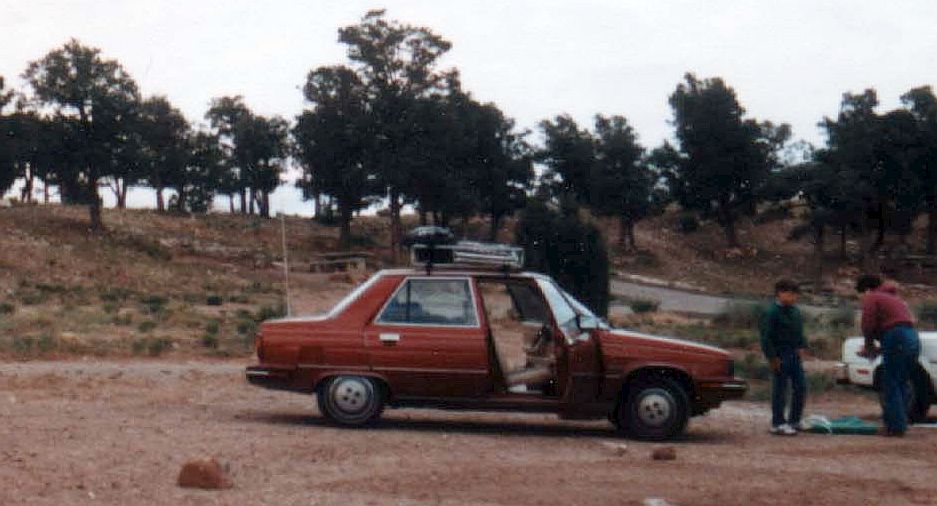
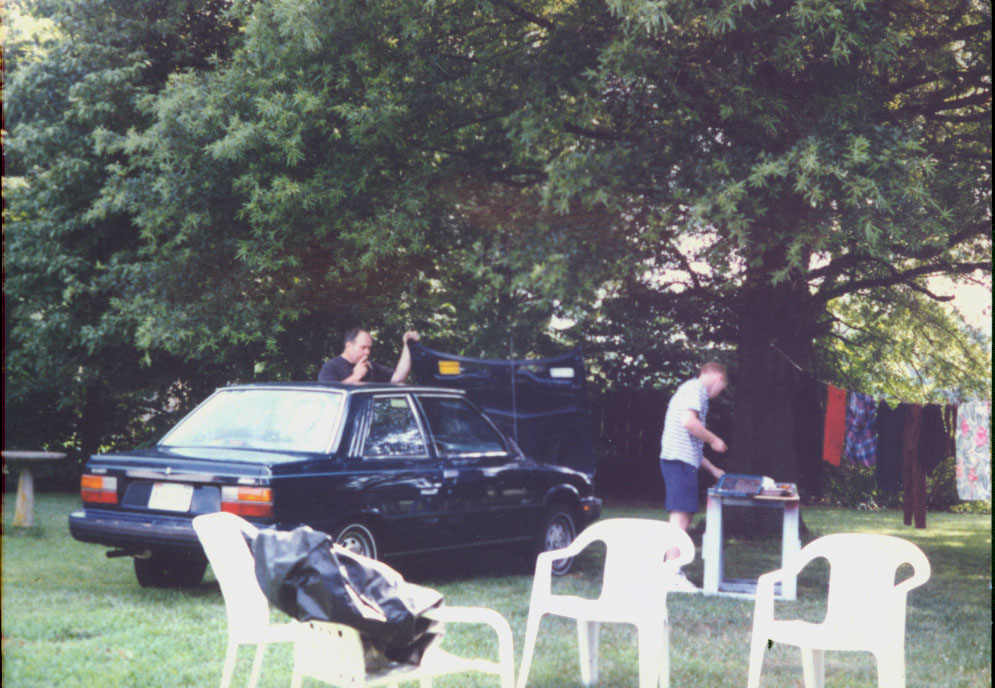
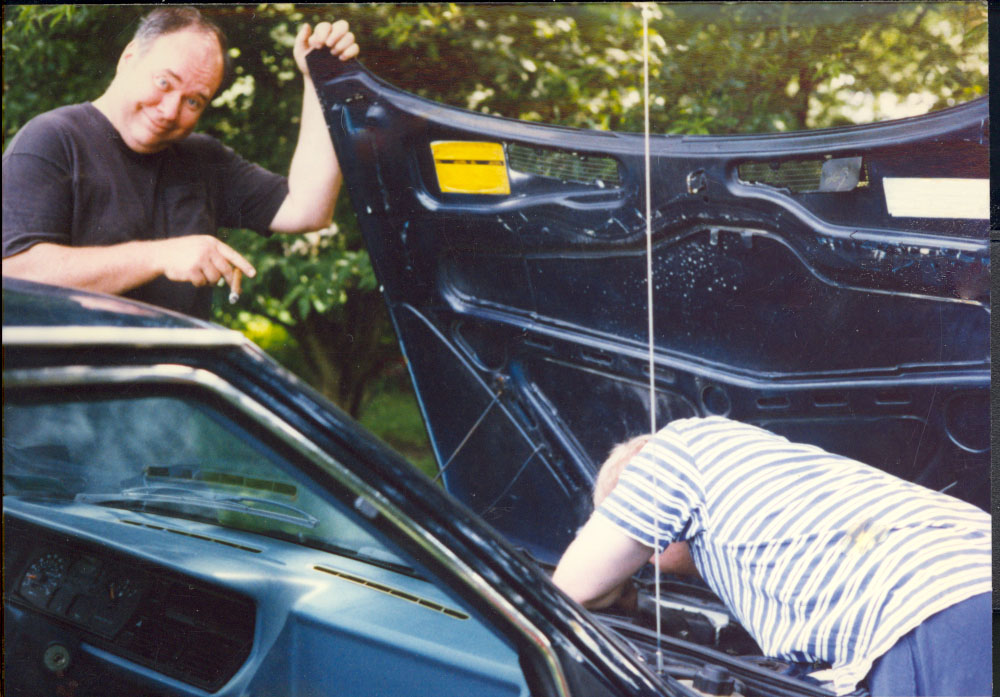

photo 2 & 3. Next, a 1986 coupe - His father was in charge of vehicle purchasing for the newspaper where he worked. He loved their Alliance sedan so much that he arranged for the company to buy some for business purposes in 1985 and 1986. When they were sold at auction in 1990, Chris bought the one that belonged to the publisher. In the photo, taken in 1993, Chris (aged 18) is repairing/replacing the idle control part with his father. It's very hot... 100 degrees Fahrenheit (37 degrees Celsius) and they had parked the car in the shade of a tree in the backyard.
He drove this car until 1998. It's his favorite car... his first.
photo 4. Finally, the 1985 Alliance Convertible. Purchased in 2001 from a "little old lady." Her husband had bought it for her but she never liked it (the car, not the husband). In 2007, following the timing belt failure, the engine suffered damage that Chris was not ready to repair. On the 1.4L, it was a chain, but on the 1.7L, a belt that could potentially break again. Chris couldn't part with the car and the idea grew to try an electric conversion. It sat in the driveway and then in the garage until 2011, when Chris finally had the time, inspiration, and money to actually start the project.
A coupe, a sedan, and a convertible. All that's missing is an Encore. "I spent two and a half years working on the electric conversion, working on it in the garage."
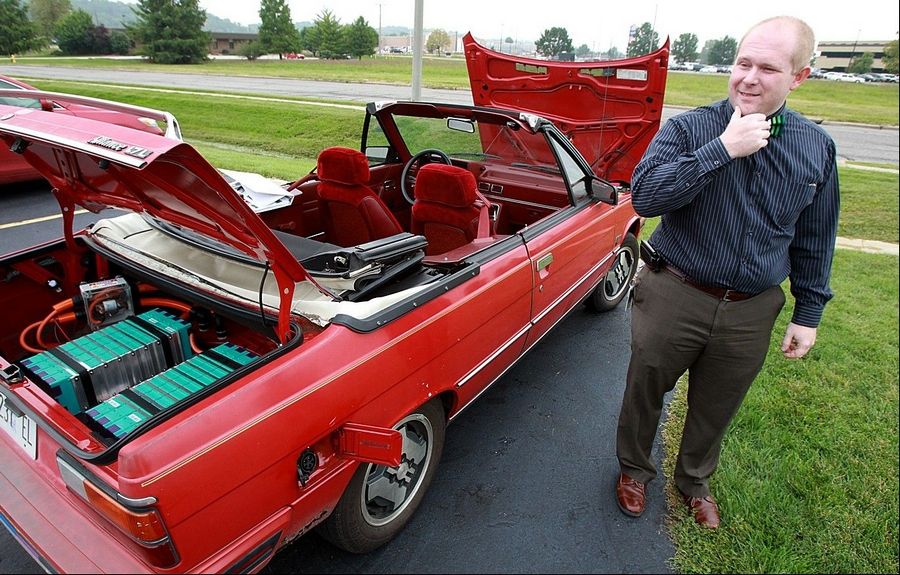
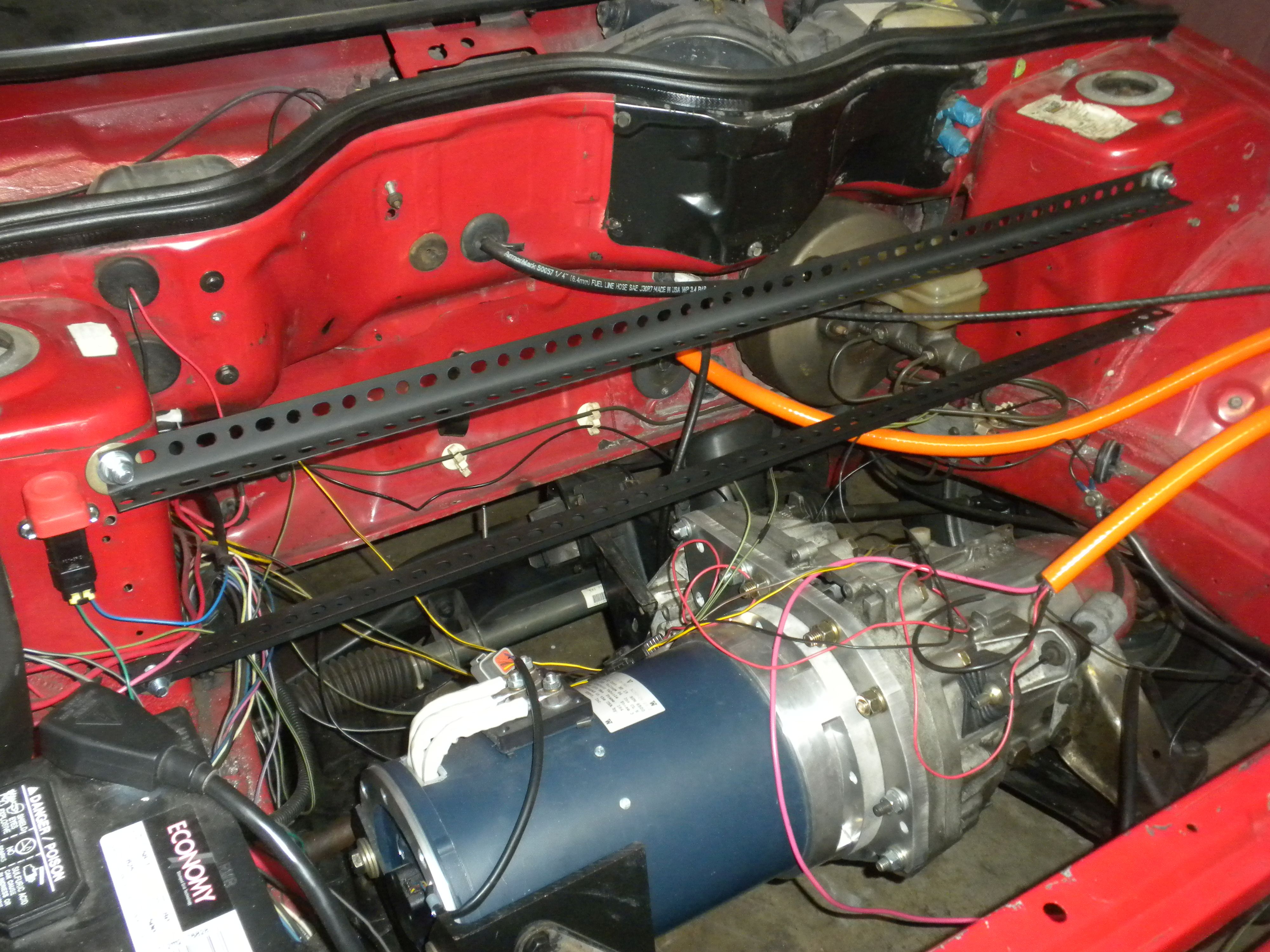
He bought all the components, batteries and everything, and assembled them all. You can see some of the technical details further down the page.
He had a lot of problems with this car. After replacing the timing belt that broke in St. Louis, he only had enough time to get back to Belleville before the new belt snapped. And this time, the engine was truly damaged.
"I learned that it was a known problem among mechanics," Chris said.
So he scrapped the old engine and turned to electric.
"My father, a qualified electrician, had helped me work on cars when we were both younger, and that naturally continued with the Alliance convertible. He built the circuit that supports all the original dashboard gauges."
Under the gas flap is an electrical plug, which would fit a standard 220-volt clothes dryer outlet in case of emergency.
"You only need a 100-foot extension cord," Chris jokes.
The Alliance handles the regular 24-mile (40 km) round trips to his work without issues.
He is still trying to determine the maximum mileage the car can travel on a single electric charge.
"I haven't traveled more than 25 miles (40 km) with two people so far," he said.
"I guess the maximum distance would be somewhere between 40 to 50 miles (65-80 km)."
A recharge takes about three to four hours, he said.
The car can only accommodate two passengers because some of the batteries fill the space where the back seat was. There are also batteries under the hood and in the trunk.
Chris says he spent just under $25,000 on this renovation, half of which was for the purchase of the batteries.
To find all the parts he needed, he made many trips to junkyards throughout the region.
But there were other complications: He shipped the original transmission to Arizona where a shop fabricated an adapter to work with electric power. When it came back, some of the connection bolts were too short and the only match he could find came from a DeLorean.
The gears go from one to five, but he never really could shift into fifth...
"I only went up to 65 mph (100+ km/h) once during testing," he said.
The interior of the car was also reworked. There is a new stereo and heating system. But no air conditioning.
His best estimate of the battery weight is about 360 kg (800 lbs), which makes the car a bit heavier than its original weight. He has special shocks to handle this weight, which tends to be concentrated in the rear.
"I hope that when the batteries need replacing the cost will be lower, as technology improves over time," he said. "The documentation indicates that the batteries should handle about 1,000 charges. That's about three years, but I'm hoping for four to five years."
Obtaining his license plate, specific to electric cars, "237-EL" came with a discount. But it was a real uphill battle with the administration.
"The state's incentive program for electric cars was so complicated that I opened the application, looked at it, and closed it immediately," he said.
Aside from obviously being a vintage car, the slightly faded red Renault doesn't attract much attention, Chris said.
"Most people don't notice it except in parking lots," he said.
"Once, I was at Belleville Crossing and a guy was looking at it because it's old. But he did a double-take when he noticed it made no noise."
Building a fully electric car is not for the faint of heart, he said. There are many advantages, but there are also disadvantages.
Now, Chris is subject to a new syndrome that often applies to electric car drivers.
"I feel range anxiety," he said.
A big thank you to Chris for all this information, the photos, and the time he dedicated to us. It was a true pleasure!
Thanks to you Chris, the very first article of the RACP club is a real treasure.
Special thanks to Chris for the stories, time and photographs he shared with us. That was a pleasure for us. Our first RACP's article is a hit!
Chris Roberts
Belleville, IL (USA)
email on request.
Technical data
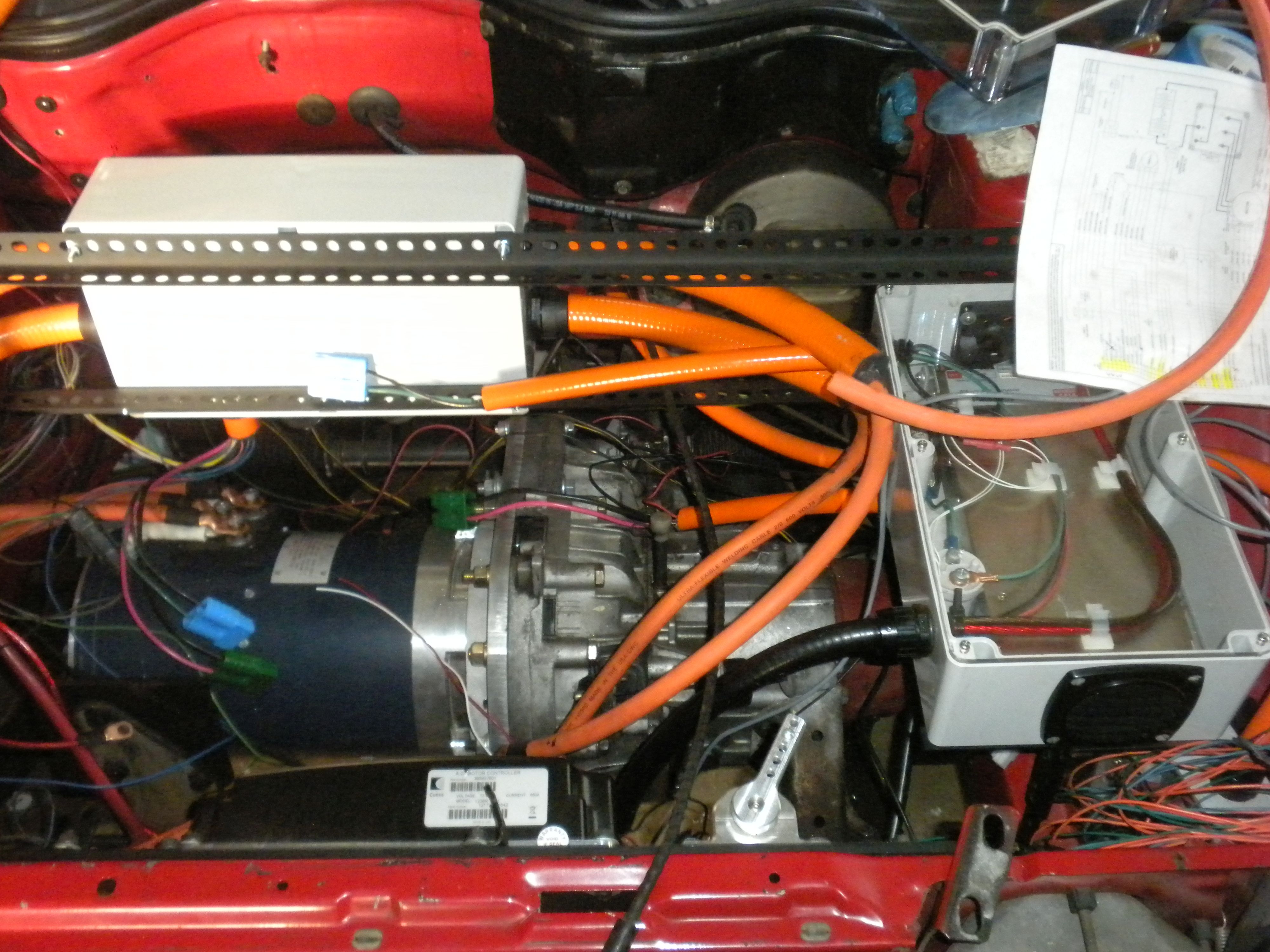
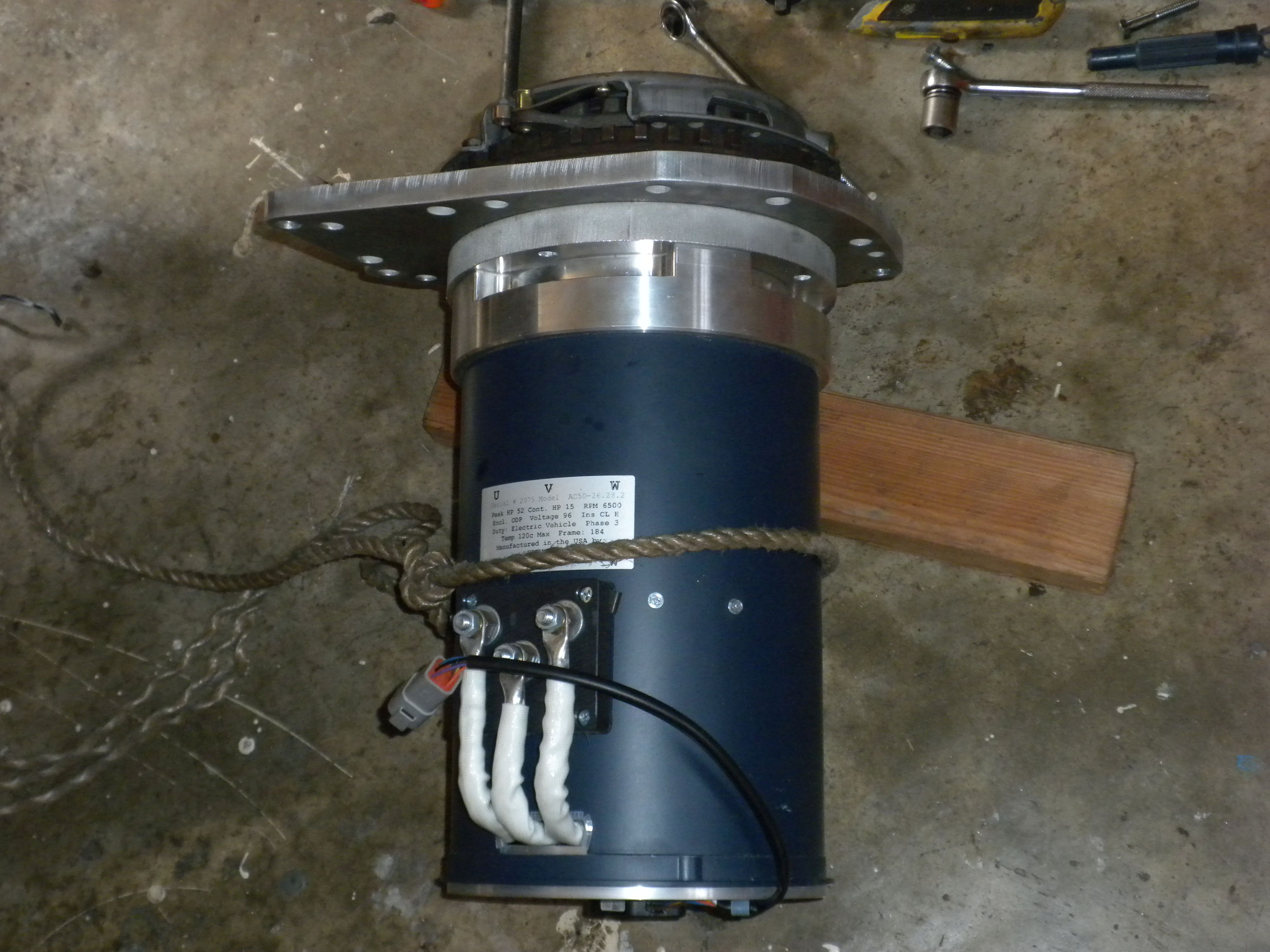
| Motor | HPEVS AC-50 3-Phase AC |
| Drivetrain | Original 5-speed JB gearbox |
| Controller | Curtis 1238-7601 |
| Batteries | 32 GBS 200AH, 3.20 Volt, Lithium Iron Phosphate |
| System Voltage | 96 Volts |
| Charger | Elcon PFC-5000 Configured with charger profile 501 with no BMS. |
| Heater | Dual 1500W Electric Heater elements. 2 cores fit perfectly in the old heater core frame |
| DC/DC converter | Meanwell SD-1000H-12 |
| Instrumentation | Original gauges and lights being run by custom VCL in the Curtis controller. Digital ammeter is functioning off a negative side 1000A shunt in the pack circuit. |
| Top speed | 70 MPH (112 KPH) Downhill, of course. ~60mph seems to be the highest speed for any real length of time. |
| Range | 52 Miles (83 Kilometers) Still pushing the limits on this slowly. |
| EV miles | Start:77,672 Miles (124,974 Kilometers) Current:81,254 Miles (130,737 Kilometers) Total:3,582 Miles (5,763 Kilometers) |
| Seating capacity | 2 adults |
| Tires | Bridgestone B381 85T |
| Conversion time | 2.5 years |
| Additional features | Upgraded suspension. The original Alliance suspension is not up to the job of holding that much battery weight. KYB aftermarket shocks with a set of MAD Suspension Coilovers with custom seats restore a reasonable ride height to the rear of the car. |
for those who want to rebuild a flux capacitor
A very timid start
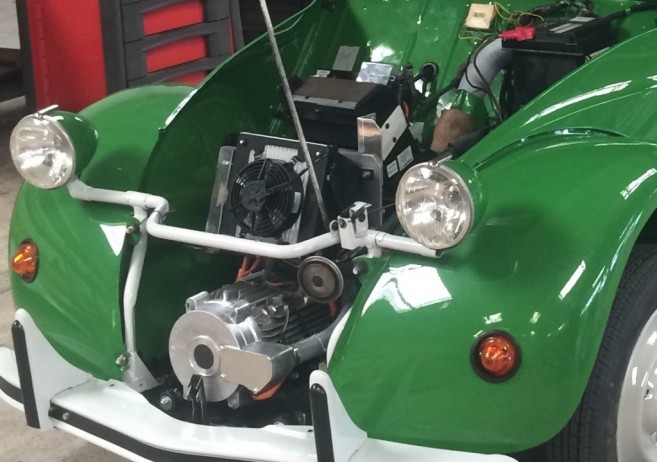
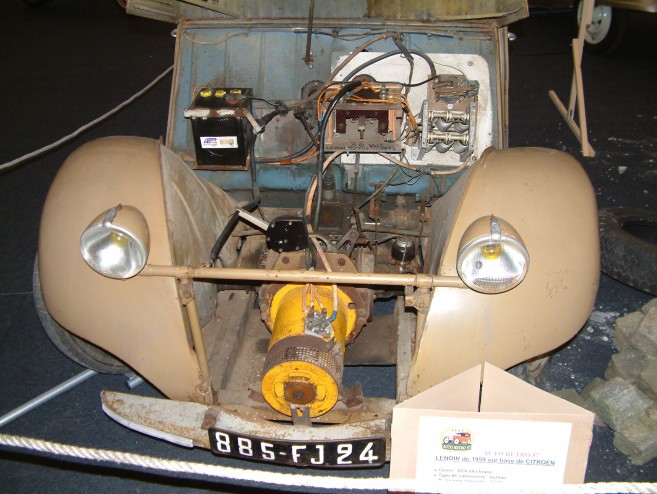
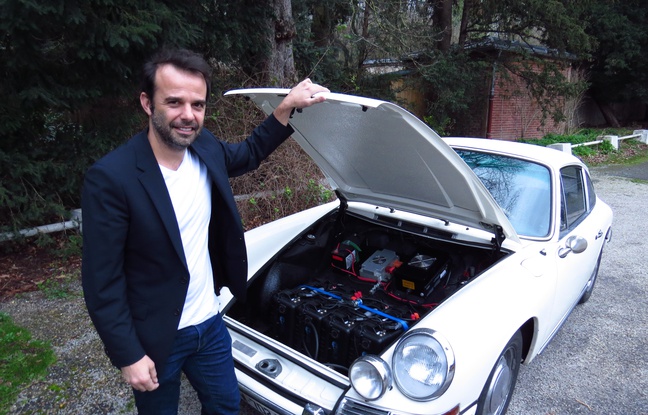
In 2020, things were starting to move in France regarding Retrofitting.
But Covid gave a serious blow to the growth of this great idea.
Today, development is very limited due to delays, costs, and homologation.
Many pioneers went bankrupt. Neither supply nor demand is meeting expectations.
Yet...
Many pioneers went bankrupt. Neither supply nor demand is meeting expectations.
Yet...
- Automobile Propre: Converting a thermal car to electric: what you need to know
- Renault Group: How to convert a thermal car to an electric car?
- L'usine nouvelle: From February, you can convert your thermal vehicle to electric thanks to retrofitting
- Transition-One: https://transition-one.eu/

contact@renaultalliance.net +33 9 72 45 10 13 (answering machine) Cookie Management Data Protection and Legal Notices
Renault Alliance Club Passion 2002 - 2026